Jeppesen Tina Dysgaard
Copenhagen Neuromuscular Clinic, Department of Neurology, Rigshospitalet, University of Copenhagen, Copenhagen, Denmark.
Front Physiol. 2020 May 21;11:349. doi: 10.3389/fphys.2020.00349. eCollection 2020.
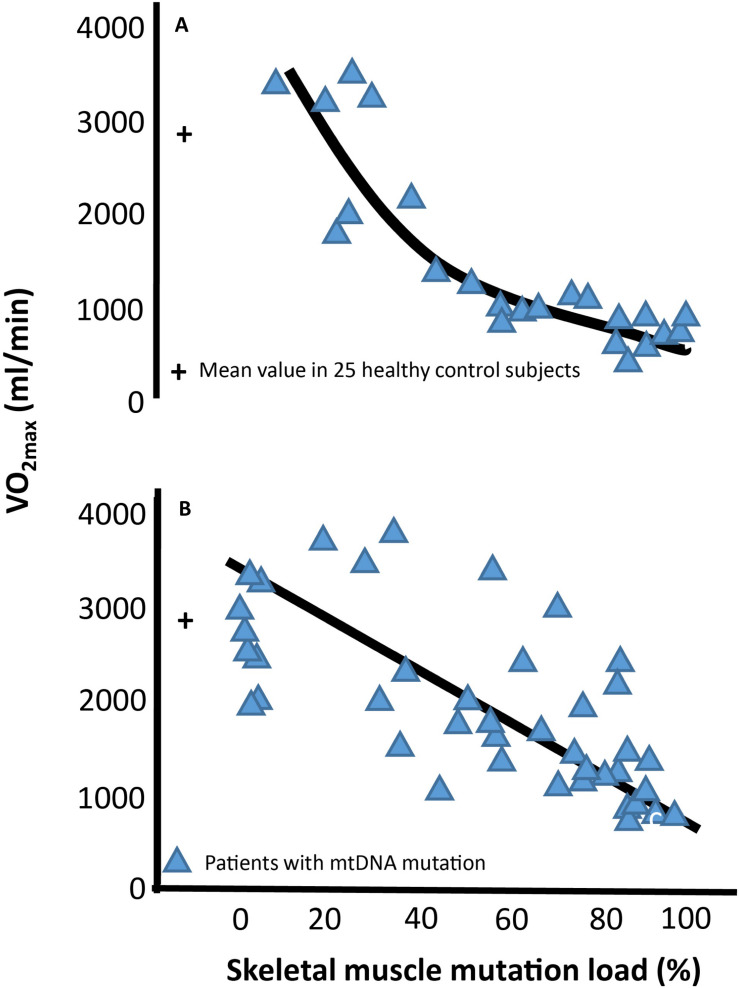
In patients with mitochondrial DNA (mtDNA) mutation, a pathogenic mtDNA mutation is heteroplasmically distributed among tissues. The ratio between wild-type and mutated mtDNA copies determines the mtDNA mutation load of the tissue, which correlates inversively with oxidative capacity of the tissue. In patients with mtDNA mutation, the mutation load is often very high in skeletal muscle compared to other tissues. Additionally, skeletal muscle can increase its oxygen demand up to 100-fold from rest to exercise, which is unmatched by any other tissue. Thus, exercise intolerance is the most common symptom in patients with mtDNA mutation. The impaired oxidative capacity in skeletal muscle in patients with mtDNA mutation results in limitation in physical capacity that interferes with daily activities and impairs quality of life. Additionally, patients with mitochondrial disease due to mtDNA mutation often live a sedentary lifestyle, which further impair oxidative capacity and exercise tolerance. Since aerobic exercise training increase mitochondrial function and volume density in healthy individuals, studies have investigated if aerobic training could be used to counteract the progressive exercise intolerance in patients with mtDNA mutation. Overall studies investigating the effect of aerobic training in patients with mtDNA mutation have shown that aerobic training is an efficient way to improve oxidative capacity in this condition, and aerobic training seems to be safe even for patients with high mtDNA mutation in skeletal muscle.
在患有线粒体DNA(mtDNA)突变的患者中,致病性mtDNA突变在组织中呈异质性分布。野生型和突变型mtDNA拷贝之间的比例决定了组织的mtDNA突变负荷,而该负荷与组织的氧化能力呈负相关。在患有mtDNA突变的患者中,与其他组织相比,骨骼肌中的突变负荷通常非常高。此外,骨骼肌从静息状态到运动状态时,其氧需求可增加至100倍,这是其他任何组织都无法比拟的。因此,运动不耐受是mtDNA突变患者最常见的症状。mtDNA突变患者骨骼肌中氧化能力受损导致身体能力受限,进而干扰日常活动并损害生活质量。此外,由于mtDNA突变导致线粒体疾病的患者通常生活方式久坐不动,这进一步损害了氧化能力和运动耐量。由于有氧运动训练可增加健康个体的线粒体功能和体积密度,因此研究探讨了有氧运动训练是否可用于对抗mtDNA突变患者逐渐加重的运动不耐受。总体而言,调查有氧运动训练对mtDNA突变患者影响的研究表明,有氧运动训练是改善这种情况下氧化能力的有效方法,而且即使对于骨骼肌中mtDNA突变率高的患者,有氧运动训练似乎也是安全的。