Zhang Mingyue, Chen Jie, Zhan Chenyi, Liu Jinjin, Chen Qian, Xia Tianyi, Zhang Tingting, Zhu Dongqin, Chen Chao, Yang Yunjun
Department of Radiology, The First Affiliated Hospital of Wenzhou Medical University, Wenzhou, China.
Front Neurol. 2020 May 19;11:334. doi: 10.3389/fneur.2020.00334. eCollection 2020.
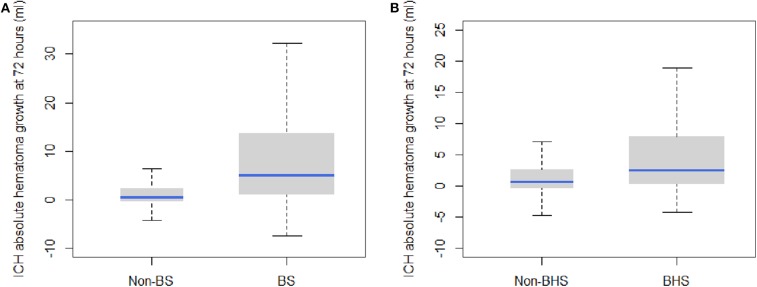
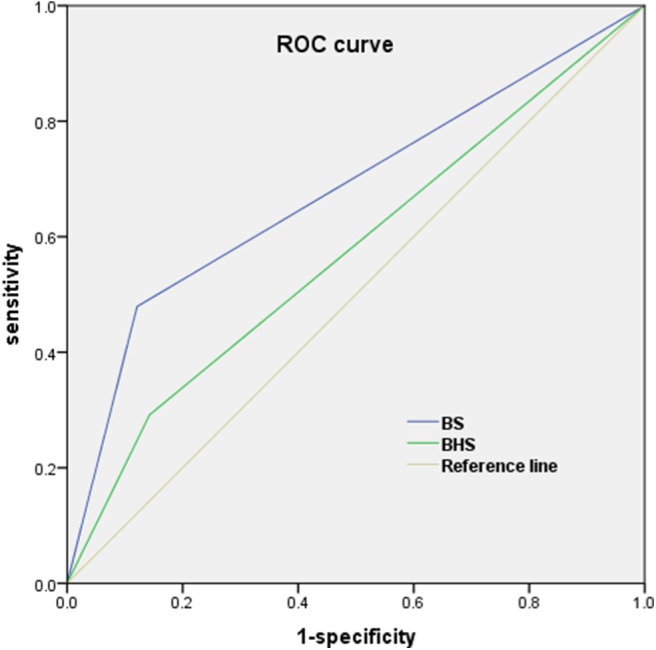
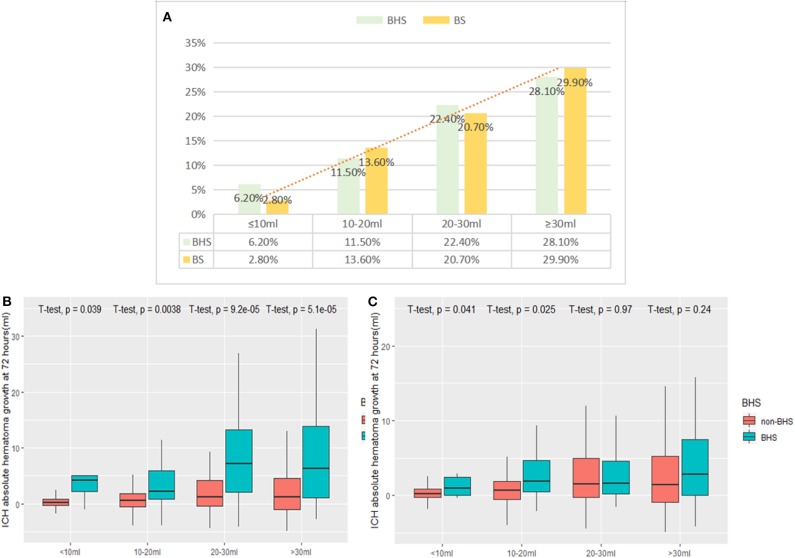
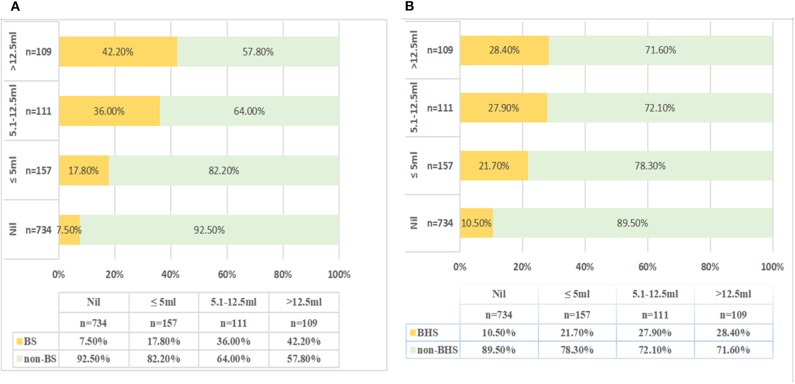
It is unclear which imaging marker is optimal for predicting the extent of hematoma expansion (EHE). We aimed to compare the usefulness of the blend sign (BS) with that of other non-contrast computed tomography (NCCT) markers for predicting the EHE in patients with spontaneous intracerebral hemorrhage (sICH). Patients with sICH admitted to our Neurology Emergency Department between September 2013 and January 2019 were enrolled. The EHE was calculated as the absolute increase in hematoma volume between baseline and follow-up CT (within 72 h). The EHE was categorized into four groups: "no growth," "minimal change" (≤5.1 ml), "moderate change" (5.1-12.5 ml), and "massive change" (>12.5 ml). Univariate and multivariate analyses were performed to investigate the relationship between the NCCT markers [BS, black hole sign (BHS), satellite sign, and island sign] and the EHE. A total of 1,111 sICH patients were included (median age: 60 years; 66.5% males). Multiple linear regression analysis showed that the presence of the BS and BHS was independently associated with the EHE, after adjusting for confounders ( < 0.001 and = 0.003, respectively). The presence of the BS and BHS was positively correlated with growth category ( = 0.285 and = 0.199, both s < 0.001). The BS demonstrated a better predictive performance for the EHE than did the BHS [area under the curve (AUC): 0.67 vs. 0.57; both s < 0.001]. In patients with acute sICH, the BS showed a better performance in predicting the EHE compared with other NCCT markers. This imaging marker may help identify patients at a high risk of significant hematoma expansion and may facilitate its early management.
目前尚不清楚哪种影像学标志物最适合预测血肿扩大程度(EHE)。我们旨在比较混合征(BS)与其他非增强计算机断层扫描(NCCT)标志物在预测自发性脑出血(sICH)患者EHE方面的效用。纳入了2013年9月至2019年1月期间入住我院神经内科急诊科的sICH患者。EHE计算为基线CT与随访CT(72小时内)之间血肿体积的绝对增加量。EHE分为四组:“无增长”、“微小变化”(≤5.1 ml)、“中度变化”(5.1 - 12.5 ml)和“大量变化”(>12.5 ml)。进行单因素和多因素分析以研究NCCT标志物[BS、黑洞征(BHS)、卫星征和岛征]与EHE之间的关系。共纳入1111例sICH患者(中位年龄:60岁;男性占66.5%)。多元线性回归分析显示,在调整混杂因素后,BS和BHS的存在与EHE独立相关(分别为<0.001和 = 0.003)。BS和BHS的存在与增长类别呈正相关(分别为 = 0.285和 = 0.199,均P<0.001)。与BHS相比,BS对EHE的预测性能更好[曲线下面积(AUC):0.67对0.57;均P<0.001]。在急性sICH患者中,与其他NCCT标志物相比,BS在预测EHE方面表现更好。这种影像学标志物可能有助于识别血肿显著扩大的高危患者,并可能促进其早期管理。