Childhood Nutrition Research Centre, Population, Policy and Practice Programme, UCL Great Ormond Street Institute of Child Health, London, United Kingdom.
Department of Anthropology, University of Western Ontario, London, ON, Canada.
Front Endocrinol (Lausanne). 2020 May 21;11:325. doi: 10.3389/fendo.2020.00325. eCollection 2020.
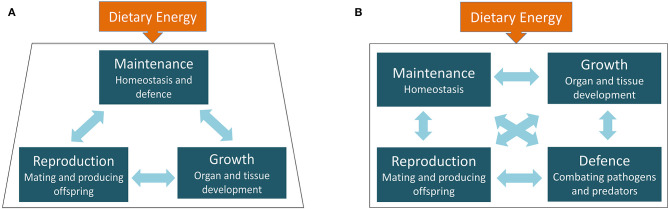
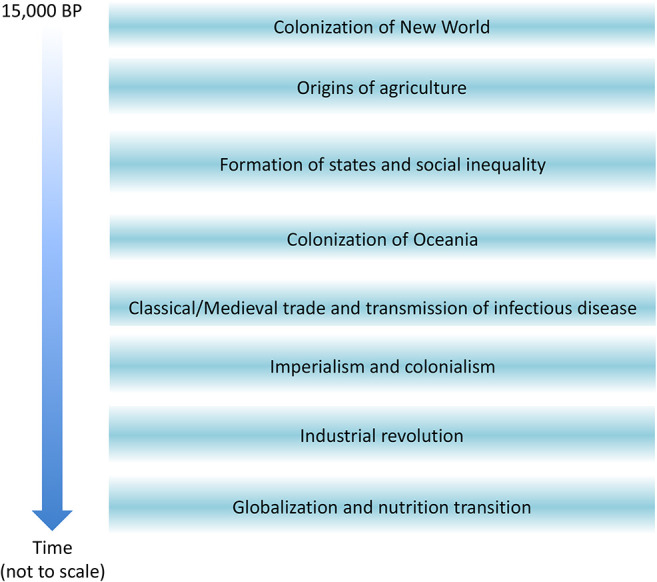
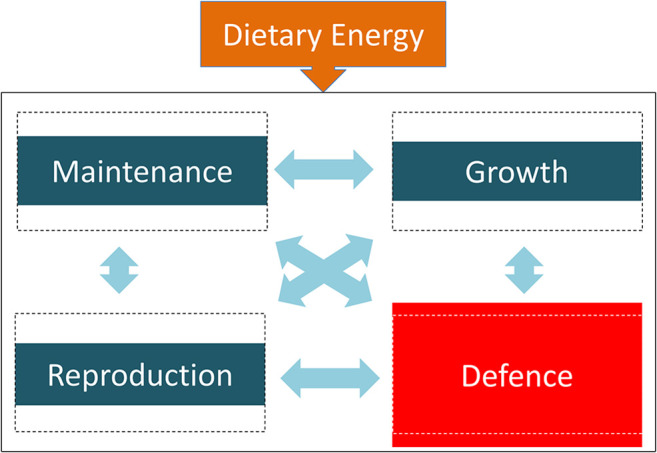
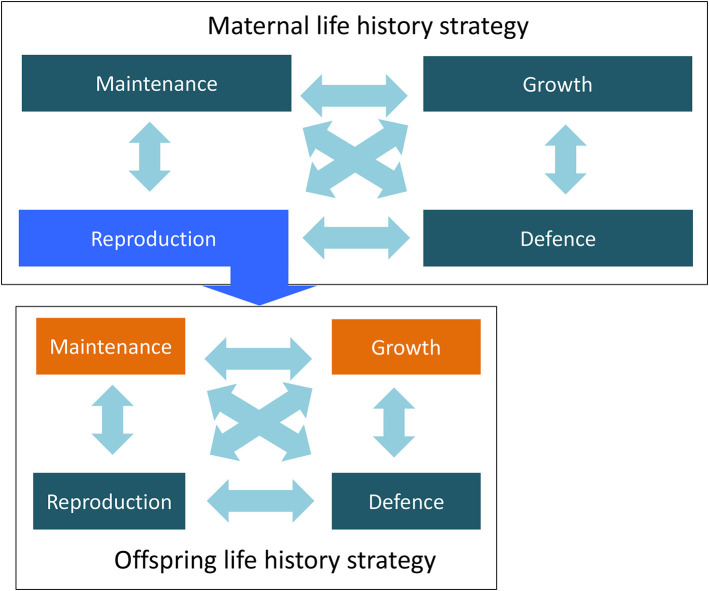
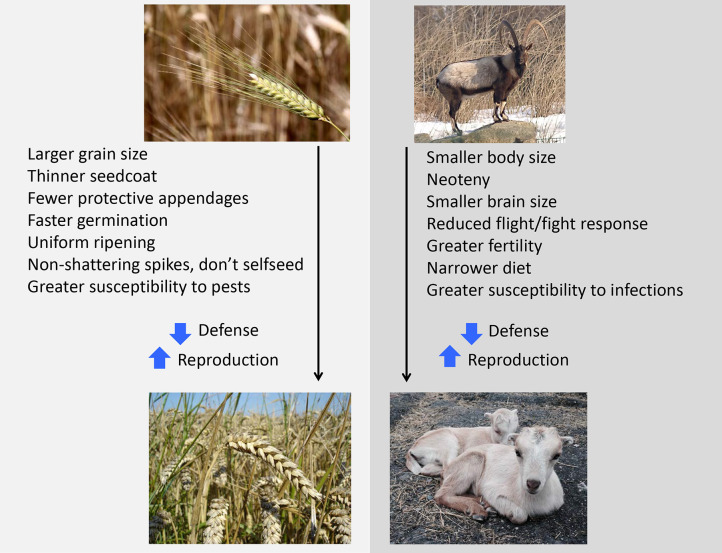
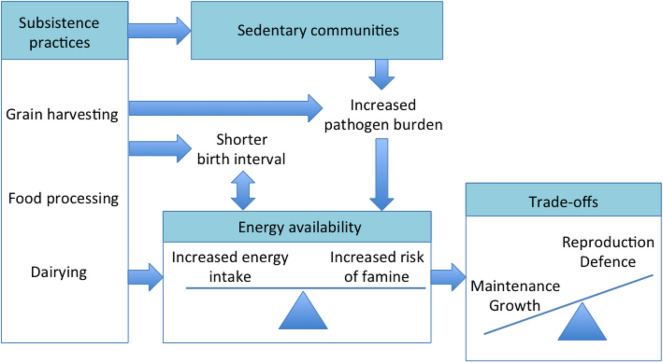
Over recent millennia, human populations have regularly reconstructed their subsistence niches, changing both how they obtain food and the conditions in which they live. For example, over the last 12,000 years the vast majority of human populations shifted from foraging to practicing different forms of agriculture. The shift to farming is widely understood to have impacted several aspects of human demography and biology, including mortality risk, population growth, adult body size, and physical markers of health. However, these trends have not been integrated within an over-arching conceptual framework, and there is poor understanding of why populations tended to increase in population size during periods when markers of health deteriorated. Here, we offer a novel conceptual approach based on evolutionary life history theory. This theory assumes that energy availability is finite and must be allocated in competition between the functions of maintenance, growth, reproduction, and defence. In any given environment, and at any given stage during the life-course, natural selection favours energy allocation strategies that maximise fitness. We argue that the origins of agriculture involved profound transformations in human life history strategies, impacting both the availability of energy and the way that it was allocated between life history functions in the body. Although overall energy supply increased, the diet composition changed, while sedentary populations were challenged by new infectious burdens. We propose that this composite new ecological niche favoured increased energy allocation to defence (immune function) and reproduction, thus reducing the allocation to growth and maintenance. We review evidence in support of this hypothesis and highlight how further work could address both heterogeneity and specific aspects of the origins of agriculture in more detail. Our approach can be applied to many other transformations of the human subsistence niche, and can shed new light on the way that health, height, life expectancy, and fertility patterns are changing in association with globalization and nutrition transition.
在最近的几千年里,人类种群经常重建他们的生存生态位,改变他们获取食物的方式和生活条件。例如,在过去的 12000 年里,绝大多数人类种群从采集食物转变为从事不同形式的农业。农业的转变被广泛认为影响了人类人口统计学和生物学的几个方面,包括死亡率风险、人口增长、成人身体大小和健康的生理标志。然而,这些趋势并没有被整合到一个总体概念框架中,对于为什么在健康标志物恶化的时期,人口往往会增加,人们的理解也很差。在这里,我们提供了一种基于进化生活史理论的新的概念方法。该理论假设能量供应是有限的,必须在维持、生长、繁殖和防御等功能之间的竞争中进行分配。在任何给定的环境中,以及在生命过程中的任何给定阶段,自然选择都有利于最大限度地提高适应性的能量分配策略。我们认为,农业的起源涉及到人类生活史策略的深刻转变,这既影响了能量的可利用性,也影响了它在身体内生命史功能之间的分配方式。虽然总的能量供应增加了,但饮食结构发生了变化,而久坐不动的人口受到了新的传染病负担的挑战。我们提出,这种复合的新生态位有利于更多地将能量分配给防御(免疫功能)和繁殖,从而减少了对生长和维持的分配。我们回顾了支持这一假设的证据,并强调了如何进一步的工作可以更详细地解决农业起源的异质性和具体方面。我们的方法可以应用于人类生存生态位的许多其他转变,并且可以为与全球化和营养转型相关的健康、身高、预期寿命和生育率模式的变化方式提供新的见解。