Liu Jiaxin, Qin Qiwei, Zhang Xinyue, Li Chen, Yu Yepin, Huang Xiaohong, Mukama Omar, Zeng Lingwen, Wang Shaowen
Joint Laboratory of Guangdong Province and Hong Kong Region on Marine Bioresource Conservation and Exploitation, College of Marine Sciences, South China Agricultural University, Guangzhou, China.
Guangdong Laboratory for Lingnan Modern Agriculture, College of Marine Sciences, South China Agricultural University, Guangzhou, China.
Front Microbiol. 2020 May 19;11:886. doi: 10.3389/fmicb.2020.00886. eCollection 2020.
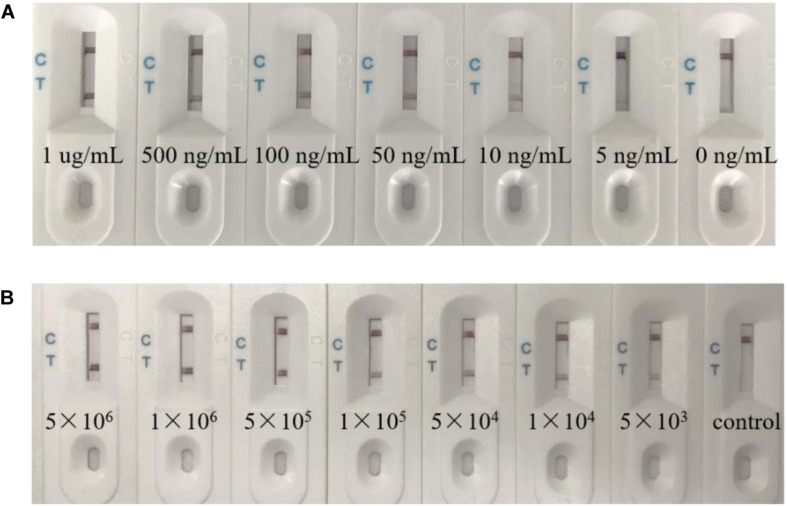
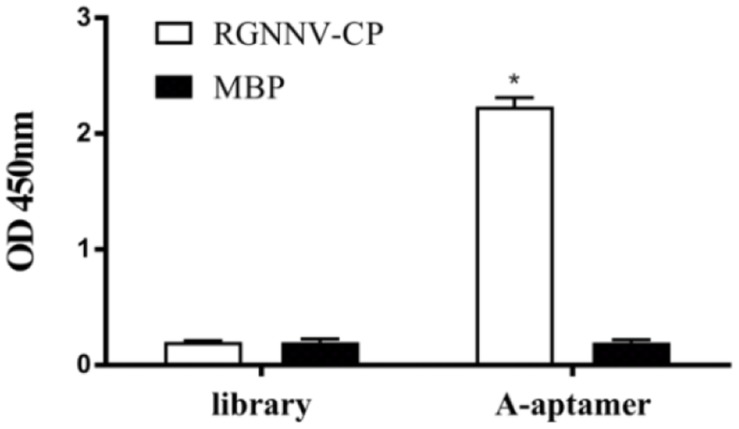
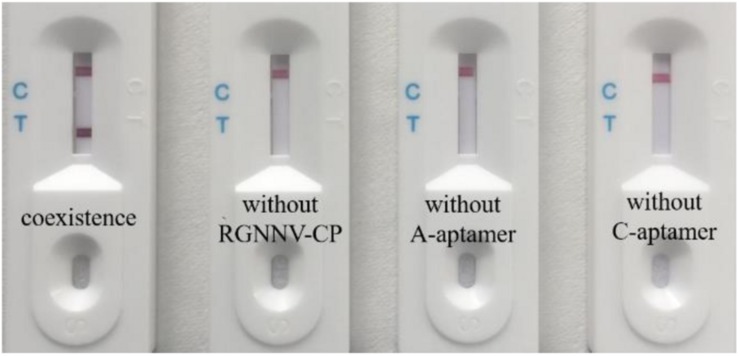
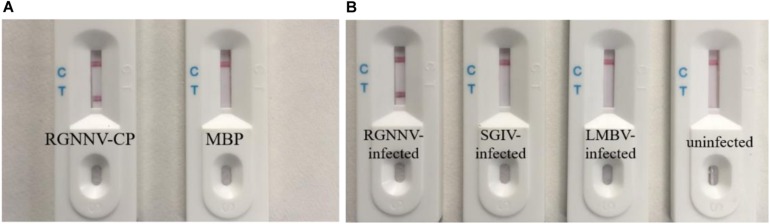
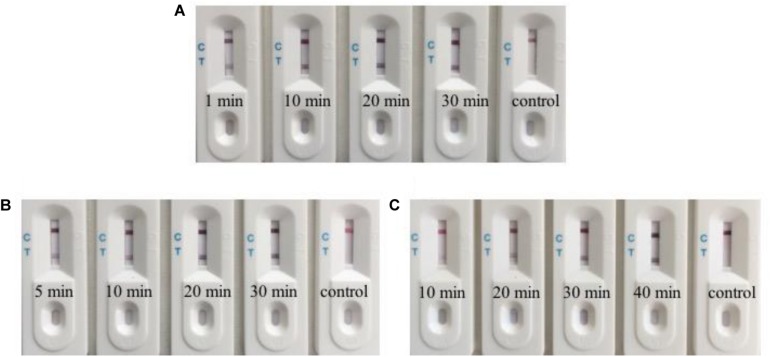
Nervous necrosis virus (NNV) has infected more than 50 fish species worldwide, and has caused serious economic losses in the aquaculture industries. However, there is no effective antiviral therapy. The development of a rapid and accurate point-of-care diagnostic method for the prevention and control of NNV infection is urgently required. Commonly used methods for NNV detection include the cell culture-based assay, antibody-based assay and polymerase chain reaction (PCR)-based assay. However, these methods have disadvantages as they are time-consuming and complex. In the present study, we developed a simple and sensitive aptamer-based lateral flow biosensor (LFB) method for the rapid detection of red-spotted grouper nervous necrosis virus (RGNNV). An aptamer is a single-stranded nucleotide, which can specifically bind to the target and has many advantages. Based on a previously selected aptamer, which specifically bound to the coat protein of RGNNV (RGNNV-CP), two modified aptamers were used in this study. One aptamer was used for magnetic bead enrichment and the other was used for isothermal strand displacement amplification (SDA). After amplification, the product was further tested by the LFB, and the detection results were observed by the naked eye within 5 min with high specificity and sensitivity. The LFB method could detect RGNNV-CP protein as low as 5 ng/mL or 5 × 10 RGNNV-infected GB (grouper brain) cells. Overall, it is the first application of a LFB combined with aptamer in the rapid diagnosis of virus from aquatic animals, which provides a new option for virus detection in aquaculture.
神经坏死病毒(NNV)已感染全球50多种鱼类,并给水产养殖业造成了严重的经济损失。然而,目前尚无有效的抗病毒疗法。因此,迫切需要开发一种快速、准确的即时诊断方法来预防和控制NNV感染。常用的NNV检测方法包括基于细胞培养的检测法、基于抗体的检测法和基于聚合酶链反应(PCR)的检测法。然而,这些方法存在耗时且复杂的缺点。在本研究中,我们开发了一种简单、灵敏的基于适配体的侧向流动生物传感器(LFB)方法,用于快速检测红斑石斑鱼神经坏死病毒(RGNNV)。适配体是一种单链核苷酸,能够特异性结合靶标,具有诸多优点。基于先前筛选出的能特异性结合RGNNV衣壳蛋白(RGNNV-CP)的适配体,本研究使用了两种修饰后的适配体。一种适配体用于磁珠富集,另一种用于等温链置换扩增(SDA)。扩增后,产物通过LFB进一步检测,5分钟内即可肉眼观察到检测结果,具有高特异性和高灵敏度。该LFB方法能够检测低至5 ng/mL的RGNNV-CP蛋白或5×10个感染RGNNV的石斑鱼脑组织(GB)细胞。总体而言,这是LFB与适配体结合在水生动物病毒快速诊断中的首次应用,为水产养殖中的病毒检测提供了新的选择。