Guerrero Jennifer, Regedanz Elizabeth, Lu Liu, Ruan Jianhua, Bisaro David M, Sunter Garry
Department of Biology, South Texas Center for Emerging Infectious Diseases, University of Texas at San Antonio, San Antonio, TX, United States.
Department of Molecular Genetics, Center for Applied Plant Sciences, Center for RNA Biology, Infectious Diseases Institute, The Ohio State University, Columbus, OH, United States.
Front Plant Sci. 2020 May 19;11:591. doi: 10.3389/fpls.2020.00591. eCollection 2020.
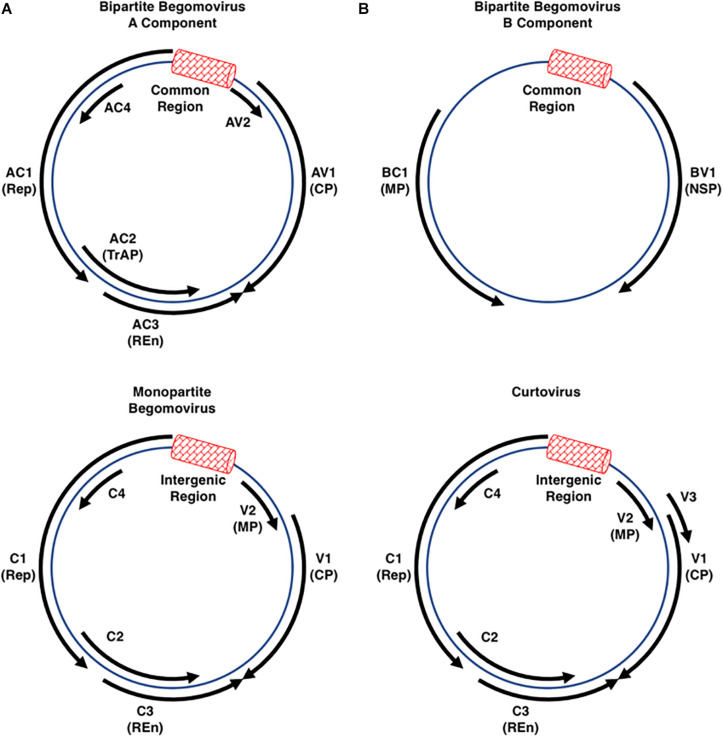
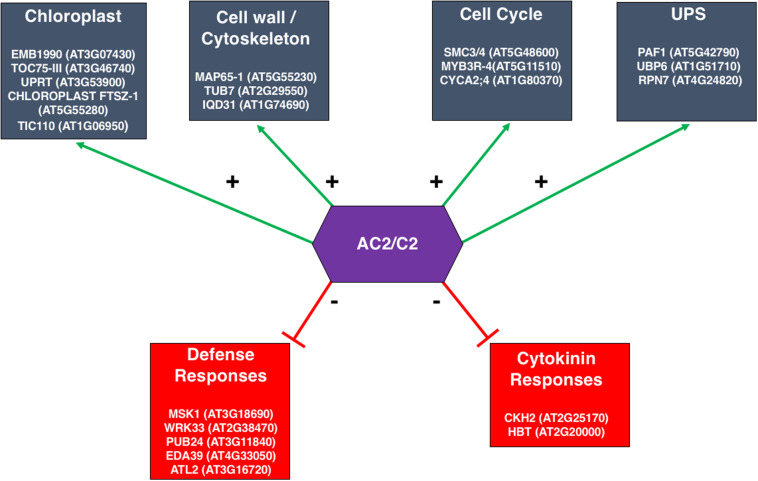
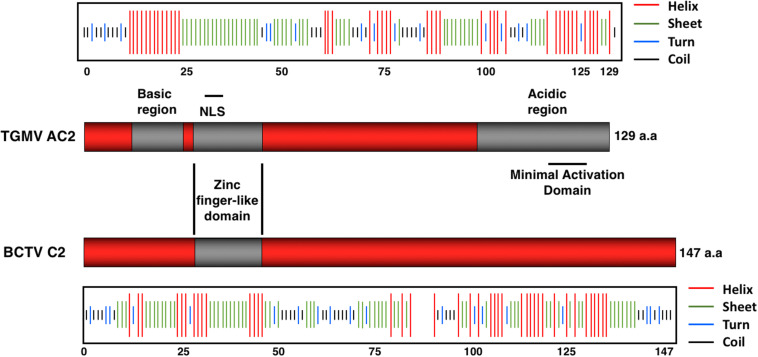
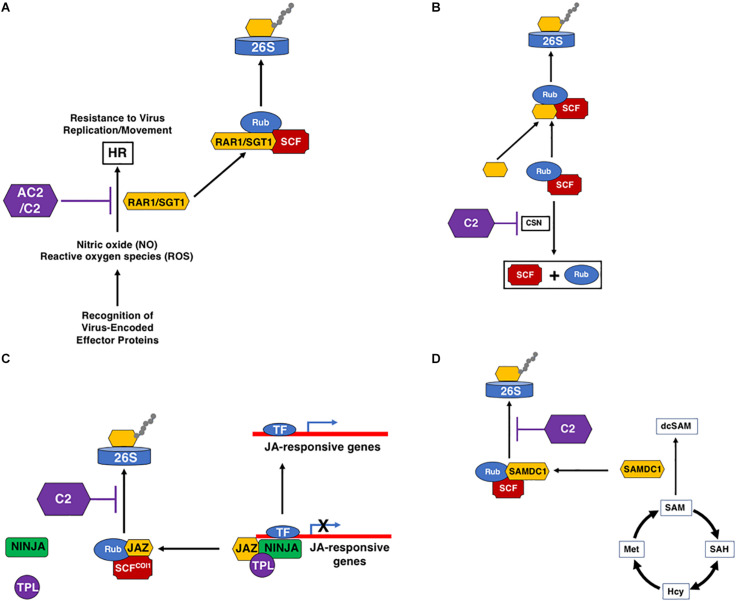
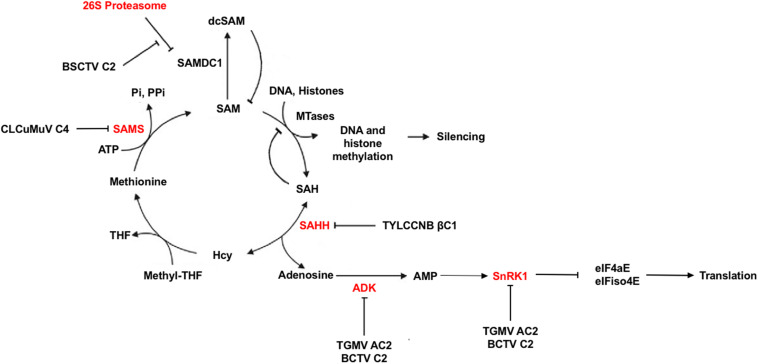
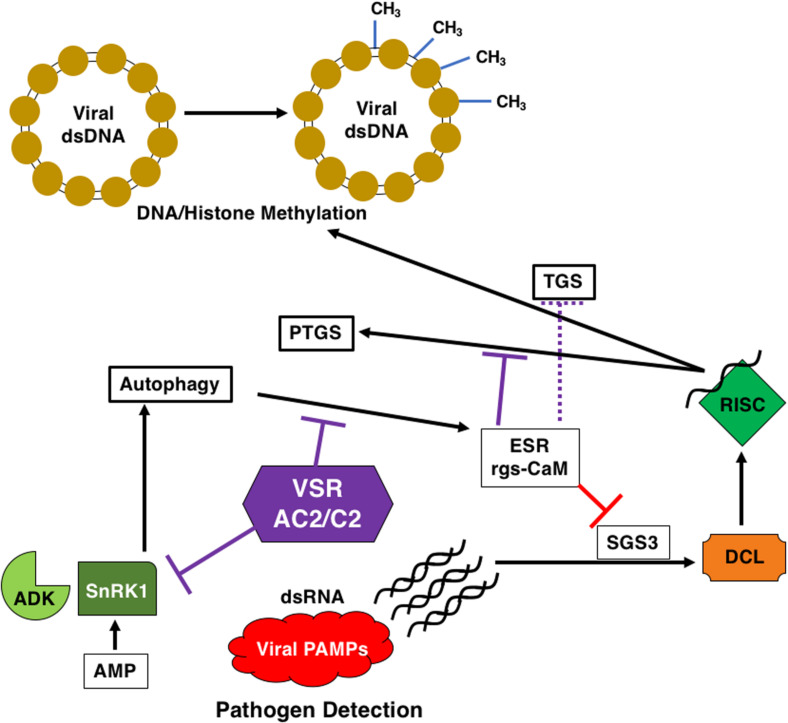
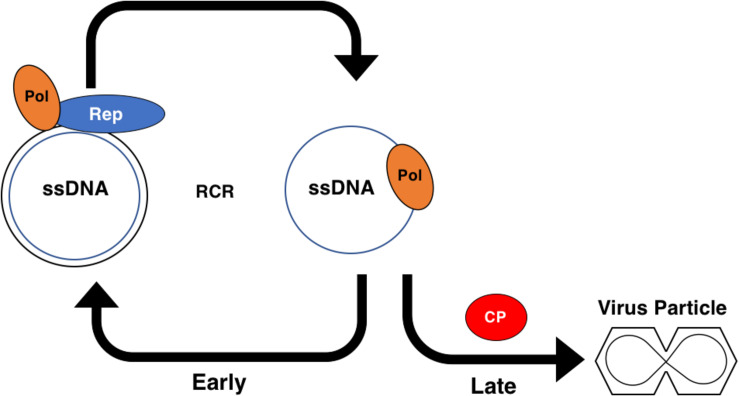
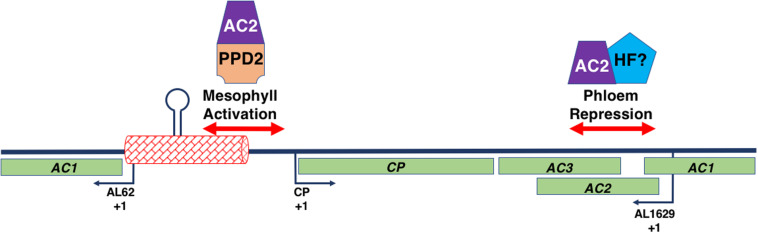
Geminiviruses are a significant group of emergent plant DNA viruses causing devastating diseases in food crops worldwide, including the Southern United States, Central America and the Caribbean. Crop failure due to geminivirus-related disease can be as high as 100%. Improved global transportation has enhanced the spread of geminiviruses and their vectors, supporting the emergence of new, more virulent recombinant strains. With limited coding capacity, geminiviruses encode multifunctional proteins, including the gene that plays a central role in the viral replication-cycle through suppression of host defenses and transcriptional regulation of the late viral genes. The AC2/C2 proteins encoded by mono- and bipartite geminiviruses and the curtovirus C2 can be considered virulence factors, and are known to interact with both basal and inducible systems. This review highlights the role of AC2/C2 in affecting the jasmonic acid and salicylic acid (JA and SA) pathways, the ubiquitin/proteasome system (UPS), and RNA silencing pathways. In addition to suppressing host defenses, AC2/C2 play a critical role in regulating expression of the coat protein during the viral life cycle. It is important that the timing of CP expression is regulated to ensure that ssDNA is converted to dsDNA early during an infection and is sequestered late in the infection. How AC2 interacts with host transcription factors to regulate CP expression is discussed along with how computational approaches can help identify critical host networks targeted by geminivirus AC2 proteins. Thus, the role of AC2/C2 in the viral life-cycle is to prevent the host from mounting an efficient defense response to geminivirus infection and to ensure maximal amplification and encapsidation of the viral genome.
双生病毒是一类重要的新兴植物DNA病毒,在包括美国南部、中美洲和加勒比地区在内的全球粮食作物中引发毁灭性病害。由双生病毒相关病害导致的作物歉收率可能高达100%。全球交通运输的改善加速了双生病毒及其传播媒介的扩散,促使新的、毒性更强的重组毒株出现。由于编码能力有限,双生病毒编码多功能蛋白,包括通过抑制宿主防御和对病毒晚期基因进行转录调控,在病毒复制周期中发挥核心作用的基因。单分体和双分体双生病毒以及菜豆金色花叶病毒属C2编码的AC2/C2蛋白可被视为毒力因子,已知它们能与基础系统和诱导系统相互作用。本综述重点介绍了AC2/C2在影响茉莉酸和水杨酸(JA和SA)途径、泛素/蛋白酶体系统(UPS)以及RNA沉默途径方面的作用。除了抑制宿主防御外,AC2/C2在病毒生命周期中调控外壳蛋白的表达也起着关键作用。重要的是要调控外壳蛋白表达的时机,以确保在感染早期单链DNA转化为双链DNA,并在感染后期被隔离。文中讨论了AC2如何与宿主转录因子相互作用以调控外壳蛋白的表达,以及计算方法如何有助于识别双生病毒AC2蛋白靶向的关键宿主网络。因此,AC2/C2在病毒生命周期中的作用是防止宿主对双生病毒感染产生有效的防御反应,并确保病毒基因组的最大程度扩增和衣壳化。