Anhembi Morumbi University, School of Medicine, Avenida Deputado Benedito Matarazzo 6070, Sao Jose dos Campos-SP, Brazil 12230-002.
Federal University of Sao Paulo (UNIFESP), Post-Graduation Program in Sciences of Human Movement and Rehabilitation, Avenida Ana Costa 95, Santos-SP, Brazil 11060-001.
Oxid Med Cell Longev. 2020 May 15;2020:6874260. doi: 10.1155/2020/6874260. eCollection 2020.
To investigate the effects of a combined herbal medicine Miodesin™ on the inflammatory response of key cells involved in the acute and chronic inflammatory processes as well as the possible epigenetic involvement.
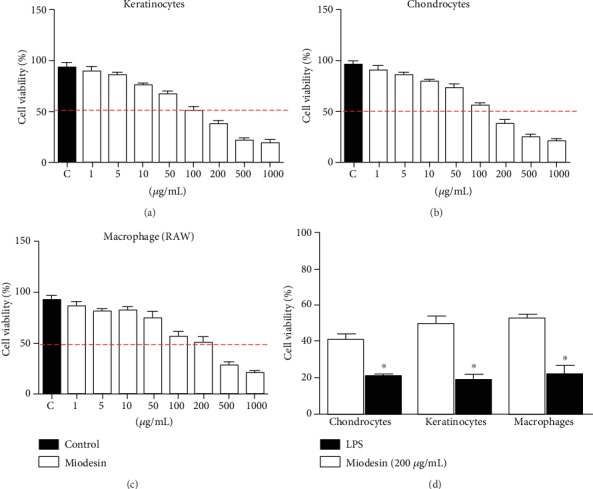
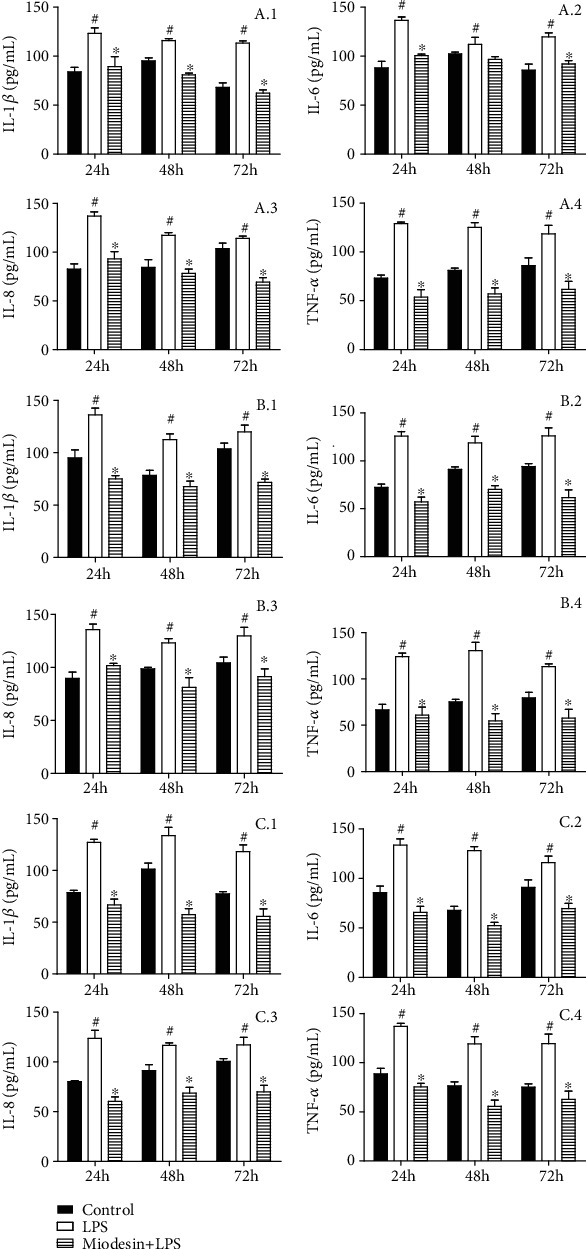
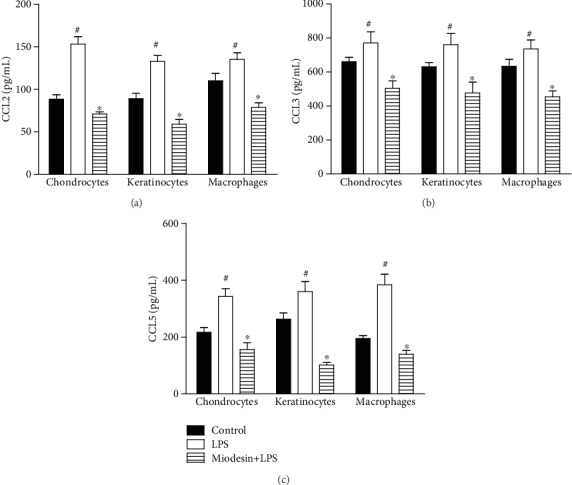
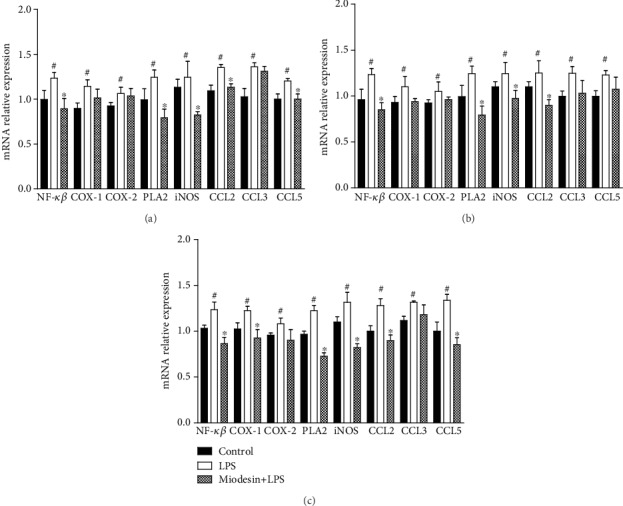
After the establishment of the IC dose, the chondrocyte, keratinocyte, and macrophage cell lines were pretreated for 2 hours with Miodesin™ (200 g/mL) and stimulated with LPS (1 g/mL) for 24 hours. The supernatant was used to measure the levels of cytokines (IL-1, IL-6, IL-8, and TNF-) and chemokines (CCL2, CCL3, and CCL5), and the cells were used to extract the mRNA for the transcription factor (NF-), inflammatory enzymes (COX-1, COX-2, PLA2, and iNOS), and chemokines (CCL2, CCL3, and CCL5).
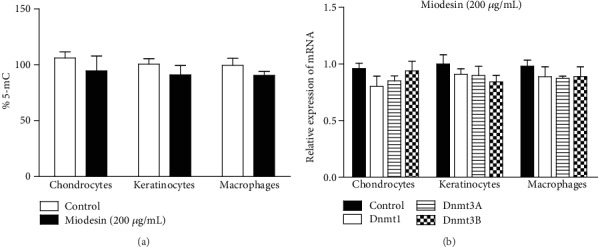
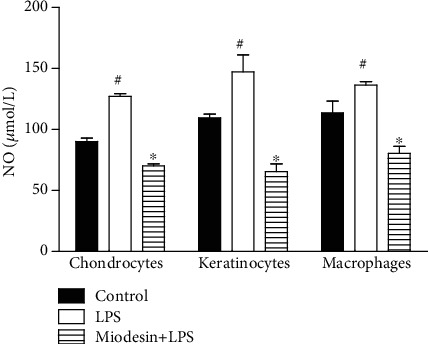
Miodesin™ inhibited the release of LPS-induced cytokines (IL-1, IL-6, IL-8, and TNF-; < 0.01) and chemokines (CCL2, CCL3, and CCL5; < 0.01) and the expression of the transcription factor (NF-; < 0.01), inflammatory enzymes (COX-1, COX-2, PLA2, iNOS; < 0.01), and chemokines (CCL2, CCL3, and CCL5; < 0.01). In addition, the evaluation of epigenetic mechanism revealed that Miodesin™ did not induce changes in DNA methylation, assuring the genetic safeness of the compound in terms of the inflammatory response.
Miodesin™ presents anti-inflammatory properties, inhibiting hyperactivation of chondrocytes, keratinocytes, and macrophages, involving epigenetics in such effects.
研究一种复方草药 Miodesin™ 对急性和慢性炎症过程中关键细胞炎症反应的影响,以及可能的表观遗传参与。
在确定 IC 剂量后,用 Miodesin™(200μg/ml)预处理软骨细胞、角质形成细胞和巨噬细胞细胞系 2 小时,然后用 LPS(1μg/ml)刺激 24 小时。使用上清液测量细胞因子(IL-1、IL-6、IL-8 和 TNF-)和趋化因子(CCL2、CCL3 和 CCL5)的水平,并提取转录因子(NF-)、炎症酶(COX-1、COX-2、PLA2 和 iNOS)和趋化因子(CCL2、CCL3 和 CCL5)的 mRNA。
Miodesin™ 抑制 LPS 诱导的细胞因子(IL-1、IL-6、IL-8 和 TNF-;<0.01)和趋化因子(CCL2、CCL3 和 CCL5;<0.01)的释放以及转录因子(NF-;<0.01)、炎症酶(COX-1、COX-2、PLA2、iNOS;<0.01)和趋化因子(CCL2、CCL3 和 CCL5;<0.01)的表达。此外,对表观遗传机制的评估表明,Miodesin™ 不会诱导 DNA 甲基化变化,从而确保该化合物在炎症反应方面的遗传安全性。
Miodesin™ 具有抗炎特性,可抑制软骨细胞、角质形成细胞和巨噬细胞的过度激活,涉及到这种作用的表观遗传。