Aix Marseille Univ, IRD, AP-HM, SSA, VITROME, Marseille, France.
IHU-Méditerranée Infection, Marseille, France.
Front Cell Infect Microbiol. 2020 May 19;10:207. doi: 10.3389/fcimb.2020.00207. eCollection 2020.
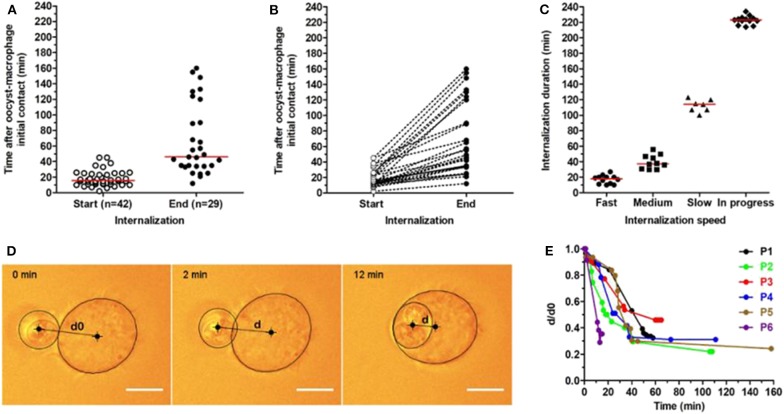
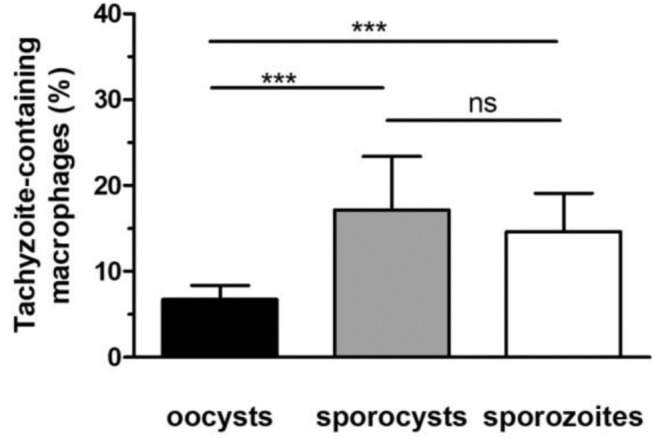
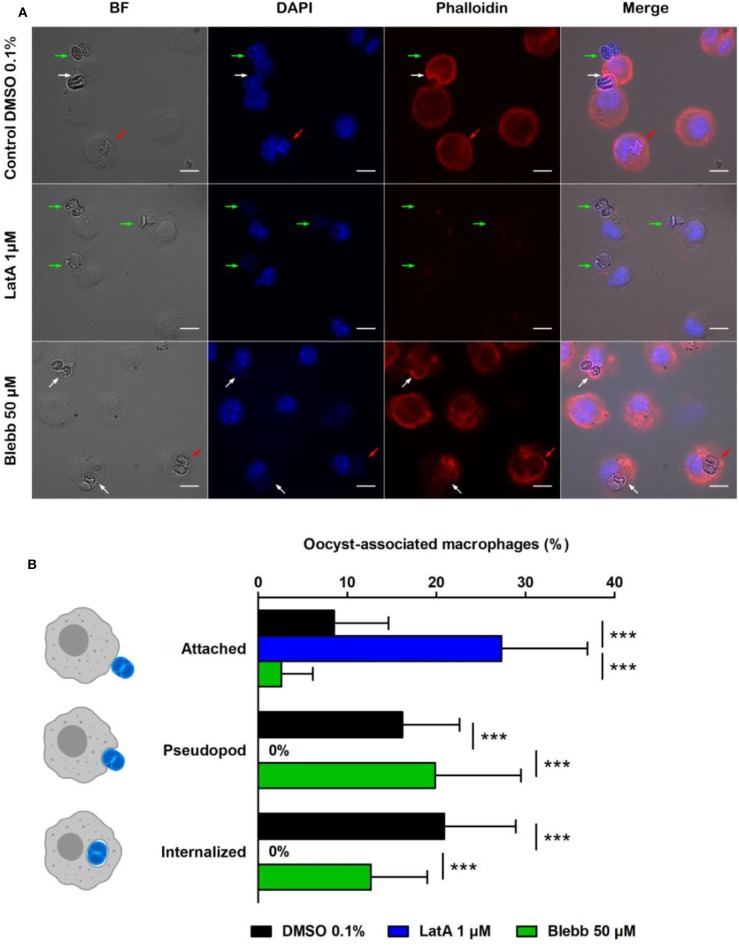
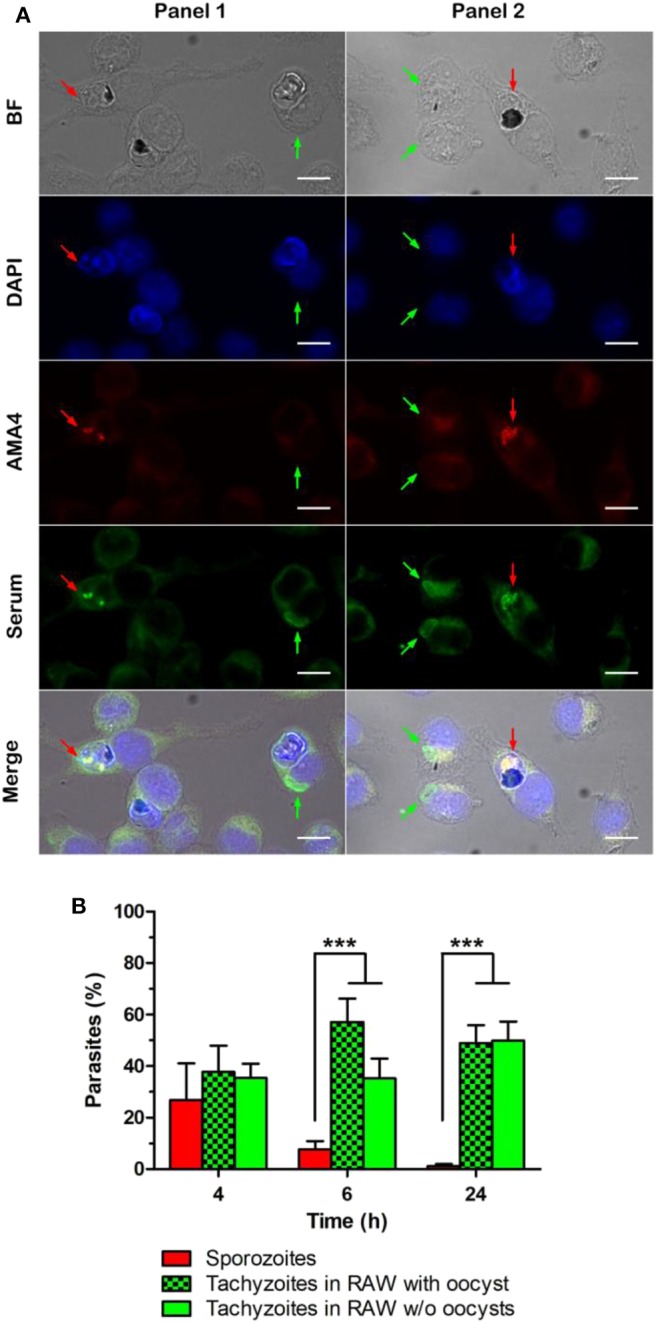
Oocysts are the environmentally resistant stage of the protozoan parasite . They are responsible for foodborne infections in humans and animals worldwide. Infectious oocysts contain sporozoites that have to exit the sporocyst and oocyst walls to initiate replication of the parasite within the host tissues. Given their robustness and resistance to chemical degradation, it is still unclear how the oocyst and sporocyst walls release the sporozoites. This process called excystation is thought to occur in the small intestine as a result of the combined action of digestive agents, yet to be identified. By using an oocyst-macrophage co-culture platform, we previously demonstrated that the excystation of sporozoites and their differentiation into replicative tachyzoites could occur in absence of digestive factors, following phagocytosis by macrophages. Here, we further characterize the dynamics of the oocyst phagocytosis at the single-cell level by using optical tweezers and micropipette aspiration techniques. Our results show that the oocyst internalization kinetics can vary among a given population of macrophages, but similar processes and dynamics could be observed. Most of the cells manipulate oocysts for ~15 min before internalizing them in typically 30 min. This process mainly involves the actin cytoskeleton of the macrophages. Liberated sporozoites within macrophages then differentiate into tachyzoites within 4-6 h following oocyst-macrophage contact. Tachyzoites appear to develop better in macrophages challenged with free sporocysts or sporozoites than with whole oocysts, suggesting that opening of the oocyst wall is one of the most limiting steps for sporozoite excystation completion.
卵囊是原生动物寄生虫的环境抗性阶段。它们是导致全球人类和动物食源性感染的罪魁祸首。传染性卵囊含有孢子,孢子必须离开孢子囊和卵囊壁,才能在宿主组织内开始寄生虫的复制。鉴于它们的坚固性和对化学降解的抵抗力,目前尚不清楚卵囊和孢子囊壁如何释放孢子。这个过程称为出囊,据认为是在小肠中由于尚未确定的消化剂的共同作用而发生的。通过使用卵囊-巨噬细胞共培养平台,我们之前已经证明,在没有消化因素的情况下,巨噬细胞吞噬后,孢子的出囊和分化为复制性速殖子可以发生。在这里,我们使用光镊和微吸管抽吸技术在单细胞水平上进一步研究了卵囊吞噬的动力学。我们的结果表明,在给定的巨噬细胞群体中,卵囊的内化动力学可能会有所不同,但可以观察到类似的过程和动力学。大多数细胞在将卵囊内化之前,会操纵卵囊约 15 分钟,通常需要 30 分钟。这个过程主要涉及巨噬细胞的肌动蛋白细胞骨架。释放到巨噬细胞内的游离孢子在与卵囊-巨噬细胞接触后 4-6 小时内分化为速殖子。速殖子似乎在受到游离孢子囊或孢子的挑战的巨噬细胞中比在完整的卵囊中发育得更好,这表明卵囊壁的打开是完成孢子出囊的最关键步骤之一。