Abril Ana G, Carrera Mónica, Böhme Karola, Barros-Velázquez Jorge, Rama José-Luis R, Calo-Mata Pilar, Sánchez-Pérez Angeles, Villa Tomás G
Departamento de Microbiología y Parasitología, Facultad de Farmacia, Campus Sur, Universidad de Santiago de Compostela, 15782 Santiago de Compostela, Spain.
Marine Research Institute (IIM), Spanish National Research Council (CSIC), Eduardo Cabello 6, 36208 Vigo, Spain.
Antibiotics (Basel). 2020 Jun 4;9(6):302. doi: 10.3390/antibiotics9060302.
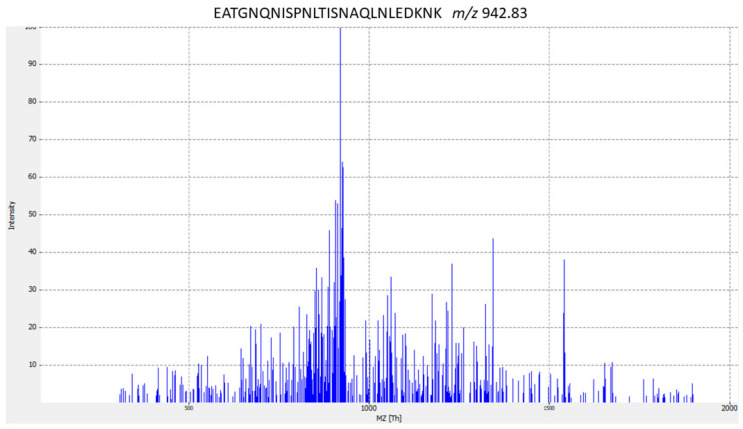
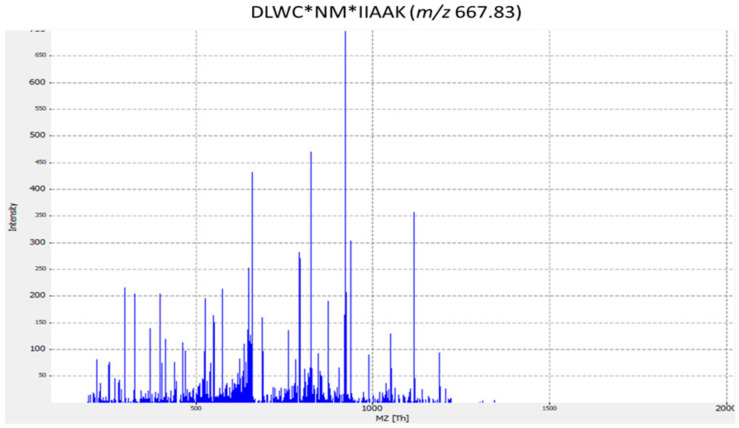
spp. are major mastitis pathogens present in dairy products, which produce a variety of virulence factors that are involved in streptococcal pathogenicity. These include neuraminidase, pyrogenic exotoxin, and M protein, and in addition they might produce bacteriocins and antibiotic-resistance proteins. Unjustifiable misuse of antimicrobials has led to an increase in antibiotic-resistant bacteria present in foodstuffs. Identification of the mastitis-causing bacterial strain, as well as determining its antibiotic resistance and sensitivity is crucial for effective therapy. The present work focused on the LC-ESI-MS/MS (liquid chromatography-electrospray ionization tandem mass spectrometry) analysis of tryptic digestion peptides from mastitis-causing spp. isolated from milk. A total of 2706 non-redundant peptides belonging to 2510 proteins was identified and analyzed. Among them, 168 peptides were determined, representing proteins that act as virulence factors, toxins, anti-toxins, provide resistance to antibiotics that are associated with the production of lantibiotic-related compounds, or play a role in the resistance to toxic substances. Protein comparisons with the NCBI database allowed the identification of 134 peptides as specific to spp., while two peptides (EATGNQNISPNLTISNAQLNLEDKNK and DLWCNMIIAAK) were found to be species-specific to . This proteomic repository might be useful for further studies and research work, as well as for the development of new therapeutics for the mastitis-causing strains.
某属细菌是乳制品中主要的乳腺炎病原体,它们会产生多种与链球菌致病性相关的毒力因子。这些毒力因子包括神经氨酸酶、致热外毒素和M蛋白,此外它们还可能产生细菌素和抗生素抗性蛋白。不合理地滥用抗菌药物导致食品中出现抗生素抗性细菌的情况增加。鉴定引起乳腺炎的细菌菌株,并确定其抗生素抗性和敏感性对于有效治疗至关重要。目前的工作重点是对从牛奶中分离出的引起乳腺炎的某属细菌的胰蛋白酶消化肽进行液相色谱 - 电喷雾电离串联质谱(LC - ESI - MS/MS)分析。共鉴定并分析了属于2510种蛋白质的2706条非冗余肽段。其中,确定了168条肽段,它们所代表的蛋白质可作为毒力因子、毒素、抗毒素,赋予对与羊毛硫抗生素相关化合物产生有关的抗生素的抗性,或在对有毒物质的抗性中发挥作用。与NCBI数据库进行蛋白质比较后,鉴定出134条肽段为某属细菌所特有,同时发现两条肽段(EATGNQNISPNLTISNAQLNLEDKNK和DLWCNMIIAAK)为另一属细菌所特有。这个蛋白质组库可能对进一步的研究工作以及开发针对引起乳腺炎的某属细菌菌株的新疗法有用。