Department of Pathology, Keck School of Medicine, University of Southern California, Los Angeles, CA 90033, USA; Integrative Stem Cell Center, China Medical University and Hospital, China Medical University, Taichung 404, Taiwan.
Department of Pathology, Keck School of Medicine, University of Southern California, Los Angeles, CA 90033, USA.
Dev Cell. 2020 Jun 8;53(5):561-576.e9. doi: 10.1016/j.devcel.2020.05.007.
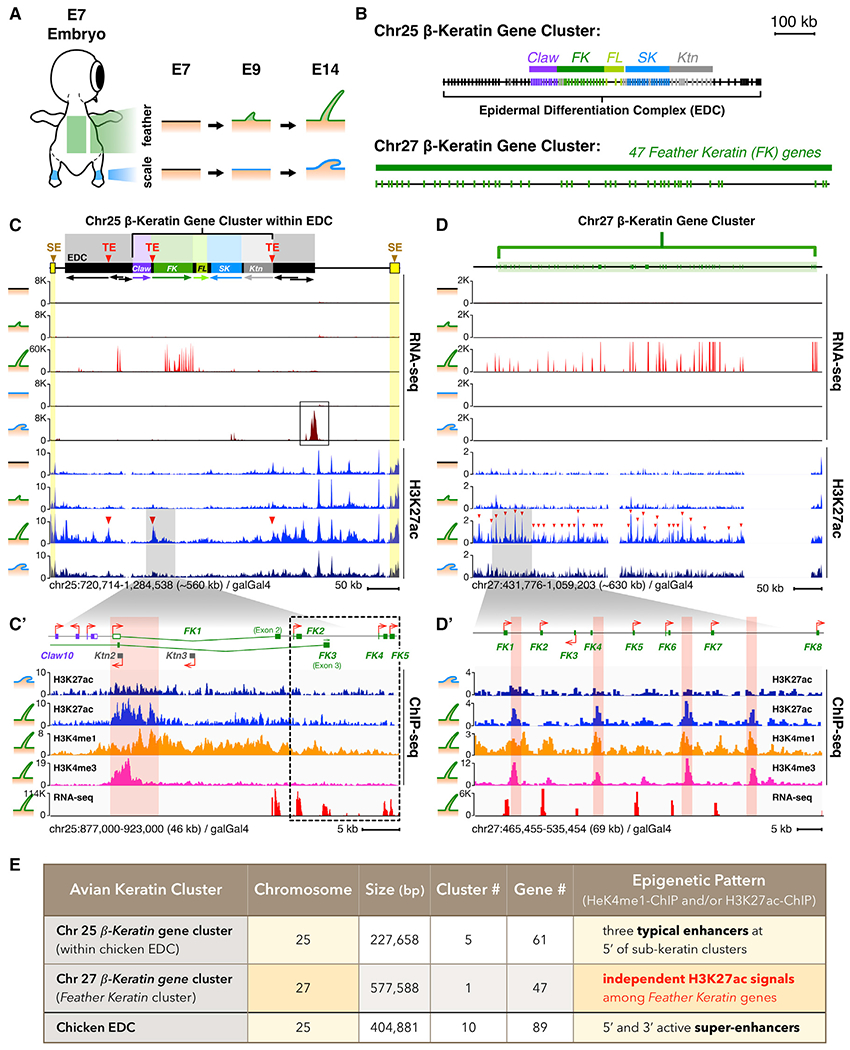
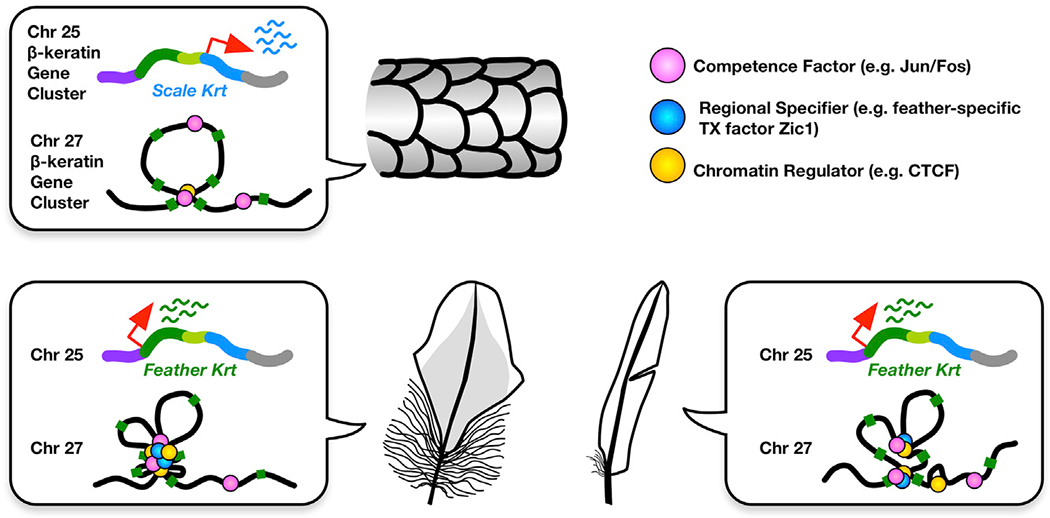
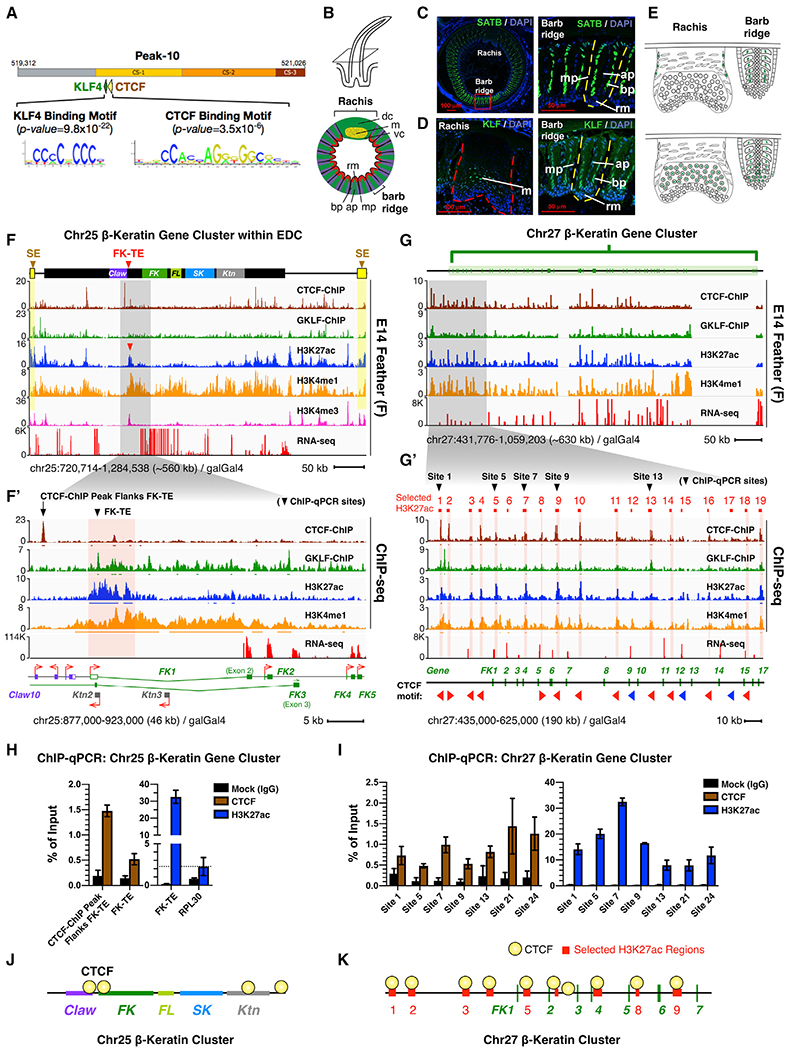
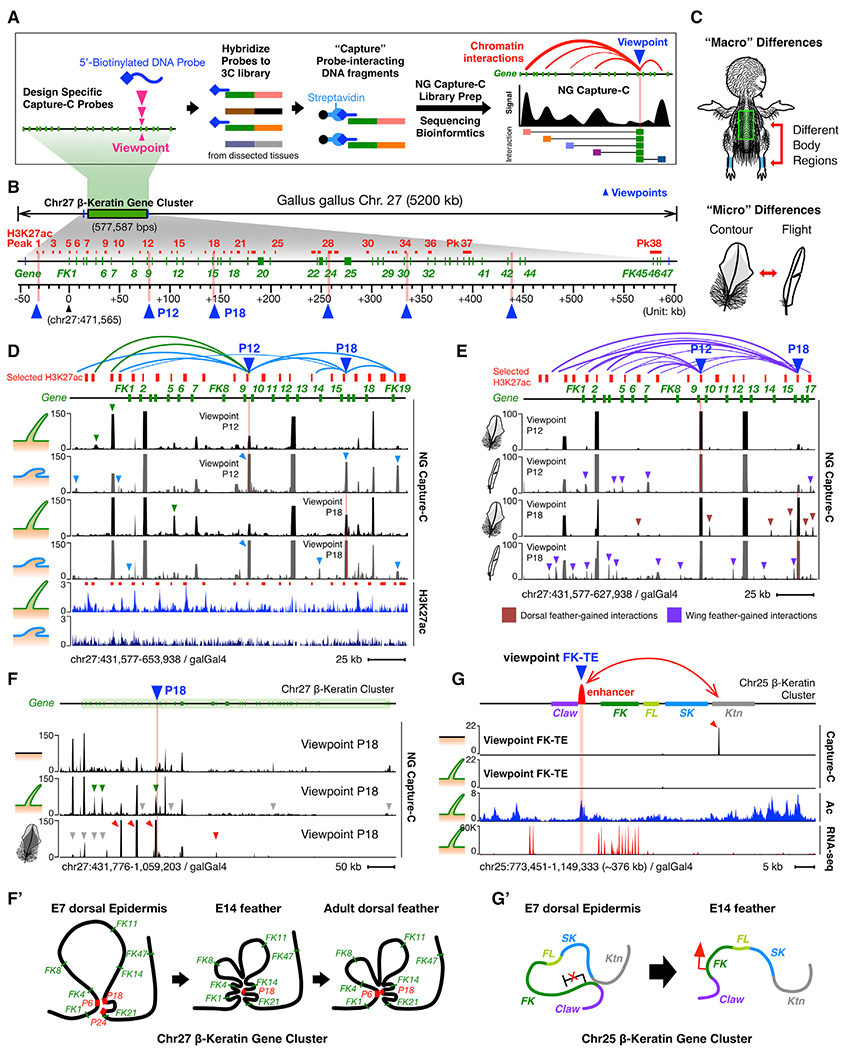
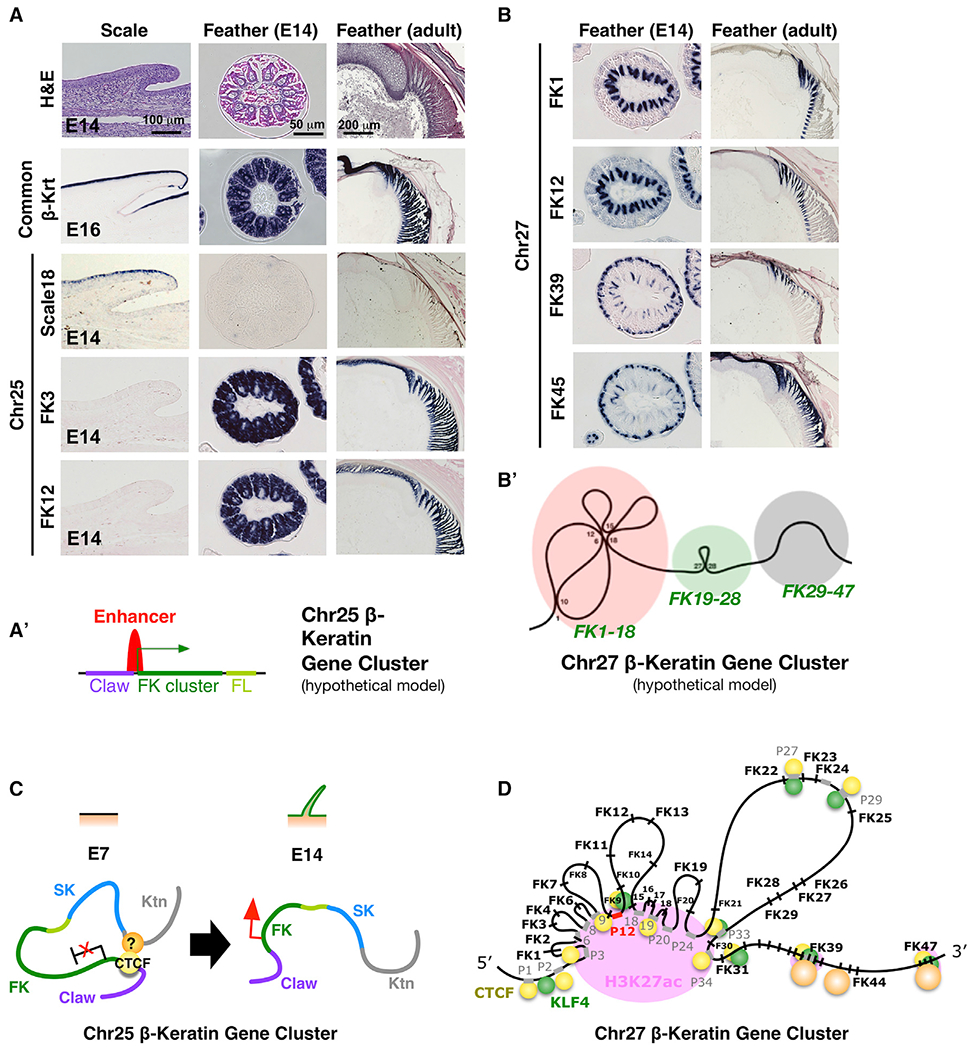
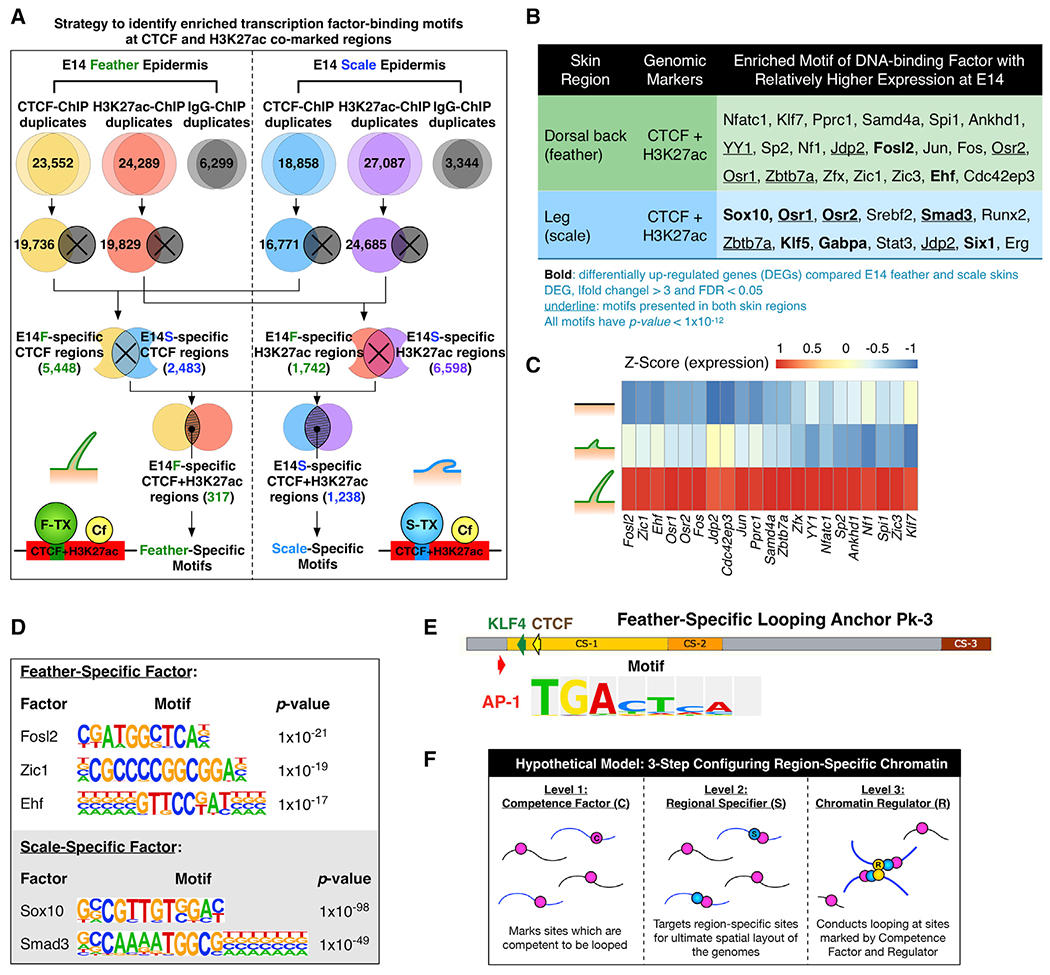
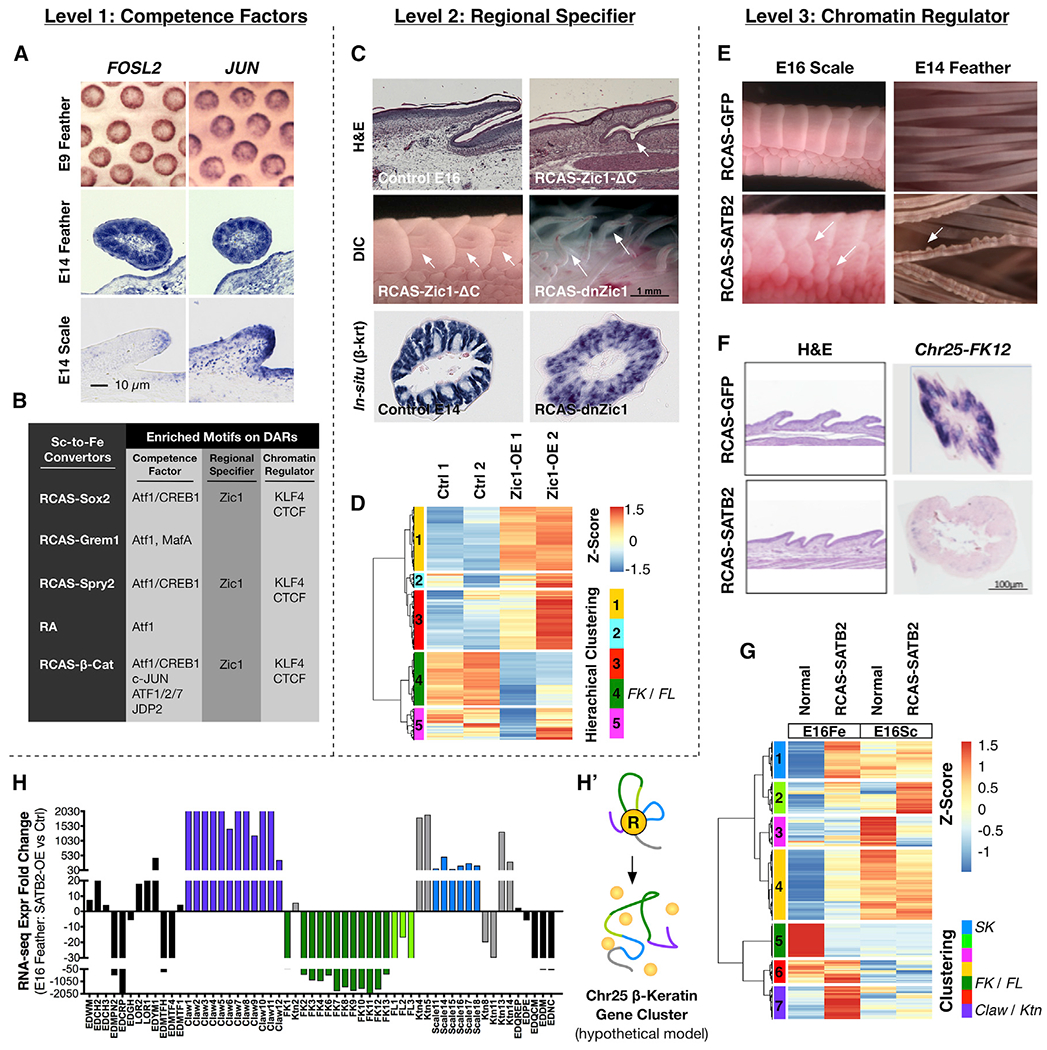
Regional specification is critical for skin development, regeneration, and evolution. The contribution of epigenetics in this process remains unknown. Here, using avian epidermis, we find two major strategies regulate β-keratin gene clusters. (1) Over the body, macro-regional specificities (scales, feathers, claws, etc.) established by typical enhancers control five subclusters located within the epidermal differentiation complex on chromosome 25; (2) within a feather, micro-regional specificities are orchestrated by temporospatial chromatin looping of the feather β-keratin gene cluster on chromosome 27. Analyses suggest a three-factor model for regional specification: competence factors (e.g., AP1) make chromatin accessible, regional specifiers (e.g., Zic1) target specific genome regions, and chromatin regulators (e.g., CTCF and SATBs) establish looping configurations. Gene perturbations disrupt morphogenesis and histo-differentiation. This chicken skin paradigm advances our understanding of how regulation of big gene clusters can set up a two-dimensional body surface map.
区域特化对于皮肤的发育、再生和演化至关重要。然而,目前我们对于表观遗传在这一过程中的作用还知之甚少。在这里,我们利用禽类表皮发现了两种调控β-角蛋白基因簇的主要策略。(1)在体表,由典型增强子建立的宏观区域特异性(鳞片、羽毛、爪子等),控制位于 25 号染色体表皮分化复合物内的五个亚簇;(2)在一根羽毛内,通过 27 号染色体上羽毛β-角蛋白基因簇的时空染色质环化来协调微区域特异性。分析表明,区域特化存在三因素模型:(1) 竞争因素(如 AP1)使染色质变得易于接近;(2) 区域指定因子(如 Zic1)靶向特定的基因组区域;(3) 染色质调节因子(如 CTCF 和 SATBs)建立环化结构。基因扰动会破坏形态发生和组织分化。该鸡皮模型推进了我们对大基因簇调控如何构建二维体表图谱的理解。