Zou Hecun, Wu Lan-Xiang, Tan Lihong, Shang Fei-Fei, Zhou Hong-Hao
Institute of Life Sciences, Chongqing Medical University, Chongqing, China.
Chongqing Medical and Pharmaceutical College, Chongqing, China.
Front Cell Dev Biol. 2020 May 25;8:347. doi: 10.3389/fcell.2020.00347. eCollection 2020.
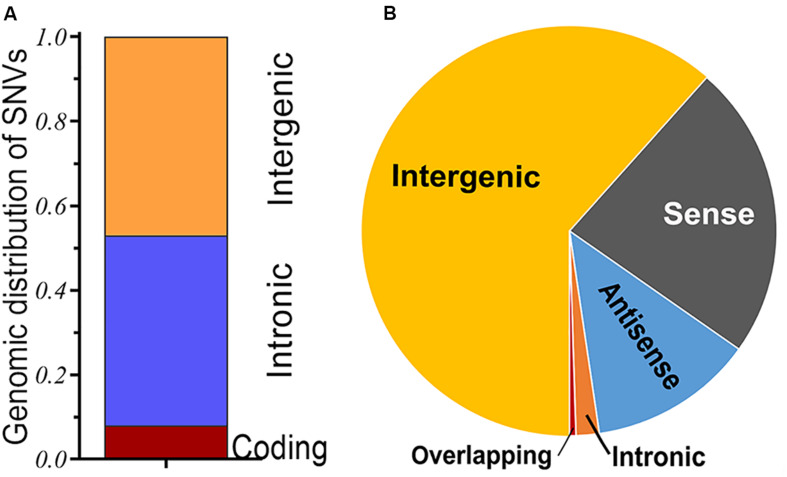
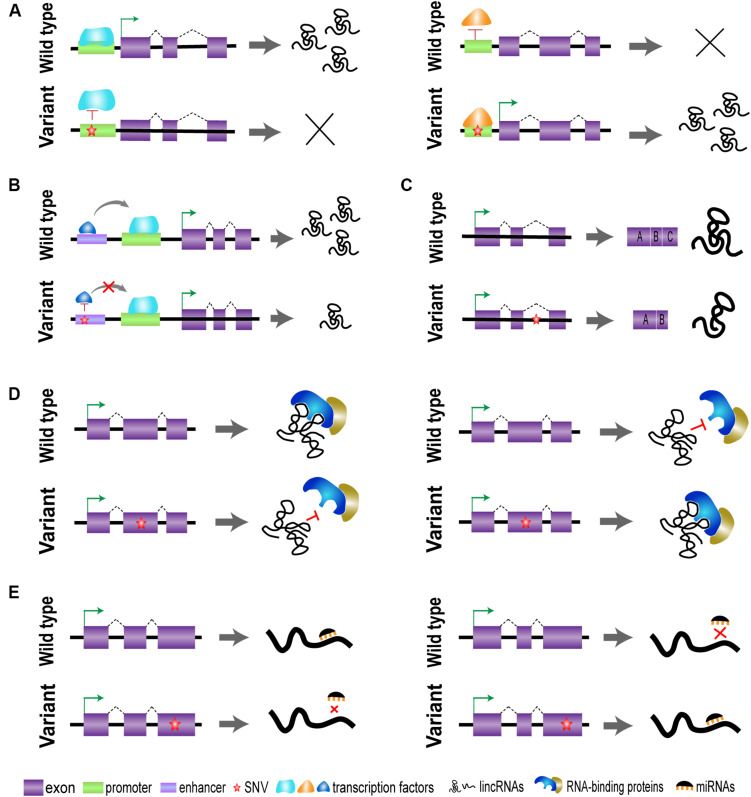
Single-nucleotide variants (SNVs) are the most common genetic variants and universally present in the human genome. Genome-wide association studies (GWASs) have identified a great number of disease or trait-associated variants, many of which are located in non-coding regions. Long intergenic non-protein coding RNAs (lincRNAs) are the major subtype of long non-coding RNAs; lincRNAs play crucial roles in various disorders and cellular models multiple mechanisms. With rapid growth in the number of the identified lincRNAs and genetic variants, there is great demand for an investigation of SNVs in lincRNAs. Hence, in this article, we mainly summarize the significant role of SNVs within human lincRNA regions. Some pivotal variants may serve as risk factors for the development of various disorders, especially cancer. They may also act as important regulatory signatures involved in the modulation of lincRNAs in a tissue- or disorder-specific manner. An increasing number of researches indicate that lincRNA variants would potentially provide additional options for genetic testing and disease risk assessment in the personalized medicine era.
单核苷酸变异(SNV)是最常见的基因变异,普遍存在于人类基因组中。全基因组关联研究(GWAS)已鉴定出大量与疾病或性状相关的变异,其中许多位于非编码区。长链基因间非编码RNA(lincRNA)是长链非编码RNA的主要亚型;lincRNA在多种疾病和细胞模型中通过多种机制发挥关键作用。随着已鉴定的lincRNA和基因变异数量的快速增长,对lincRNA中的SNV进行研究的需求很大。因此,在本文中,我们主要总结了SNV在人类lincRNA区域中的重要作用。一些关键变异可能是各种疾病尤其是癌症发生发展的危险因素。它们还可能作为重要的调控标记,以组织或疾病特异性方式参与lincRNA的调控。越来越多的研究表明,在个性化医疗时代,lincRNA变异可能为基因检测和疾病风险评估提供更多选择。