Boune Souad, Hu Peisheng, Epstein Alan L, Khawli Leslie A
Department of Pathology, University of Southern California, Keck School of Medicine, Los Angeles, CA 90089, USA.
Antibodies (Basel). 2020 Jun 10;9(2):22. doi: 10.3390/antib9020022.
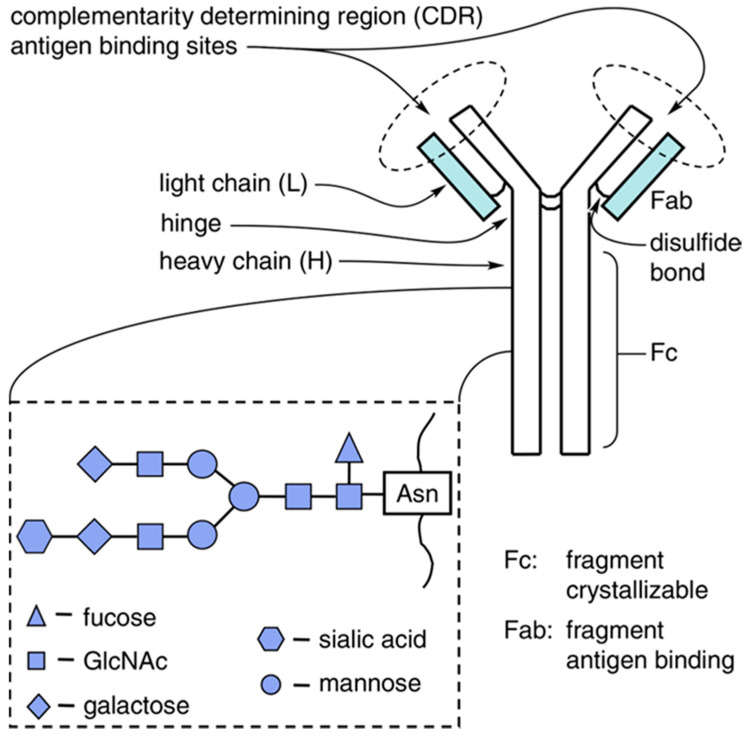
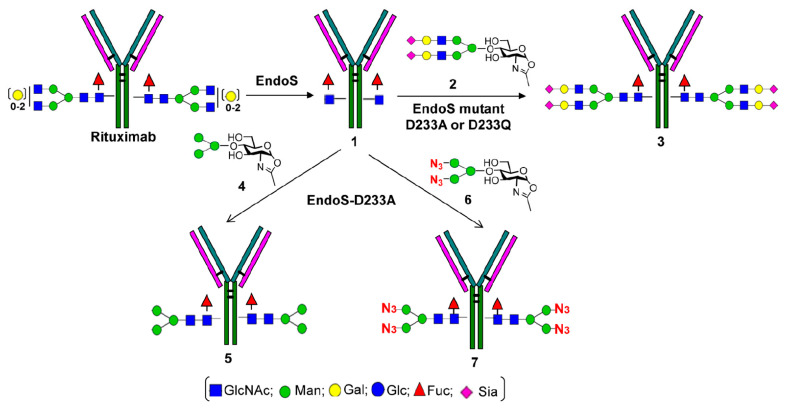
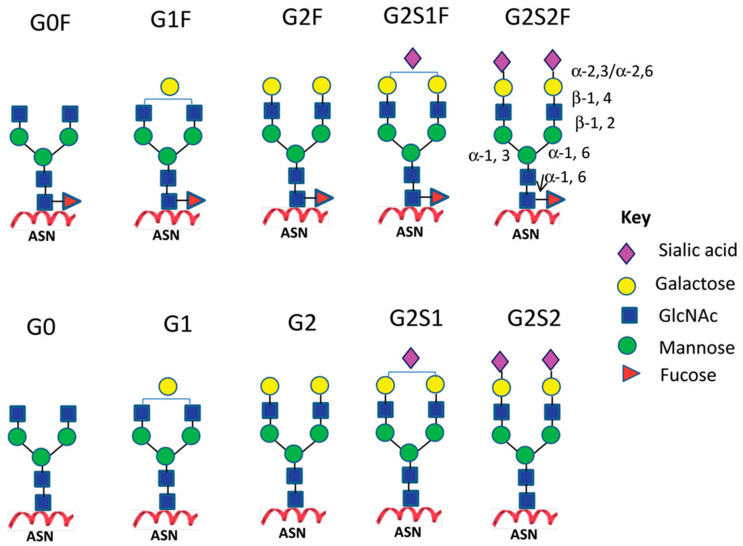
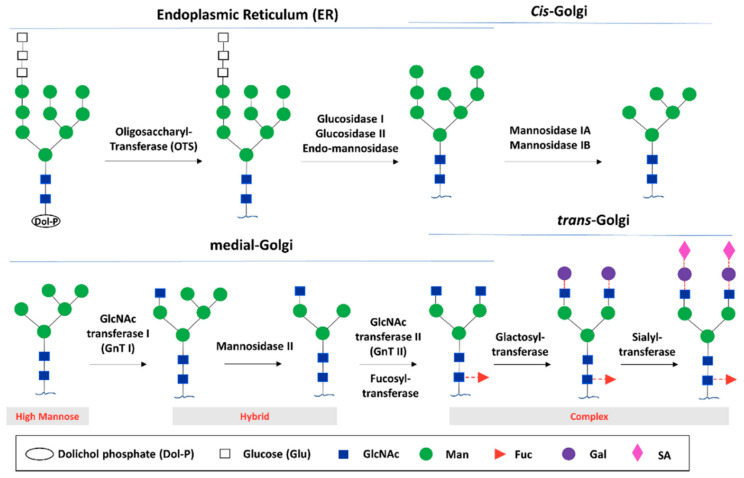
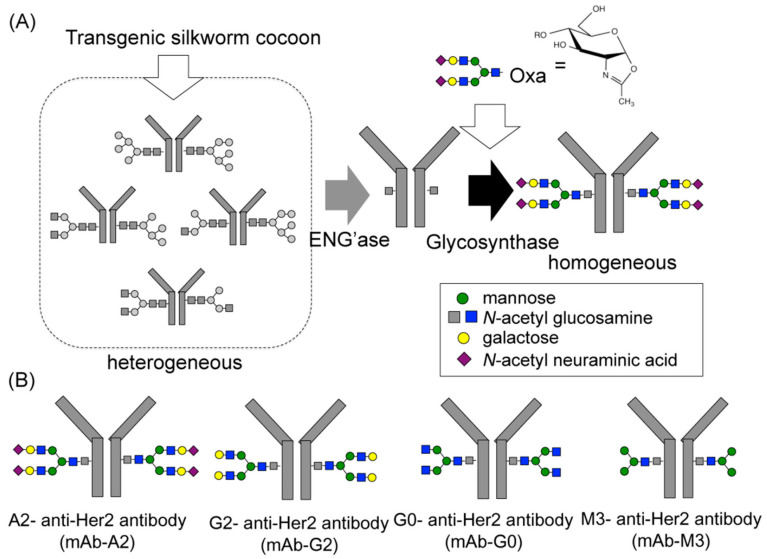
The development of recombinant therapeutic proteins has been a major revolution in modern medicine. Therapeutic-based monoclonal antibodies (mAbs) are growing rapidly, providing a potential class of human pharmaceuticals that can improve the management of cancer, autoimmune diseases, and other conditions. Most mAbs are typically of the immunoglobulin G (IgG) subclass, and they are glycosylated at the conserved asparagine position 297 (Asn-297) in the CH2 domain of the Fc region. Post-translational modifications here account for the observed high heterogeneity of glycoforms that may or not impact the stability, pharmacokinetics (PK), efficacy, and immunogenicity of mAbs. These modifications are also critical for the Fc receptor binding, and consequently, key antibody effector functions including antibody-dependent cell-mediated cytotoxicity (ADCC) and complement-dependent cytotoxicity (CDC). Moreover, mAbs produced in non-human cells express oligosaccharides that are not normally found in serum IgGs might lead to immunogenicity issues when administered to patients. This review summarizes our understanding of the terminal sugar residues, such as mannose, sialic acids, fucose, or galactose, which influence therapeutic mAbs either positively or negatively in this regard. This review also discusses mannosylation, which has significant undesirable effects on the PK of glycoproteins, causing a decreased mAbs' half-life. Moreover, terminal galactose residues can enhance CDC activities and Fc-C1q interactions, and core fucose can decrease ADCC and Fc-FcγRs binding. To optimize the therapeutic use of mAbs, glycoengineering strategies are used to reduce glyco-heterogeneity of mAbs, increase their safety profile, and improve the therapeutic efficacy of these important reagents.
重组治疗性蛋白的发展是现代医学的一项重大变革。基于治疗用途的单克隆抗体(mAb)正在迅速发展,为一类潜在的人类药物提供了可能,这类药物可改善癌症、自身免疫性疾病及其他病症的治疗。大多数单克隆抗体通常属于免疫球蛋白G(IgG)亚类,它们在Fc区域CH2结构域中保守的天冬酰胺位置297(Asn-297)处发生糖基化。此处的翻译后修饰导致观察到的糖型高度异质性,这可能会或不会影响单克隆抗体的稳定性、药代动力学(PK)、疗效和免疫原性。这些修饰对于Fc受体结合也至关重要,因此对于包括抗体依赖性细胞介导的细胞毒性(ADCC)和补体依赖性细胞毒性(CDC)在内的关键抗体效应功能也很关键。此外,在非人类细胞中产生的单克隆抗体所表达的寡糖在血清IgG中通常不存在,当给予患者时可能会导致免疫原性问题。本综述总结了我们对末端糖残基的理解,例如甘露糖、唾液酸、岩藻糖或半乳糖,它们在这方面对治疗性单克隆抗体有正面或负面的影响。本综述还讨论了甘露糖基化,它对糖蛋白的药代动力学有显著的不良影响,导致单克隆抗体的半衰期缩短。此外,末端半乳糖残基可增强CDC活性和Fc-C1q相互作用,而核心岩藻糖可降低ADCC和Fc-FcγRs结合。为了优化单克隆抗体的治疗用途,采用糖工程策略来降低单克隆抗体的糖基异质性,提高其安全性,并改善这些重要试剂的治疗效果。