Australian Institute of Health Innovation, Macquarie University, Sydney, Australia.
Scand J Trauma Resusc Emerg Med. 2020 Jun 15;28(1):55. doi: 10.1186/s13049-020-00749-2.
Over the last two decades, Emergency Department (ED) crowding has become an increasingly common occurrence worldwide. Crowding is a complex and challenging issue that affects EDs' capacity to provide safe, timely and quality care. This review aims to map the research evidence provided by reviews to improve ED performance.
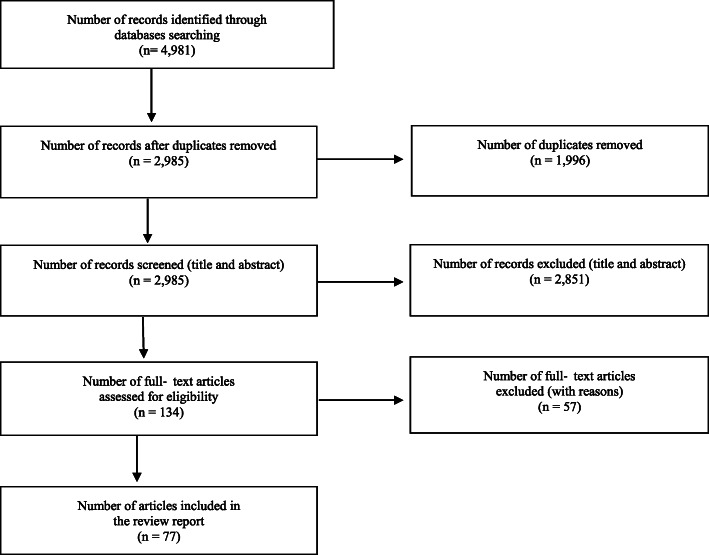
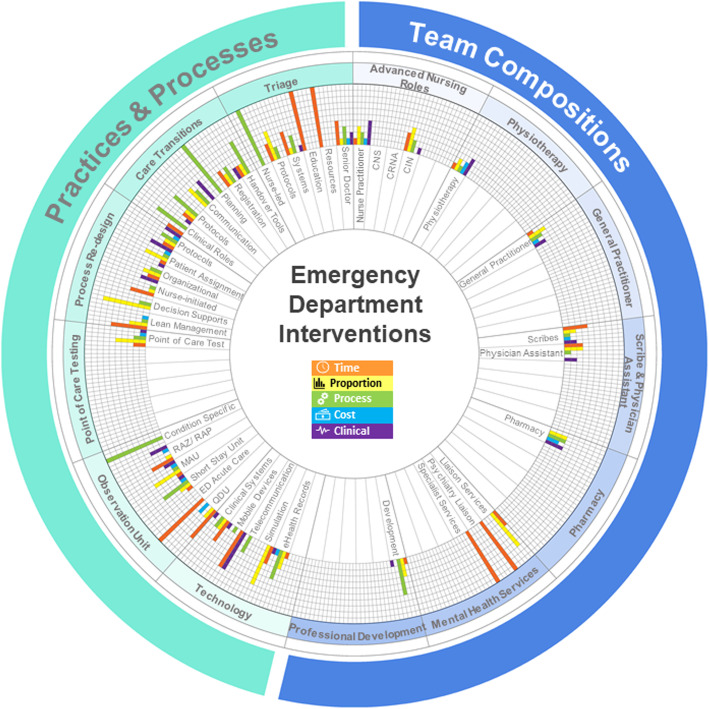
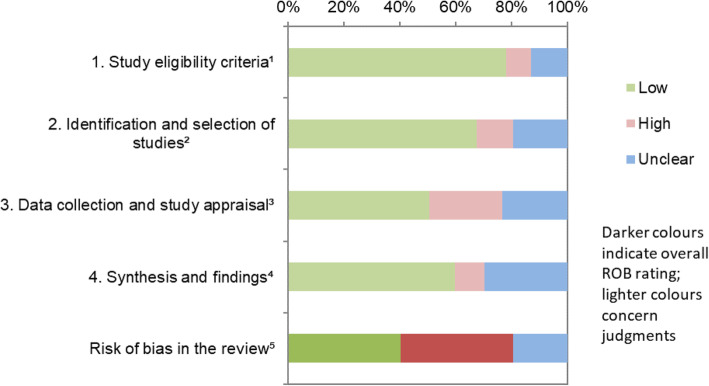
We performed a scoping review, searching Cochrane Database of Systematic Reviews, Scopus, EMBASE, CINAHL and PubMed (from inception to July 9, 2019; prospectively registered in Open Science Framework https://osf.io/gkq4t/). Eligibility criteria were: (1) review of primary research studies, published in English; (2) discusses a) how performance is measured in the ED, b) interventions used to improve ED performance and their characteristics, c) the role(s) of patients in improving ED performance, and d) the outcomes attributed to interventions used to improve ED performance; (3) focuses on a hospital ED context in any country or healthcare system. Pairs of reviewers independently screened studies' titles, abstracts, and full-texts for inclusion according to pre-established criteria. Discrepancies were resolved via discussion. Independent reviewers extracted data using a tool specifically designed for the review. Pairs of independent reviewers explored the quality of included reviews using the Risk of Bias in Systematic Reviews tool. Narrative synthesis was performed on the 77 included reviews. Three reviews identified 202 individual indicators of ED performance. Seventy-four reviews reported 38 different interventions to improve ED performance: 27 interventions describing changes to practice and process (e.g., triage, care transitions, technology), and a further nine interventions describing changes to team composition (e.g., advanced nursing roles, scribes, pharmacy). Two reviews reported on two interventions addressing the role of patients in ED performance, supporting patients' decisions and providing education. The outcomes attributed to interventions used to improve ED performance were categorised into five key domains: time, proportion, process, cost, and clinical outcomes. Few interventions reported outcomes across all five outcome domains.
ED performance measurement is complex, involving automated information technology mechanisms and manual data collection, reflecting the multifaceted nature of ED care. Interventions to improve ED performance address a broad range of ED processes and disciplines.
在过去的二十年中,急诊科(ED)拥挤已成为全球日益普遍的现象。拥挤是一个复杂且具有挑战性的问题,会影响 ED 提供安全、及时和高质量护理的能力。本综述旨在绘制综述提供的研究证据,以改善 ED 绩效。
我们进行了范围界定审查,在 Cochrane 系统评价数据库、Scopus、EMBASE、CINAHL 和 PubMed 中进行了搜索(从成立到 2019 年 7 月 9 日;前瞻性在 Open Science Framework https://osf.io/gkq4t/ 上注册)。纳入标准为:(1)对原始研究进行综述,以英文发表;(2)讨论 a)ED 中如何衡量绩效,b)用于提高 ED 绩效的干预措施及其特征,c)患者在提高 ED 绩效中的作用,以及 d)用于提高 ED 绩效的干预措施所带来的结果;(3)专注于任何国家或医疗保健系统中的医院 ED 背景。根据预先设定的标准, pairs of reviewers 独立筛选研究的标题、摘要和全文是否纳入。通过讨论解决差异。独立 reviewers 使用专门为该综述设计的工具提取数据。 pairs of independent reviewers 使用系统评价中的偏倚风险工具探索纳入综述的质量。对 77 项纳入的综述进行了叙述性综合。三篇综述确定了 202 个 ED 绩效指标。74 项综述报告了 38 种不同的干预措施以提高 ED 绩效:27 项干预措施描述了实践和流程的变化(例如分诊、护理过渡、技术),另有 9 项干预措施描述了团队组成的变化(例如高级护理角色、书记员、药剂师)。两篇综述报告了两项干预措施,以改善 ED 中患者的作用,支持患者的决策并提供教育。归因于用于改善 ED 绩效的干预措施的结果分为五个关键领域:时间、比例、过程、成本和临床结果。很少有干预措施报告了所有五个结果领域的结果。
ED 绩效衡量标准复杂,涉及自动化信息技术机制和手动数据收集,反映了 ED 护理的多方面性质。改善 ED 绩效的干预措施涉及广泛的 ED 流程和学科。