Department of Neurophysiology and Pathophysiology, University Medical Center Hamburg-Eppendorf, Hamburg, Germany.
Department of Psychology, University of Amsterdam, Amsterdam, Netherlands.
Elife. 2020 Jun 16;9:e54014. doi: 10.7554/eLife.54014.
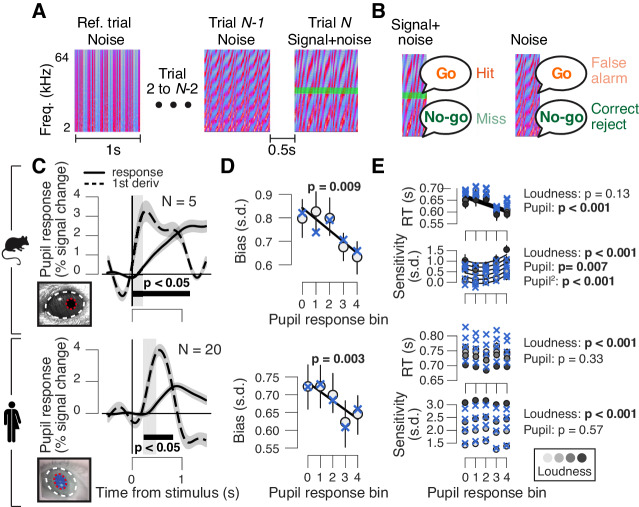
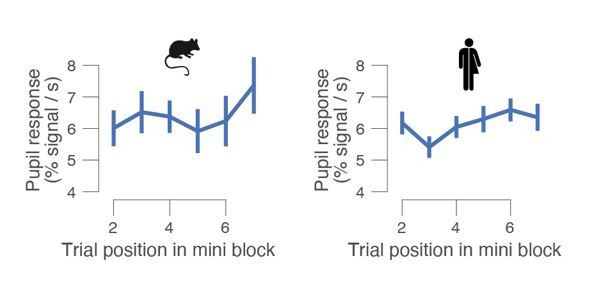
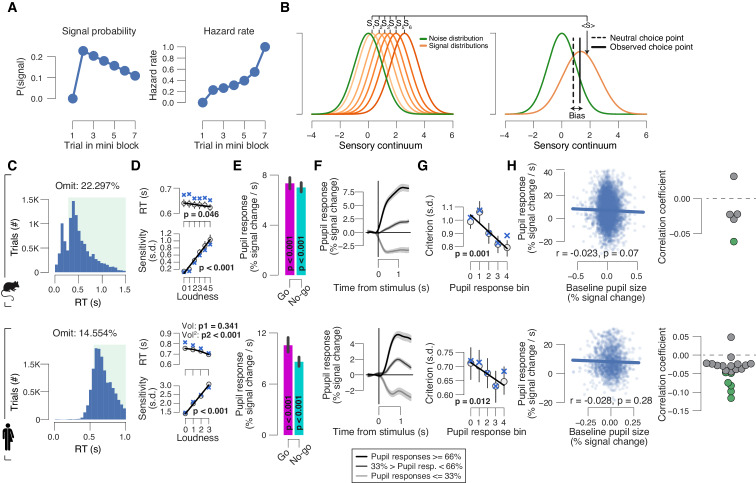
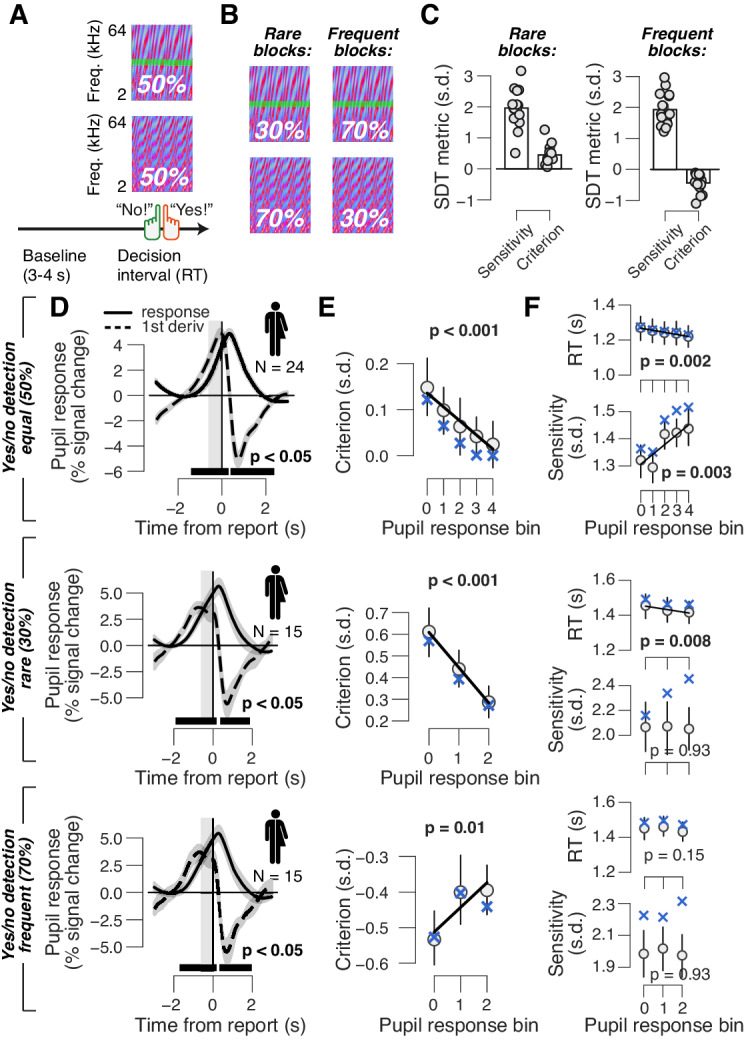
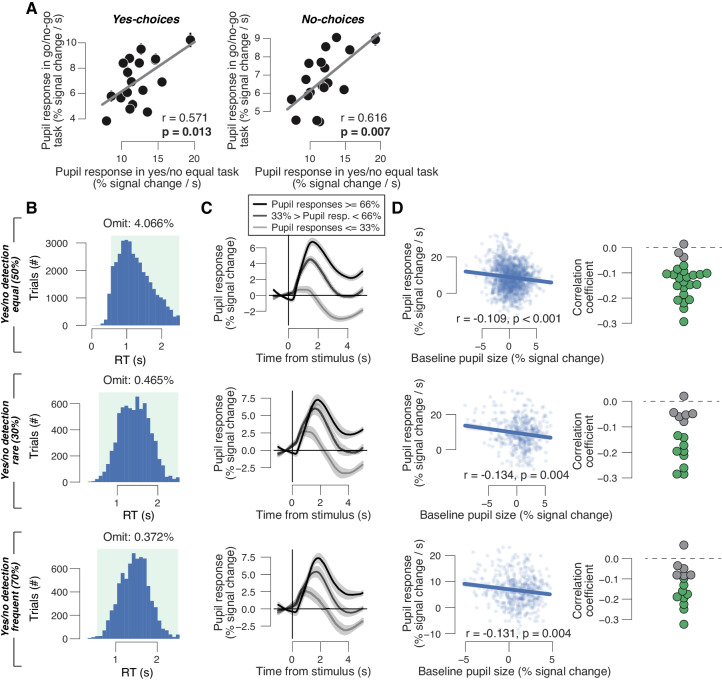
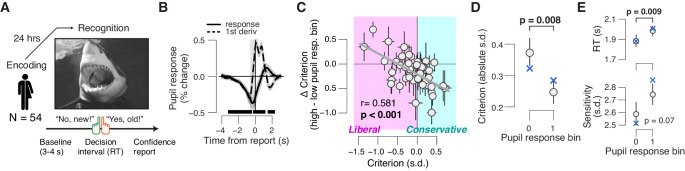
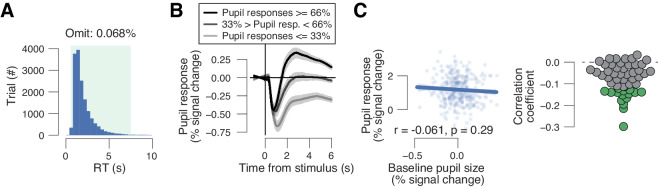
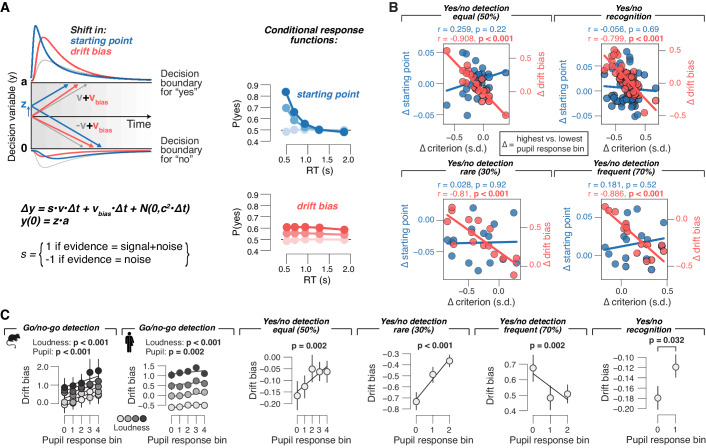
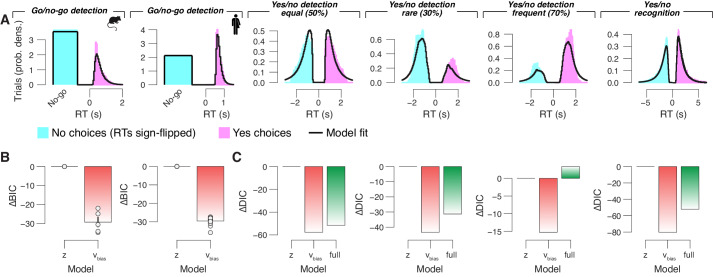
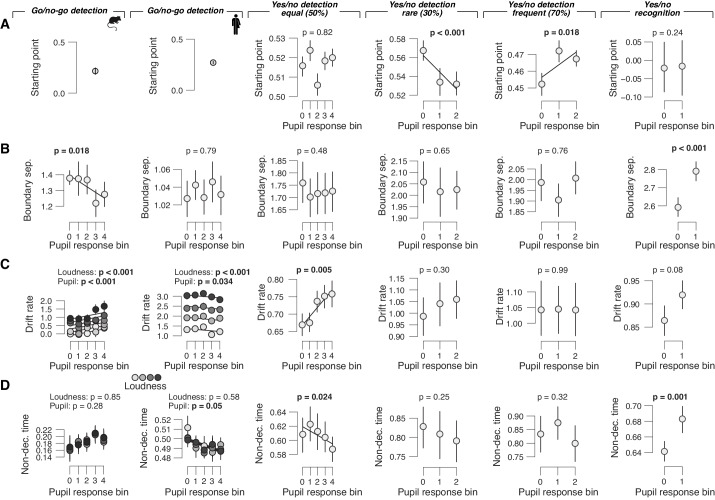
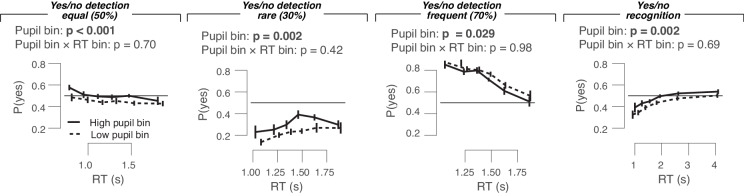
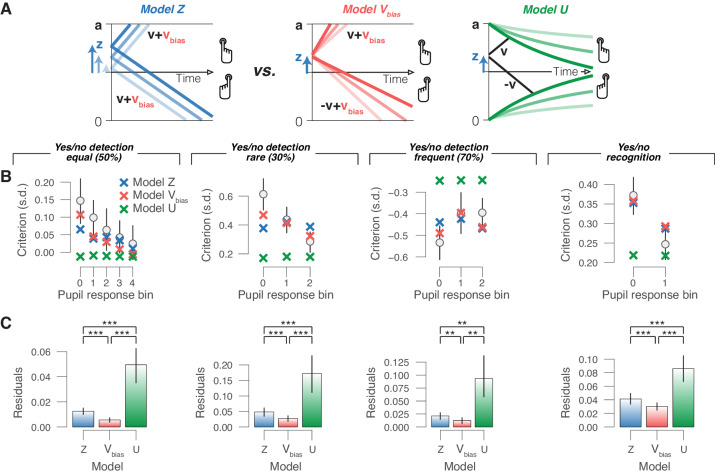
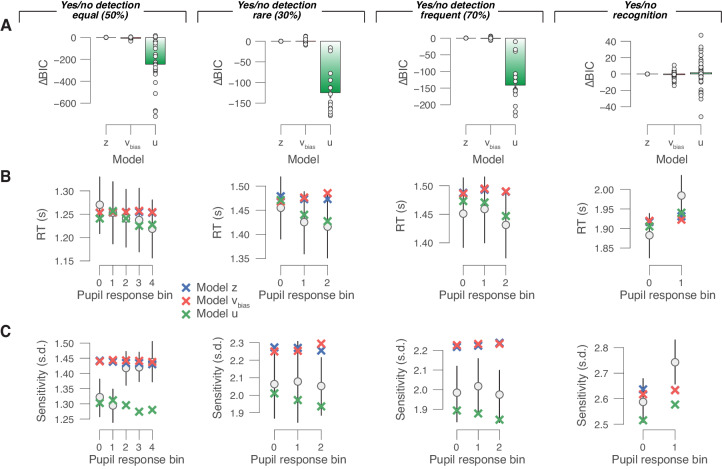
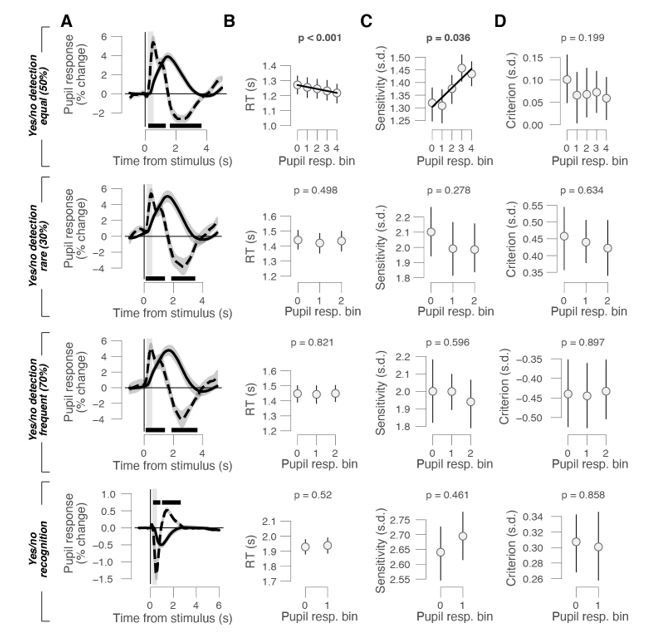
Decisions are often made by accumulating ambiguous evidence over time. The brain's arousal systems are activated during such decisions. In previous work in humans, we found that evoked responses of arousal systems during decisions are reported by rapid dilations of the pupil and track a suppression of biases in the accumulation of decision-relevant evidence (de Gee et al., 2017). Here, we show that this arousal-related suppression in decision bias acts on both conservative and liberal biases, and generalizes from humans to mice, and from perceptual to memory-based decisions. In challenging sound-detection tasks, the impact of spontaneous or experimentally induced choice biases was reduced under high phasic arousal. Similar bias suppression occurred when evidence was drawn from memory. All of these behavioral effects were explained by reduced evidence accumulation biases. Our results point to a general principle of interplay between phasic arousal and decision-making.
决策通常是通过随着时间的推移积累模糊证据来做出的。大脑的唤醒系统在这些决策中被激活。在之前的人类研究中,我们发现唤醒系统在决策过程中的诱发反应是通过瞳孔的快速扩张来报告的,并跟踪抑制决策相关证据积累中的偏差(de Gee 等人,2017)。在这里,我们表明,这种与唤醒相关的决策偏差抑制作用于保守和自由偏差,并且从人类扩展到老鼠,从基于感知的决策扩展到基于记忆的决策。在具有挑战性的声音检测任务中,在高相位唤醒下,自发或实验诱导的选择偏差的影响会降低。当从记忆中提取证据时,也会出现类似的偏差抑制。所有这些行为效应都可以用减少的证据积累偏差来解释。我们的结果表明了相位唤醒和决策之间相互作用的一般原则。