Department of Endocrinology and Diabetes Mellitus, Fukuoka University School of Medicine, Fukuoka 814-0180, Japan.
Int J Mol Sci. 2020 Jun 14;21(12):4239. doi: 10.3390/ijms21124239.
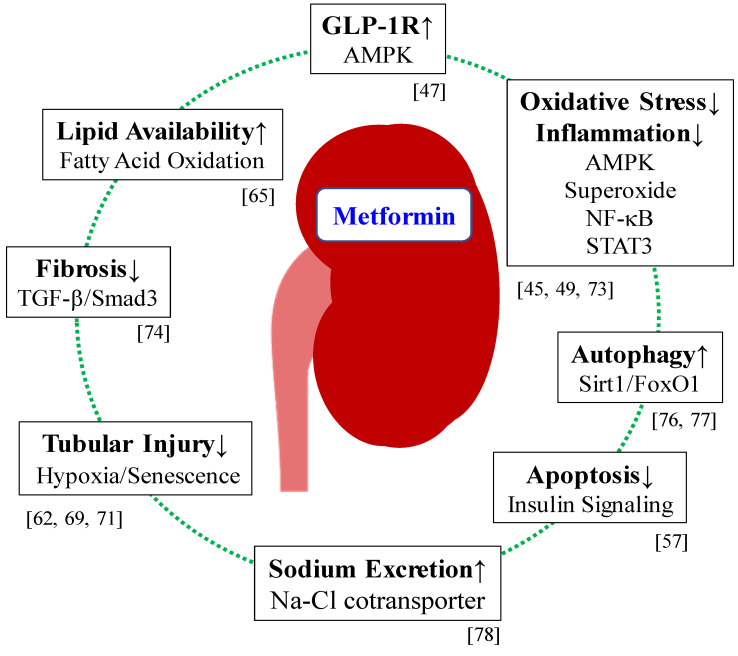
Metformin is a glucose-lowering agent that is used as a first-line therapy for type 2 diabetes (T2D). Based on its various pharmacologic actions, the renoprotective effects of metformin have been extensively studied. A series of experimental studies demonstrated that metformin attenuates diabetic kidney disease (DKD) by suppressing renal inflammation, oxidative stress and fibrosis. In clinical studies, metformin use has been shown to be associated with reduced rates of mortality, cardiovascular disease and progression to end-stage renal disease (ESRD) in T2D patients with chronic kidney disease (CKD). However, metformin should be administered with caution to patients with CKD because it may increase the risk of lactic acidosis. In this review article, we summarize our current understanding of the safety and efficacy of metformin for DKD.
二甲双胍是一种降低血糖的药物,被用作 2 型糖尿病(T2D)的一线治疗药物。基于其多种药理作用,二甲双胍的肾脏保护作用已得到广泛研究。一系列实验研究表明,二甲双胍通过抑制肾脏炎症、氧化应激和纤维化来减轻糖尿病肾病(DKD)。在临床研究中,二甲双胍的使用与降低死亡率、心血管疾病和进展为终末期肾病(ESRD)的风险相关在患有慢性肾脏病(CKD)的 T2D 患者中。然而,由于可能会增加乳酸酸中毒的风险,因此应谨慎向 CKD 患者使用二甲双胍。在这篇综述文章中,我们总结了我们目前对二甲双胍治疗 DKD 的安全性和疗效的理解。