Cai Zhaoxian, Wu Xiaotian, Song Zijun, Sun Shumin, Su Yunxing, Wang Tianyi, Cheng Xihao, Yu Yingying, Yu Chao, Chen En, Chen Wenteng, Yu Yongping, Linkermann Andreas, Min Junxia, Wang Fudi
The Second Affiliated Hospital, The First Affiliated Hospital, School of Public Health, Institute of Translational Medicine, Cancer Center, Zhejiang University School of Medicine, Hangzhou, Zhejiang, China.
The First Affiliated Hospital, Basic Medical Sciences, School of Public Health, Hengyang Medical School, University of South China, Hengyang, Hunan, China.
Cell Discov. 2023 Oct 17;9(1):104. doi: 10.1038/s41421-023-00595-3.
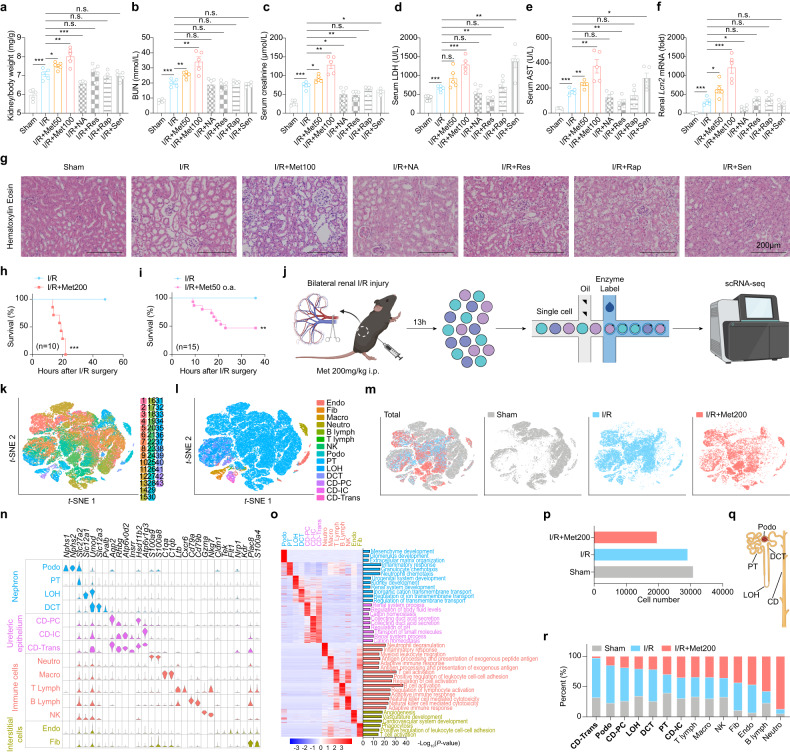
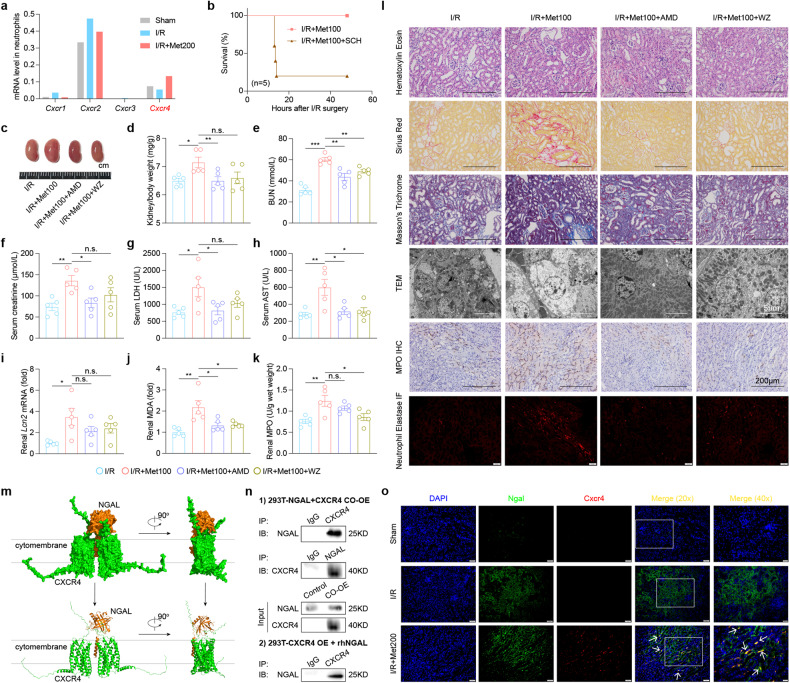
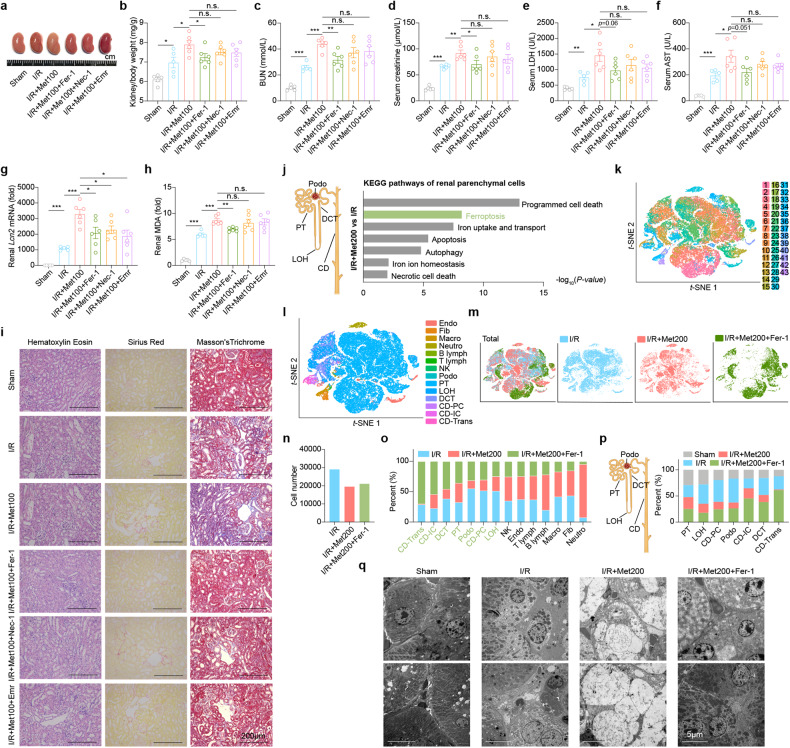
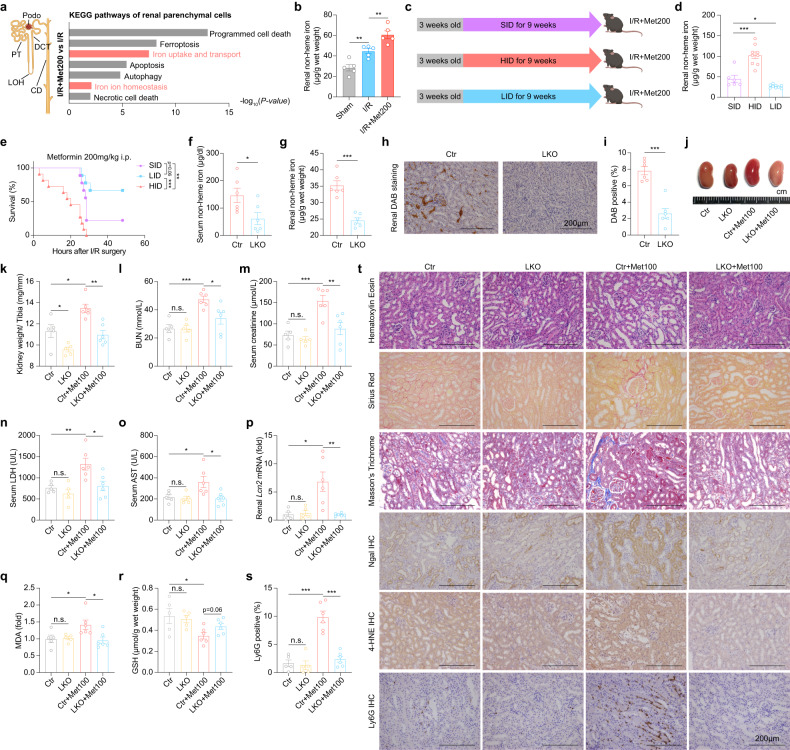
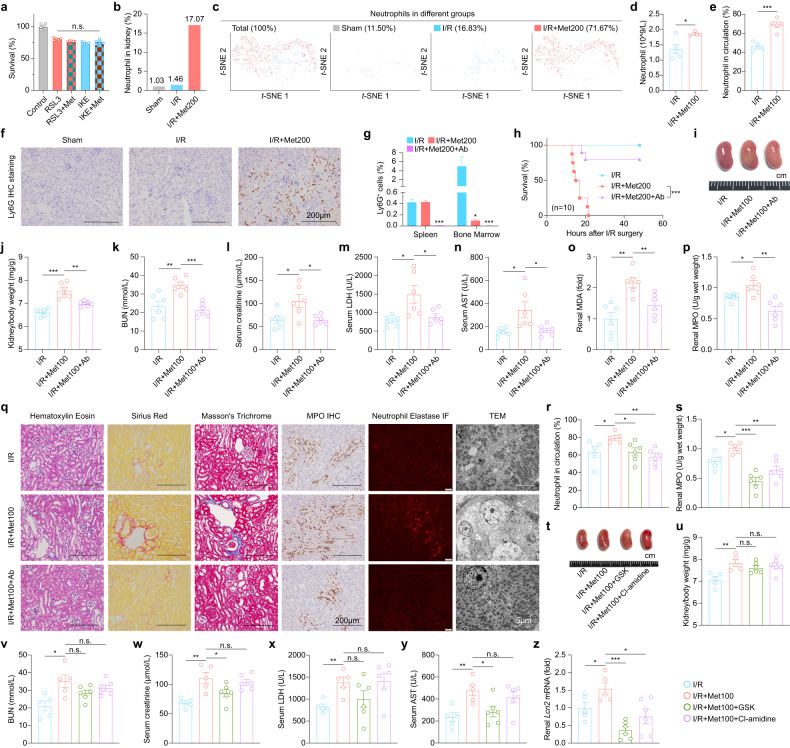
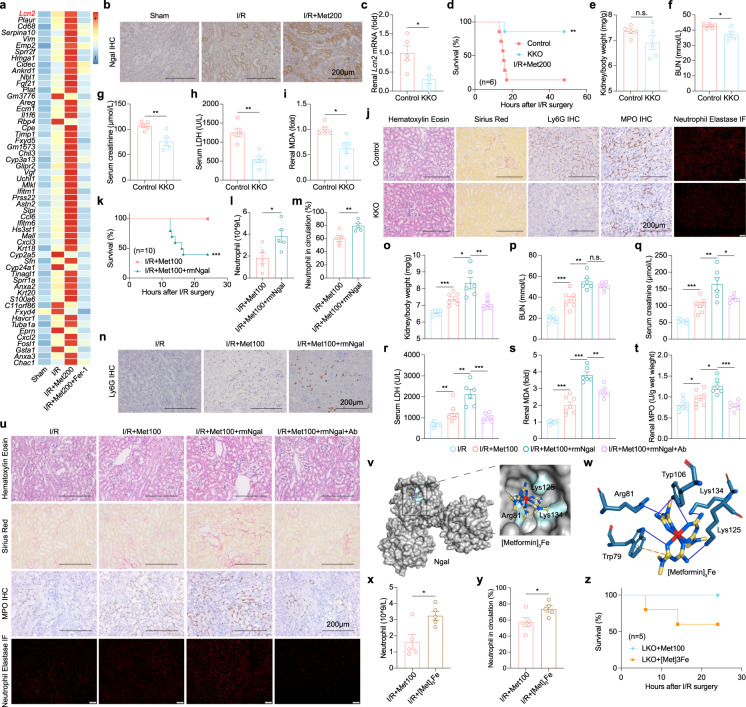
Given the rapidly aging population, aging-related diseases are becoming an excessive burden on the global healthcare system. Metformin has been shown to be beneficial to many age-related disorders, as well as increase lifespan in preclinical animal models. During the aging process, kidney function progressively declines. Currently, whether and how metformin protects the kidney remains unclear. In this study, among longevity drugs, including metformin, nicotinamide, resveratrol, rapamycin, and senolytics, we unexpectedly found that metformin, even at low doses, exacerbated experimentally-induced acute kidney injury (AKI) and increased mortality in mice. By single-cell transcriptomics analysis, we found that death of renal parenchymal cells together with an expansion of neutrophils occurs upon metformin treatment after AKI. We identified programmed cell death by ferroptosis in renal parenchymal cells and blocking ferroptosis, or depleting neutrophils protects against metformin-induced nephrotoxicity. Mechanistically, upon induction of AKI, ferroptosis in renal parenchymal cells initiates the migration of neutrophils to the site of injury via the surface receptor CXCR4-bound to metformin-iron-NGAL complex, which results in NETosis aggravated AKI. Finally, we demonstrated that reducing iron showed protective effects on kidney injury, which supports the notion that iron plays an important role in metformin-triggered AKI. Taken together, these findings delineate a novel mechanism underlying metformin-aggravated nephropathy and highlight the mechanistic relationship between iron, ferroptosis, and NETosis in the resulting AKI.
鉴于人口迅速老龄化,与衰老相关的疾病正成为全球医疗系统的沉重负担。二甲双胍已被证明对许多与年龄相关的疾病有益,并且在临床前动物模型中能延长寿命。在衰老过程中,肾功能会逐渐下降。目前,二甲双胍是否以及如何保护肾脏仍不清楚。在这项研究中,在包括二甲双胍、烟酰胺、白藜芦醇、雷帕霉素和衰老细胞溶解剂在内的长寿药物中,我们意外地发现,即使是低剂量的二甲双胍,也会加重实验性诱导的急性肾损伤(AKI),并增加小鼠的死亡率。通过单细胞转录组学分析,我们发现在AKI后用二甲双胍治疗时,肾实质细胞死亡以及中性粒细胞增多。我们确定肾实质细胞中存在铁死亡介导的程序性细胞死亡,阻断铁死亡或消耗中性粒细胞可预防二甲双胍诱导的肾毒性。从机制上讲,在诱导AKI后,肾实质细胞中的铁死亡通过与二甲双胍-铁-NGAL复合物结合的表面受体CXCR4启动中性粒细胞向损伤部位的迁移,这导致中性粒细胞胞外陷阱形成加重AKI。最后,我们证明减少铁对肾损伤有保护作用,这支持了铁在二甲双胍引发的AKI中起重要作用的观点。综上所述,这些发现描绘了二甲双胍加重肾病的新机制,并突出了铁、铁死亡和中性粒细胞胞外陷阱形成在由此产生的AKI中的机制关系。