Shi Qihan, Liu Yuantai, Shi Aoqing, Cai Zhandong, Nian Hai, Hartmann Martin, Lian Tengxiang
The State Key Laboratory for Conservation and Utilization of Subtropical Agro-bioresources, South China Agricultural University, Guangzhou, Guangdong, China.
The Key Laboratory of Plant Molecular Breeding of Guangdong Province, College of Agriculture, South China Agricultural University, Guangzhou, Guangdong, China.
Front Microbiol. 2020 May 28;11:1177. doi: 10.3389/fmicb.2020.01177. eCollection 2020.
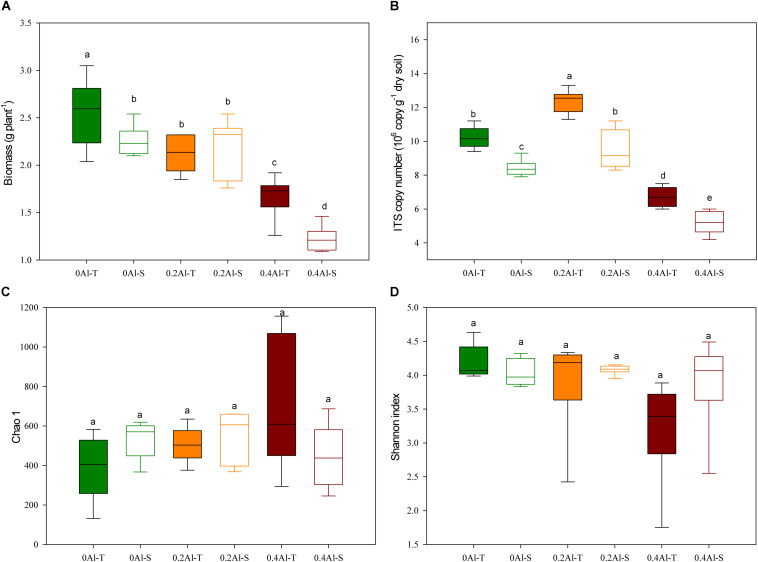
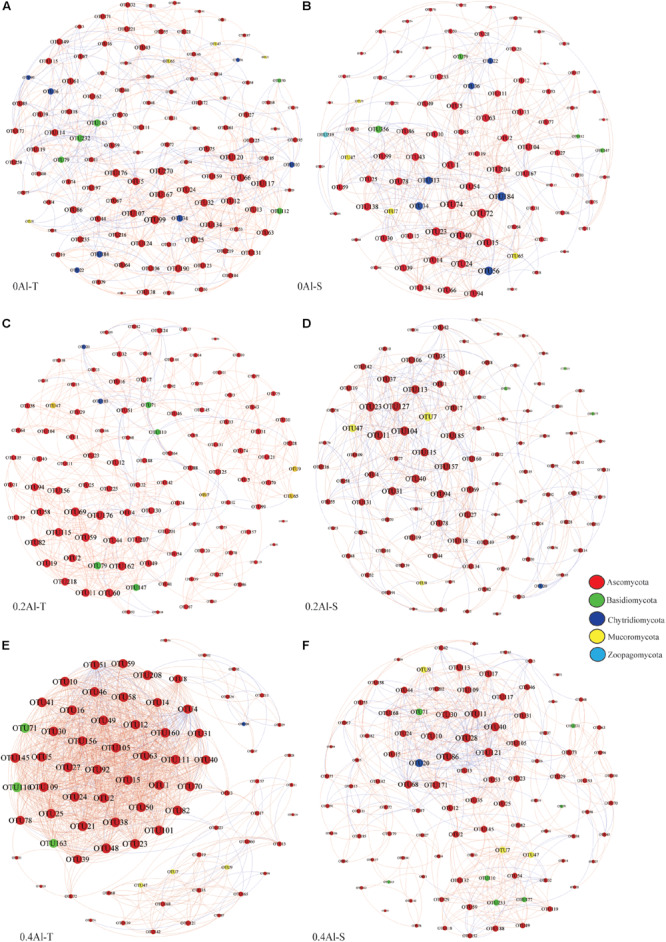
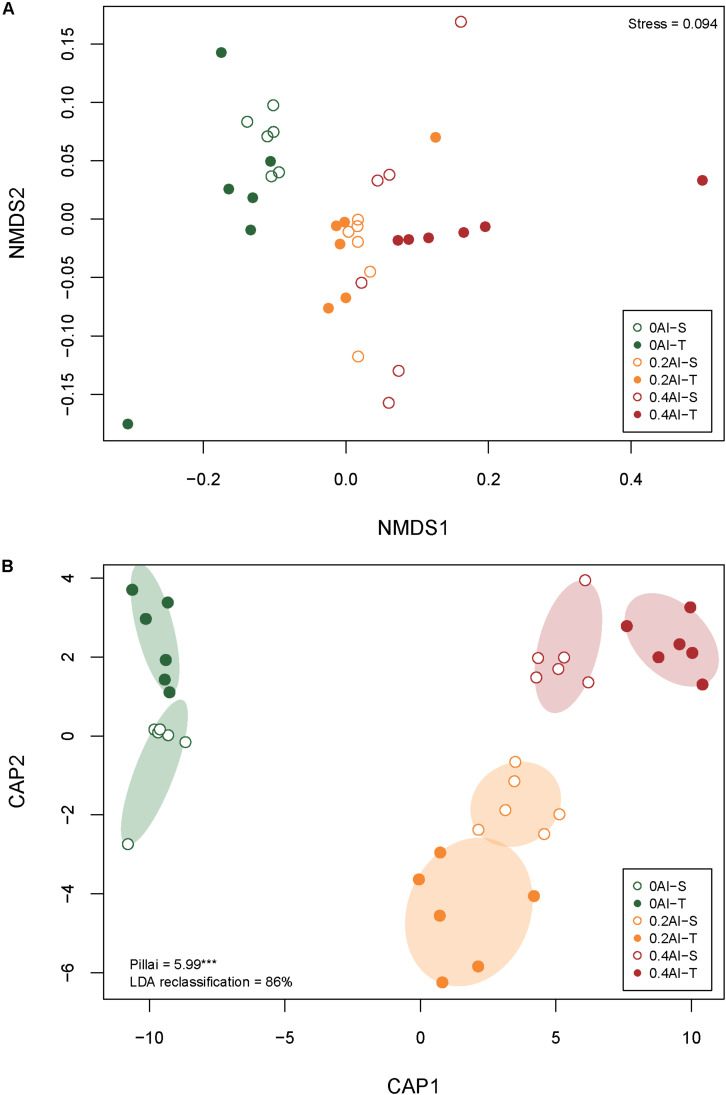
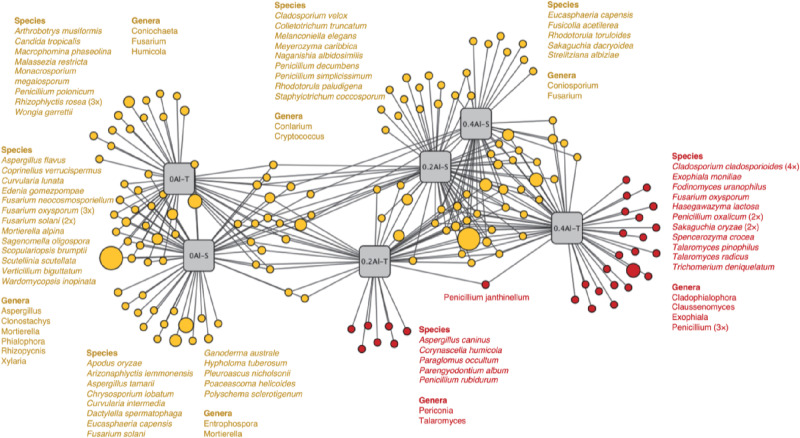
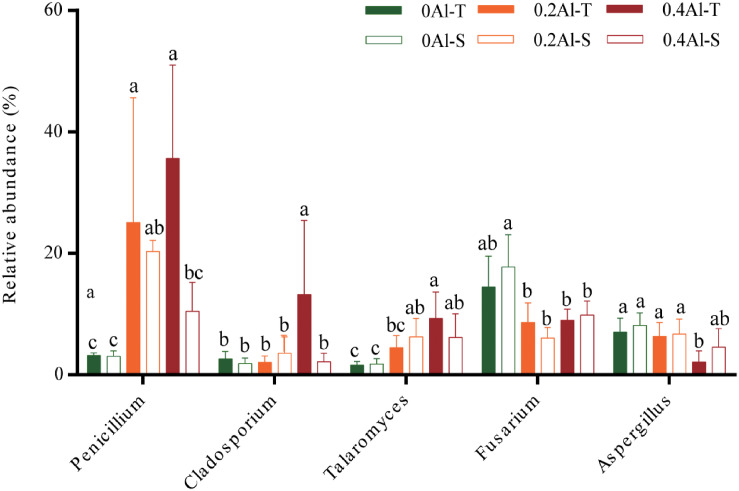
Different soybean genotypes can differ in their tolerance toward aluminum stress depending on their rhizosphere-inhabiting microorganisms. However, there is limited understanding of the response of fungal communities to different aluminum concentrations across different genotypes. Here, we used metabarcoding of fungal ribosomal markers to assess the effects of aluminum stress on the rhizosphere fungal community of aluminum-tolerant and aluminum-sensitive soybean genotypes. Shifts in fungal community structure were related to changes in plant biomass, fungal abundance and soil chemical properties. Aluminum stress increased the difference in fungal community structure between tolerant and sensitive genotypes. , and increased with increasing aluminum concentration. These taxa associated with the aluminum-tolerant genotypes were enriched at the highest aluminum concentration. Moreover, complexity of the co-occurrence network associated with the tolerant genotypes increased at the highest aluminum concentration. Collectively, increasing aluminum concentrations magnified the differences in fungal community structure between the two studied tolerant and sensitive soybean genotypes. This study highlights the possibility to focus on rhizosphere fungal communities as potential breeding target to produce crops that are more tolerant toward heavy metal stress or toxicity in general.
不同的大豆基因型对铝胁迫的耐受性可能因其根际微生物的不同而有所差异。然而,对于不同基因型真菌群落对不同铝浓度的响应,人们的了解还很有限。在这里,我们使用真菌核糖体标记的宏条形码技术来评估铝胁迫对耐铝和铝敏感大豆基因型根际真菌群落的影响。真菌群落结构的变化与植物生物量、真菌丰度和土壤化学性质的变化有关。铝胁迫增加了耐铝和敏感基因型之间真菌群落结构的差异。 、 和 随着铝浓度的增加而增加。这些与耐铝基因型相关的分类群在最高铝浓度下富集。此外,与耐铝基因型相关的共现网络的复杂性在最高铝浓度下增加。总体而言,铝浓度的增加放大了两个研究的耐铝和敏感大豆基因型之间真菌群落结构的差异。这项研究强调了将根际真菌群落作为潜在育种目标的可能性,以培育出对重金属胁迫或毒性更具耐受性的作物。