Sungnak Waradon, Huang Ni, Bécavin Christophe, Berg Marijn
Wellcome Sanger Institute, Wellcome Genome Campus, Hinxton, Cambridge, CB10 1SA, UK.
Université Côte d'Azur, CNRS, IPMC, Sophia-Antipolis 06560, France.
ArXiv. 2020 Mar 13:arXiv:2003.06122v1.
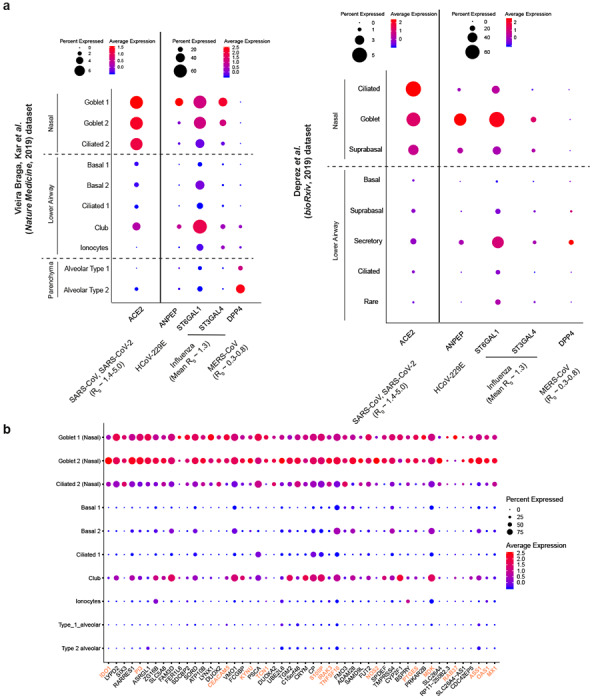
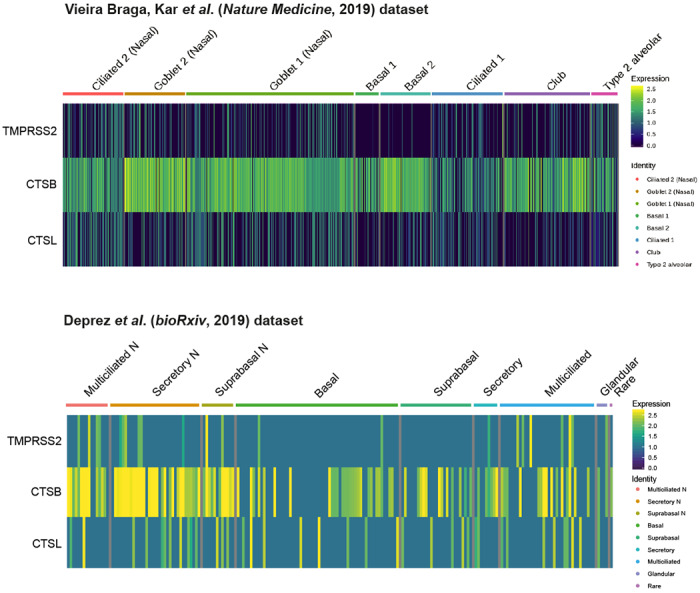
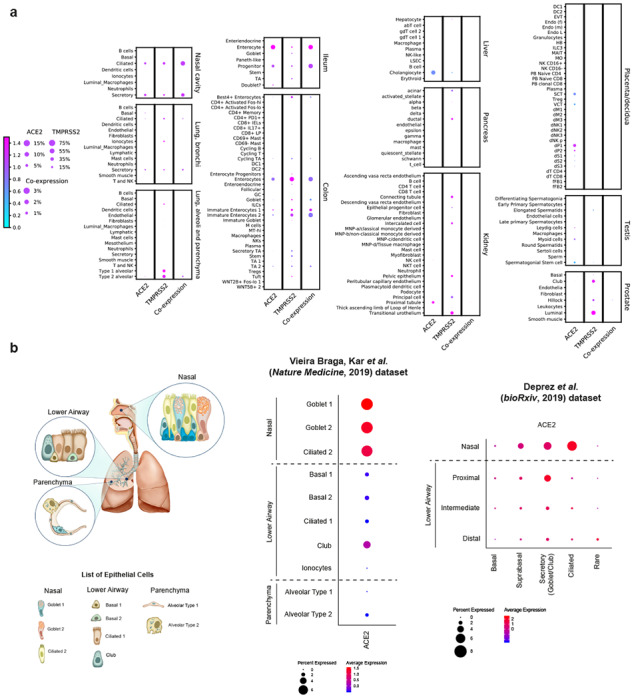
The SARS-CoV-2 coronavirus, the etiologic agent responsible for COVID-19 coronavirus disease, is a global threat. To better understand viral tropism, we assessed the RNA expression of the coronavirus receptor, , as well as the viral S protein priming protease thought to govern viral entry in single-cell RNA-sequencing (scRNA-seq) datasets from healthy individuals generated by the Human Cell Atlas consortium. We found that , as well as the protease , are differentially expressed in respiratory and gut epithelial cells. In-depth analysis of epithelial cells in the respiratory tree reveals that nasal epithelial cells, specifically goblet/secretory cells and ciliated cells, display the highest expression of all the epithelial cells analyzed. The skewed expression of viral receptors/entry-associated proteins towards the upper airway may be correlated with enhanced transmissivity. Finally, we showed that many of the top genes associated with airway epithelial expression are innate immune-associated, antiviral genes, highly enriched in the nasal epithelial cells. This association with immune pathways might have clinical implications for the course of infection and viral pathology, and highlights the specific significance of nasal epithelia in viral infection. Our findings underscore the importance of the availability of the Human Cell Atlas as a reference dataset. In this instance, analysis of the compendium of data points to a particularly relevant role for nasal goblet and ciliated cells as early viral targets and potential reservoirs of SARS-CoV-2 infection. This, in turn, serves as a biological framework for dissecting viral transmission and developing clinical strategies for prevention and therapy.
导致新型冠状病毒肺炎(COVID-19)的严重急性呼吸综合征冠状病毒2(SARS-CoV-2)是一种全球威胁。为了更好地了解病毒嗜性,我们在人类细胞图谱联盟生成的健康个体单细胞RNA测序(scRNA-seq)数据集中,评估了冠状病毒受体以及被认为控制病毒进入的病毒S蛋白启动蛋白酶的RNA表达。我们发现,以及蛋白酶在呼吸道和肠道上皮细胞中差异表达。对呼吸道树中的上皮细胞进行深入分析发现,鼻上皮细胞,特别是杯状/分泌细胞和纤毛细胞,在所有分析的上皮细胞中显示出最高的表达。病毒受体/进入相关蛋白在上呼吸道的偏斜表达可能与传播率增强有关。最后,我们表明,许多与气道上皮表达相关的顶级基因是先天免疫相关的抗病毒基因,在鼻上皮细胞中高度富集。这种与免疫途径的关联可能对感染过程和病毒病理学具有临床意义,并突出了鼻上皮在病毒感染中的特殊重要性。我们的发现强调了人类细胞图谱作为参考数据集的重要性。在这种情况下,对数据纲要的分析表明,鼻杯状细胞和纤毛细胞作为早期病毒靶标和SARS-CoV-2感染的潜在储存库具有特别相关的作用。这反过来又为剖析病毒传播和制定预防与治疗临床策略提供了生物学框架。