National-Regional Key Technology Engineering Laboratory for Medical Ultrasound, School of Biomedical Engineering, Health Science Center, Shenzhen University, Shenzhen, Guangdong, People's Republic of China.
Shenzhen Second People's Hospital, Shenzhen, People's Republic of China.
Biomed Eng Online. 2020 Jun 17;19(1):52. doi: 10.1186/s12938-020-00797-w.
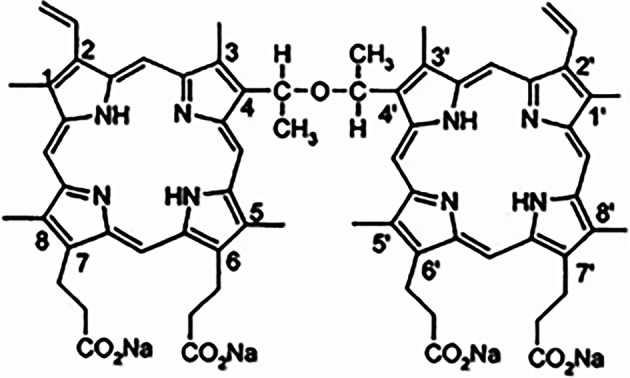
Colorectal cancer is the third leading cause of cancer-related deaths worldwide. Sonodynamic therapy (SDT) is an emerging cancer therapy, and in contrast to photodynamic therapy, could non-invasively reach deep-seated tissues and locally activates a sonosensitizer preferentially accumulated in the tumor area to produce cytotoxicity effects. In comparison with traditional treatments, SDT may serve as an alternative strategy for human colon cancer treatment. Here, we investigated the sonodynamic effect using sinoporphyrin sodium (DVDMS) as a novel sonosensitizer on human colon cancer cells in vitro.
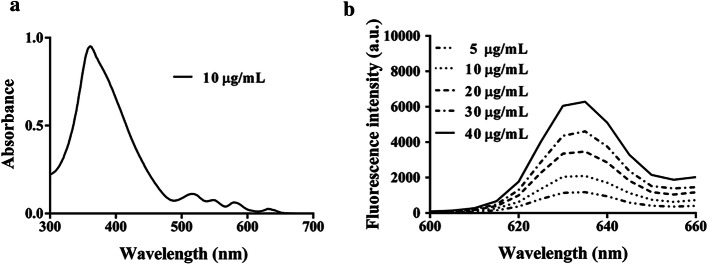
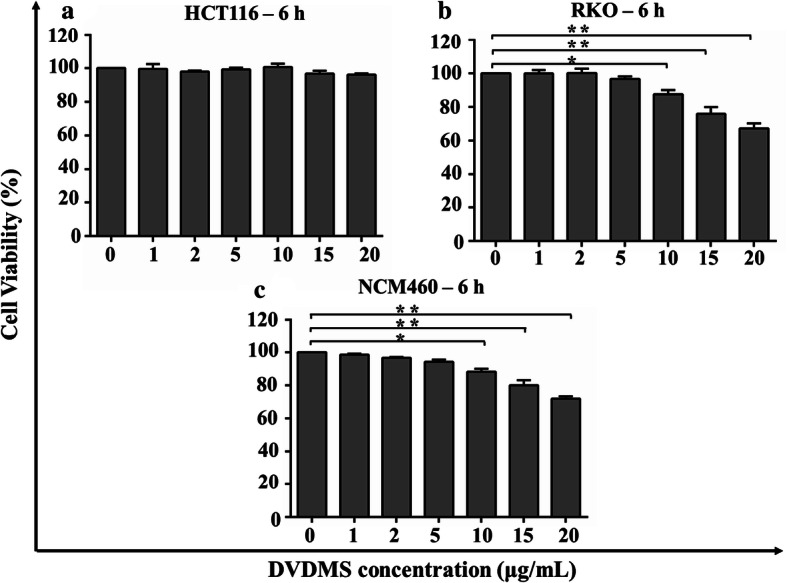
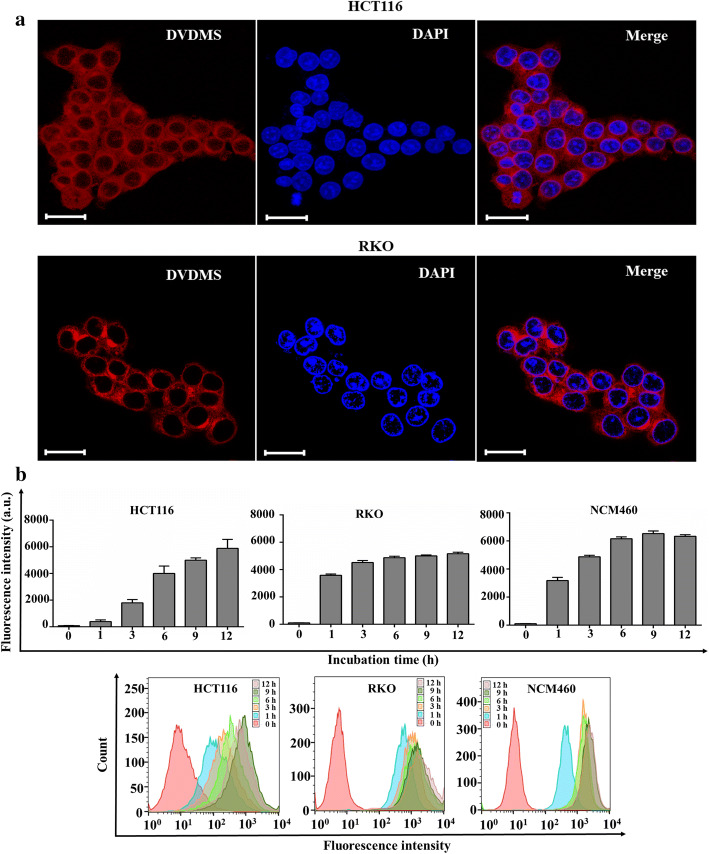
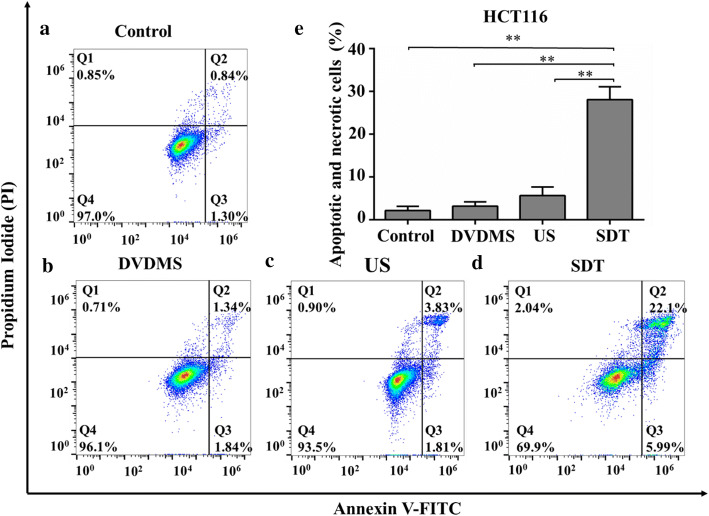
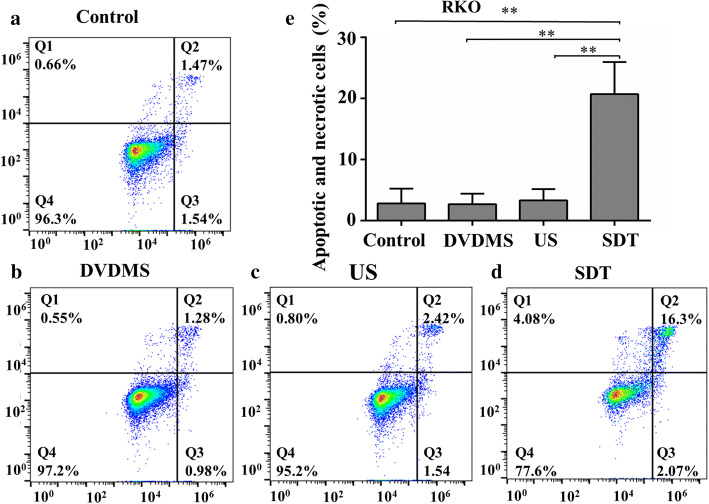
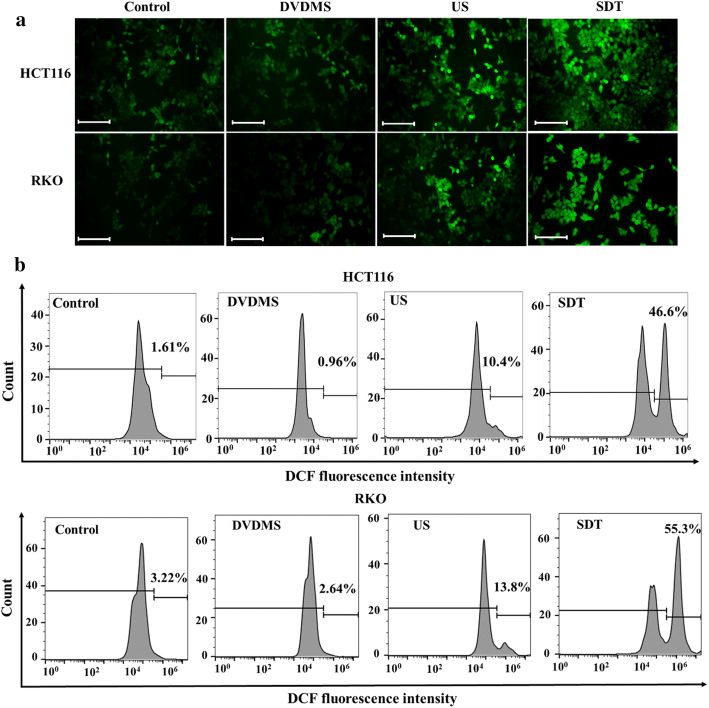
The absorption spectra of DVDMS revealed maximum absorption at 363 nm wavelength and emission peak at 635 nm. Confocal microscopy images revealed the DVDMS was primarily localized in the cytoplasm, while no evident signal was detected within the nuclei. Flow cytometry analysis showed rapid intracellular uptake of DVDMS by two types of human colon cancer cells (HCT116 and RKO). Cell viability of HCT116 was tolerant with the concentration of DVDMS up to 20 µg/mL, while the case of RKO was 5 µg/mL. In comparison with the control group, the SDT-treated groups of these two types of human colon cancer cells showed significant increase in cellular apoptosis and necrosis ratio. Increased intracellular reactive oxygen species (ROS) production was detected, indicating the involvement of ROS in mediating SDT effects.
DVDMS results an effective sonosensitizer for the ultrasound-mediated cancer cell killing, and its anticancer effect seems to rely on its ability to produce ROS under ultrasound exposure.
结直肠癌是全球癌症相关死亡的第三大原因。声动力学疗法(SDT)是一种新兴的癌症治疗方法,与光动力疗法不同,它可以非侵入性地到达深部组织,并局部激活优先积聚在肿瘤区域的声敏剂,产生细胞毒性作用。与传统治疗方法相比,SDT 可能成为人类结肠癌治疗的一种替代策略。在这里,我们研究了使用血卟啉单甲醚(DVDMS)作为新型声敏剂对体外人结肠癌细胞的声动力学效应。
DVDMS 的吸收光谱显示最大吸收波长为 363nm,发射峰为 635nm。共聚焦显微镜图像显示 DVDMS 主要定位于细胞质,而细胞核内没有明显的信号。流式细胞术分析显示两种类型的人结肠癌细胞(HCT116 和 RKO)对 DVDMS 的快速细胞内摄取。HCT116 细胞对 DVDMS 的浓度高达 20μg/mL 时具有耐受性,而 RKO 细胞的浓度为 5μg/mL。与对照组相比,两种类型的人结肠癌细胞的 SDT 处理组细胞凋亡和坏死率明显增加。检测到细胞内活性氧(ROS)的产生增加,表明 ROS 参与介导 SDT 效应。
DVDMS 是一种有效的超声介导的癌症杀伤声敏剂,其抗癌作用似乎依赖于其在超声暴露下产生 ROS 的能力。