Burnett School of Biomedical Sciences, College of Medicine, University of Central Florida, 6900 Lake Nona Blvd., Orlando, FL, 32827, USA.
Present Address: Department of Pathology and Laboratory Medicine, Abramson Cancer Center, Perelman School of Medicine, University of Pennsylvania, Philadelphia, PA, 19104, USA.
Cell Commun Signal. 2020 Jun 17;18(1):95. doi: 10.1186/s12964-020-00594-x.
While inflammation is associated with pancreatic cancer, the underlying mechanisms leading to cancer initiation are still being delineated. Eosinophils may promote or inhibit tumor growth, although the specific role in pancreatic cancer has yet to be determined. Eosinophil-supporting cytokine interleukin-5 and receptor are likely to have a role, but the significance in the pancreatic cancer microenvironment is unknown.
Genetically engineered Akt1/KRas and KRas mice were used to model changes induced by chronic inflammation. Tissue samples were collected to analyze the tumor microenvironment and infiltration of immune cells, whereas serum was collected to analyze cytokine and amylase activity in the inflammatory model. The expression of IL-5R and the effects of IL-5 were analyzed in human and murine tumor cells.
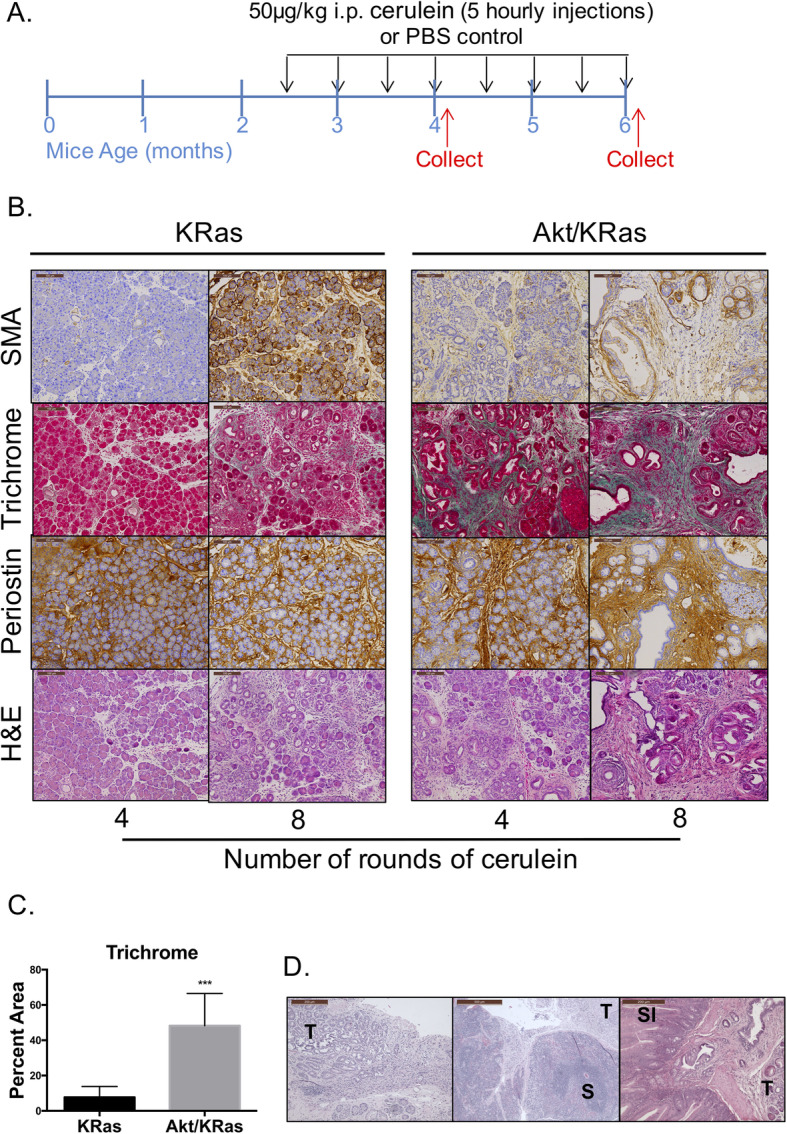
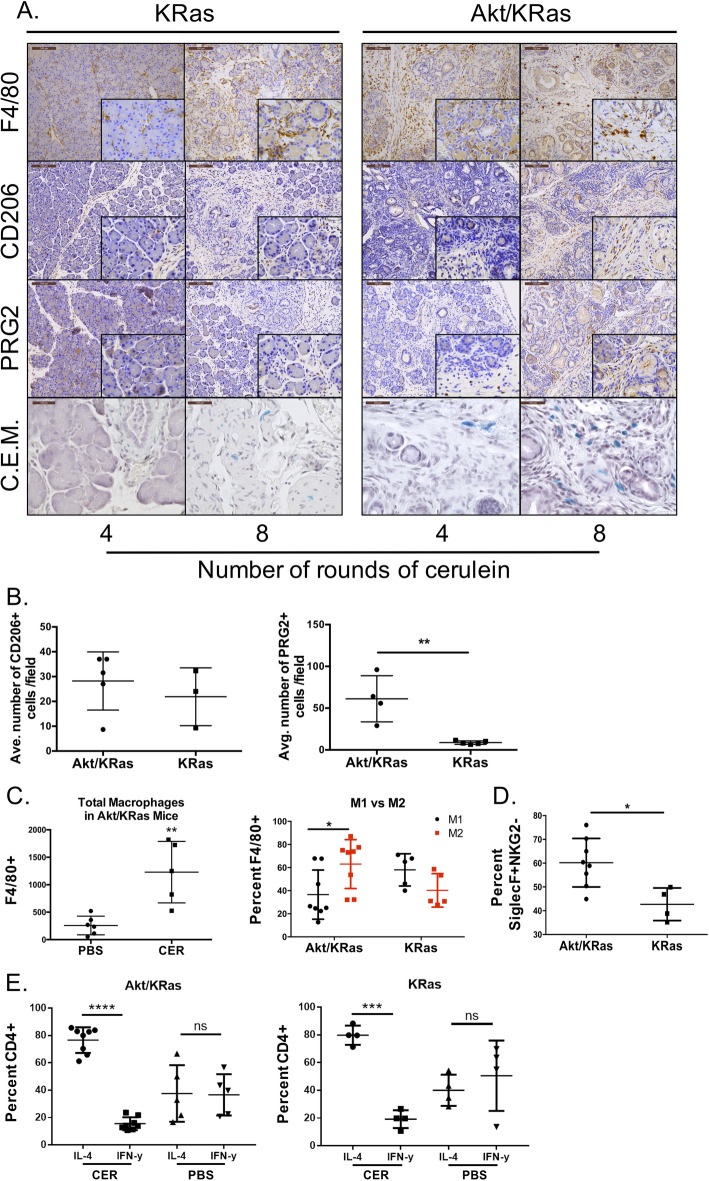
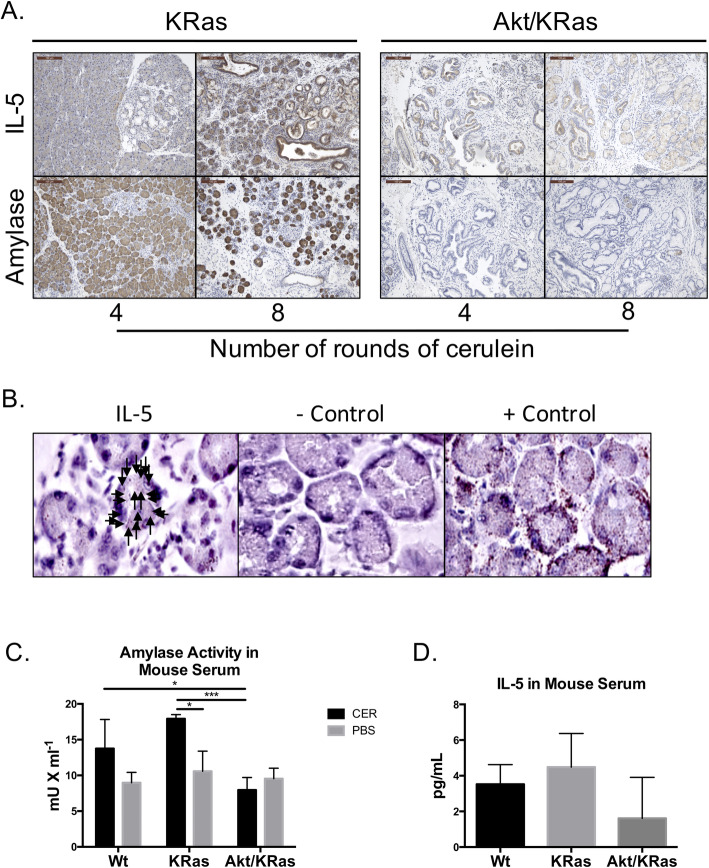
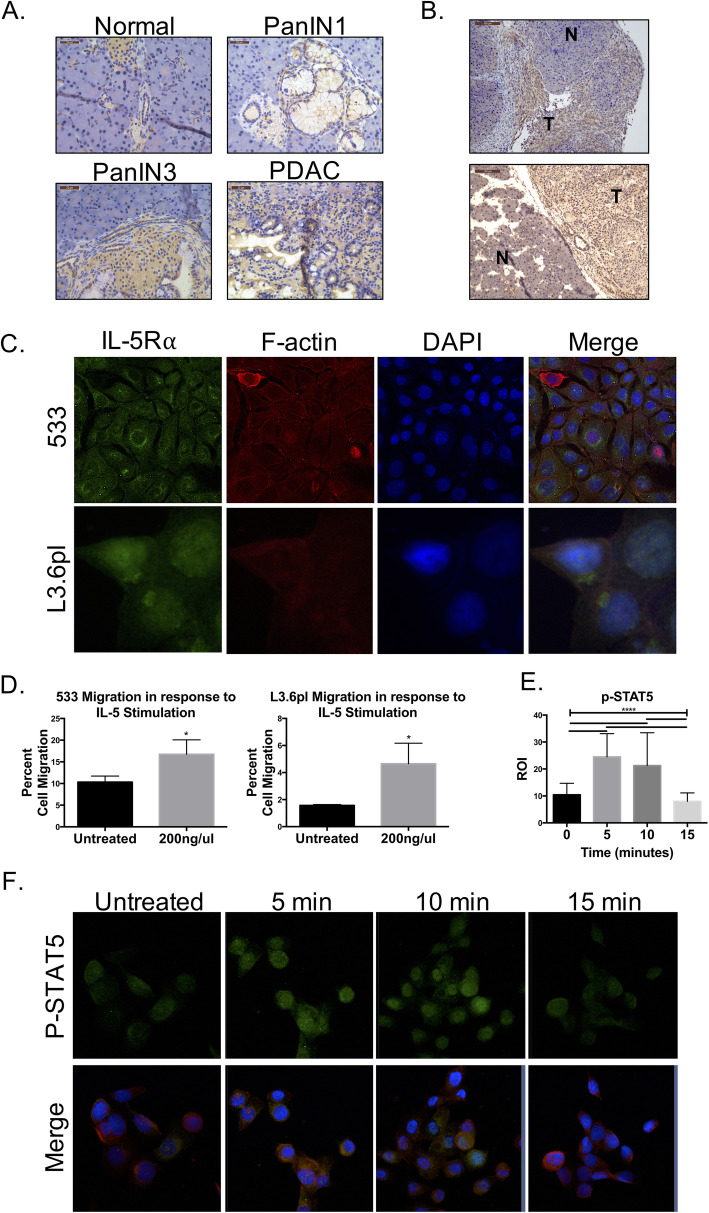
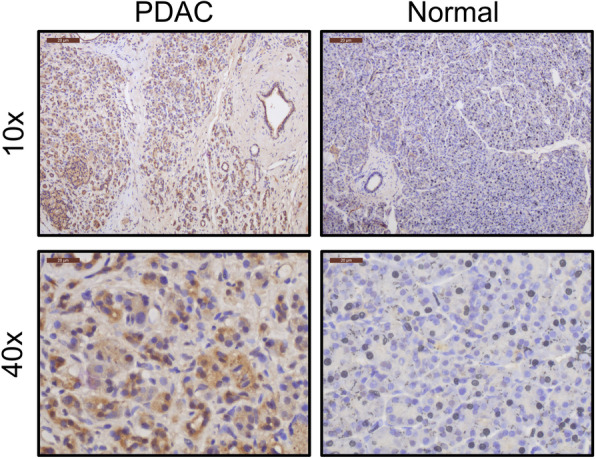
Compound Akt1/KRas mice, compared to single KRas or Akt1 mice, exhibited increased tissue damage after repeat inductions of inflammation, and had accelerated tumor development and metastasis. M2 macrophages and newly identified eosinophils co-localized with fibrotic regions rather than infiltrating into tumors, consistent with immune cell privilege. The majority of eosinophils found in the pancreas of Akt1/KRas mice with chronic inflammation lacked the cytotoxic NKG2D marker. IL-5 expression was upregulated in pancreatic cells in response to inflammation, and then diminished in advanced lesions. Although not previously described in pancreatic tumors, IL-5Rα was increased during mouse pancreatic tumor progression and expressed in human pancreatic ductal adenocarcinomas (7 of 7 by immunohistochemistry). IL-5 stimulated tumor cell migration and activation through STAT5 signaling, thereby suggesting an unreported tumor-promoting role for IL-5Rα in pancreatic cancer.
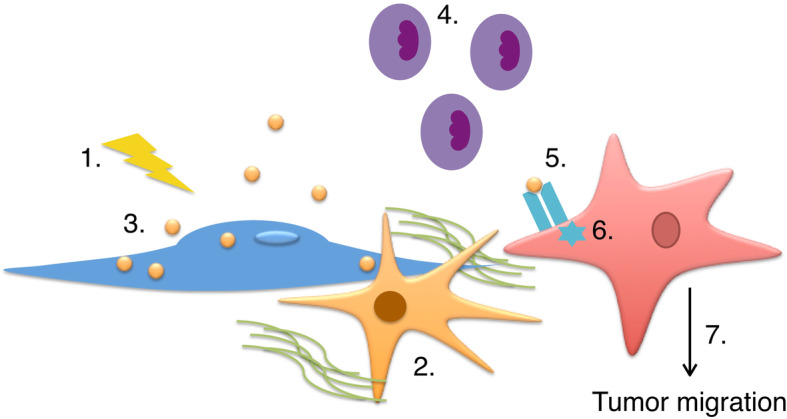
Chronic inflammation induces increased pancreatic cancer progression and immune cells such as eosinophils are attracted to areas of fibrosis. Results suggest that IL-5 in the pancreatic compartment stimulates increased IL-5Rα on ductal tumor cells to increase pancreatic tumor motility. Collectively, IL-5/IL-5Rα signaling in the mouse and human pancreatic tumors microenvironment is a novel mechanism to facilitate tumor progression. Additional file 1: Video Abstract.
尽管炎症与胰腺癌有关,但导致癌症发生的潜在机制仍在研究中。嗜酸性粒细胞可能促进或抑制肿瘤生长,尽管其在胰腺癌中的具体作用尚未确定。白细胞介素 5 及其受体等嗜酸性粒细胞支持细胞因子可能具有作用,但在胰腺癌微环境中的意义尚不清楚。
利用基因工程 Akt1/KRas 和 KRas 小鼠模型来模拟慢性炎症引起的变化。收集组织样本分析肿瘤微环境和免疫细胞浸润情况,同时收集血清分析炎症模型中的细胞因子和淀粉酶活性。分析人类和鼠肿瘤细胞中 IL-5R 的表达及其对 IL-5 的作用。
与单 KRas 或 Akt1 小鼠相比,复合 Akt1/KRas 小鼠在重复炎症诱导后表现出更严重的组织损伤,并加速了肿瘤发展和转移。M2 巨噬细胞和新鉴定的嗜酸性粒细胞与纤维化区域共定位,而不是浸润肿瘤,这与免疫细胞特权相一致。在慢性炎症的 Akt1/KRas 小鼠胰腺中发现的大多数嗜酸性粒细胞缺乏细胞毒性 NKG2D 标志物。白细胞介素 5 的表达在胰腺细胞中因炎症而上调,随后在晚期病变中减少。虽然在胰腺肿瘤中尚未描述,但 IL-5Rα 在小鼠胰腺肿瘤进展过程中增加,并在人类胰腺导管腺癌中表达(免疫组化 7/7)。白细胞介素 5 通过 STAT5 信号刺激肿瘤细胞迁移和激活,从而表明 IL-5Rα 在胰腺癌中具有未报道的促肿瘤作用。
慢性炎症可诱导胰腺癌进展加速,嗜酸性粒细胞等免疫细胞被吸引到纤维化区域。结果表明,胰腺腔内的白细胞介素 5 可刺激导管肿瘤细胞上的 IL-5Rα 增加,从而增加胰腺肿瘤的运动性。总之,在小鼠和人类胰腺肿瘤微环境中,白细胞介素 5/IL-5Rα 信号是促进肿瘤进展的新机制。