Área de Fisiología, Facultad de Medicina, Universidad de Cádiz, Cádiz, Spain.
Instituto de Investigación e Innovación Biomédica de Cádiz, Cádiz, Spain.
Aging (Albany NY). 2020 Jun 17;12(13):13824-13844. doi: 10.18632/aging.103510.
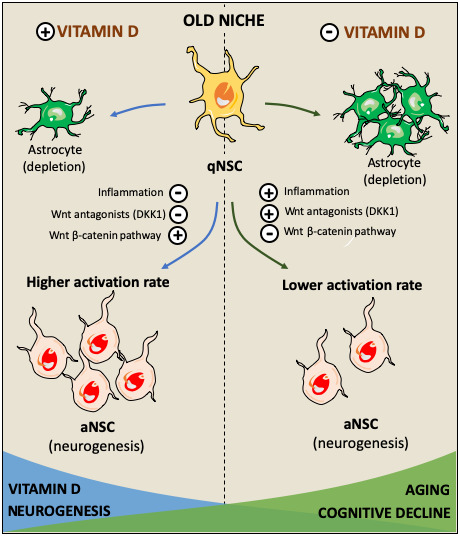
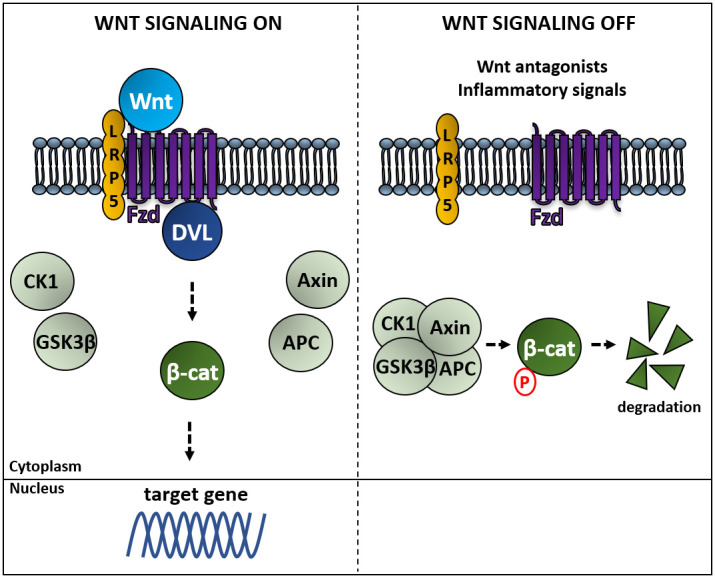
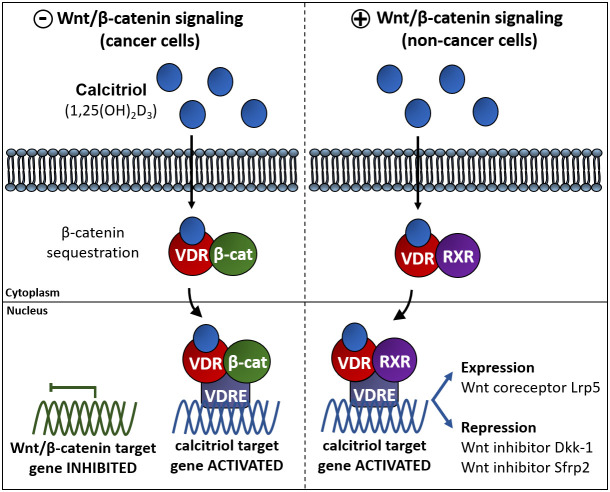
Vitamin D is an essential fat-soluble vitamin that participates in several homeostatic functions in mammalian organisms. Lower levels of vitamin D are produced in the older population, vitamin D deficiency being an accelerating factor for the progression of the aging process. In this review, we focus on the effect that vitamin D exerts in the aged brain paying special attention to the neurogenic process. Neurogenesis occurs in the adult brain in neurogenic regions, such as the dentate gyrus of the hippocampus (DG). This region generates new neurons that participate in cognitive tasks. The neurogenic rate in the DG is reduced in the aged brain because of a reduction in the number of neural stem cells (NSC). Homeostatic mechanisms controlled by the Wnt signaling pathway protect this pool of NSC from being depleted. We discuss in here the crosstalk between Wnt signaling and vitamin D, and hypothesize that hypovitaminosis might cause failure in the control of the neurogenic homeostatic mechanisms in the old brain leading to cognitive impairment. Understanding the relationship between vitamin D, neurogenesis and cognitive performance in the aged brain may facilitate prevention of cognitive decline and it can open a door into new therapeutic fields by perspectives in the elderly.
维生素 D 是一种必需的脂溶性维生素,参与哺乳动物体内的几种体内平衡功能。老年人产生的维生素 D 水平较低,维生素 D 缺乏是衰老过程加速的一个因素。在这篇综述中,我们重点研究了维生素 D 在衰老大脑中的作用,特别关注神经发生过程。神经发生发生在成年大脑的神经发生区域,如海马齿状回(DG)。这个区域产生新的神经元,参与认知任务。由于神经干细胞(NSC)数量减少,DG 中的神经发生率在老年大脑中降低。由 Wnt 信号通路控制的体内平衡机制保护这个 NSC 池免于耗尽。我们在这里讨论了 Wnt 信号和维生素 D 之间的串扰,并假设低维生素 D 血症可能导致老年大脑中神经发生的体内平衡机制控制失败,导致认知障碍。了解维生素 D、神经发生和老年大脑认知表现之间的关系,可以促进预防认知能力下降,并为老年人开辟新的治疗领域提供视角。