Maniscalco Pietro, Quattrini Fabrizio, Ciatti Corrado, Burgio Valeria, Rivera Fabrizio, Di Stefano Giovanni, Pavone Vito
Orthopedics and Traumatology Department, Guglielmo da Saliceto Hospital, Piacenza, Italy.
Orthopaedic Surgery Department, SS Annunziata Savigliano Hospital, Savigliano (CN), Italy.
Acta Biomed. 2020 May 30;91(4-S):122-127. doi: 10.23750/abm.v91i4-S.9726.
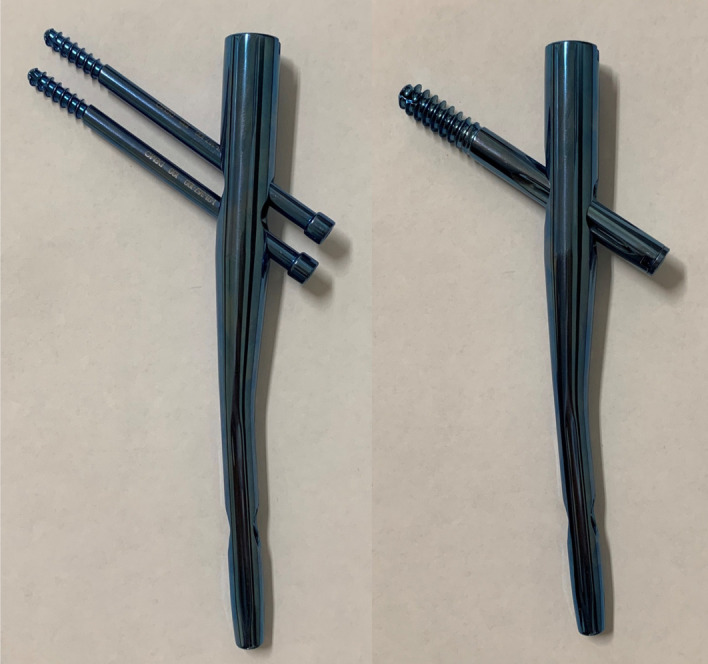
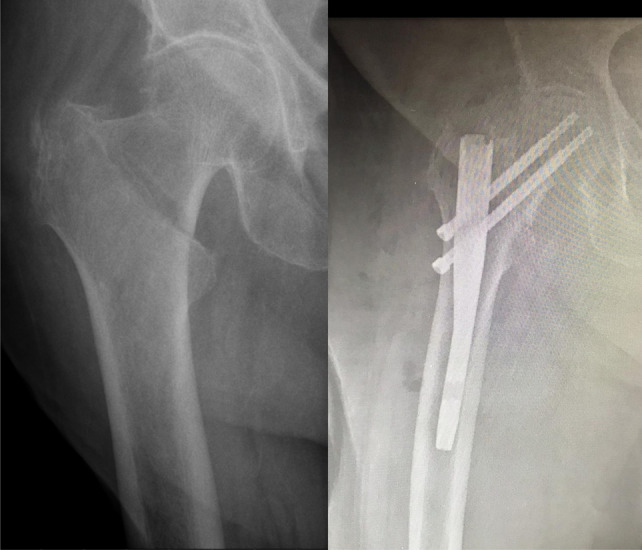
The worldwide incidence of fractures of the proximal end of the femur is increasing as the average age of the population rises. The current surgical gold treatment standard is intramedullary nail fixation. The Authors present their experience with the D-Nail system for intertrochanteric femur fractures.
From January 1st to February 21st 2020 (breakout of COVID-19 pandemic) 34 patients were treated with the D-Nail system: 11 with basicervical fractures, 16 with intertrochanteric stable fractures and 7 with intertrochanteric unstable fractures. In 11 cases, a single cephalic screw was used; in 23 cases, two of them were used. Distal locking was executed in 7 patients. Follow-up time ranged from 2 to 3 months.
None of the reported intra- or post-operative complication was linked to the fixation device or the surgical technique. Patients were monitored with clinical and radiological checkups using modified Harris Hip Score to accurately evaluate the fluctuations in the rehabilitation period.
The main advantages of this synthesis device are the proximal hole's peculiar shape, which allows the possibility to position one or two cephalic screws on the same nail, and the silicon coating, which provides numerous biological advantages. Distal locking was executed in selected cases only, based on fracture type. Optimum treatment involves rapid execution of surgery, minimal trauma during surgery, maximum mechanical stability, and rapid weight-bearing. Although our case number is small and follow-up time brief, our results are encouraging.
随着全球人口平均年龄的增长,股骨近端骨折的发病率呈上升趋势。目前手术治疗的金标准是髓内钉固定。作者介绍了他们使用D型钉系统治疗股骨转子间骨折的经验。
在2020年1月1日至2月21日(新冠疫情爆发期间),34例患者接受了D型钉系统治疗:11例为股骨颈基底部骨折,16例为转子间稳定骨折,7例为转子间不稳定骨折。11例使用了单枚头钉,23例使用了两枚头钉。7例患者进行了远端锁定。随访时间为2至3个月。
所报告的术中或术后并发症均与固定装置或手术技术无关。通过临床和影像学检查对患者进行监测,并使用改良Harris髋关节评分准确评估康复期的波动情况。
这种合成装置的主要优点是近端孔的特殊形状,使得在同一枚钉子上可以放置一枚或两枚头钉,以及硅涂层,它具有许多生物学优势。仅根据骨折类型在部分病例中进行远端锁定。最佳治疗方法包括快速进行手术、手术创伤最小化、最大程度的机械稳定性以及快速负重。尽管我们的病例数量较少且随访时间较短,但结果令人鼓舞。