Department of Biology, Boston University, Boston, MA, USA.
Boston University Center for Systems Neuroscience, Boston, MA, USA.
Nature. 2020 Jun;582(7813):539-544. doi: 10.1038/s41586-020-2397-3. Epub 2020 Jun 17.
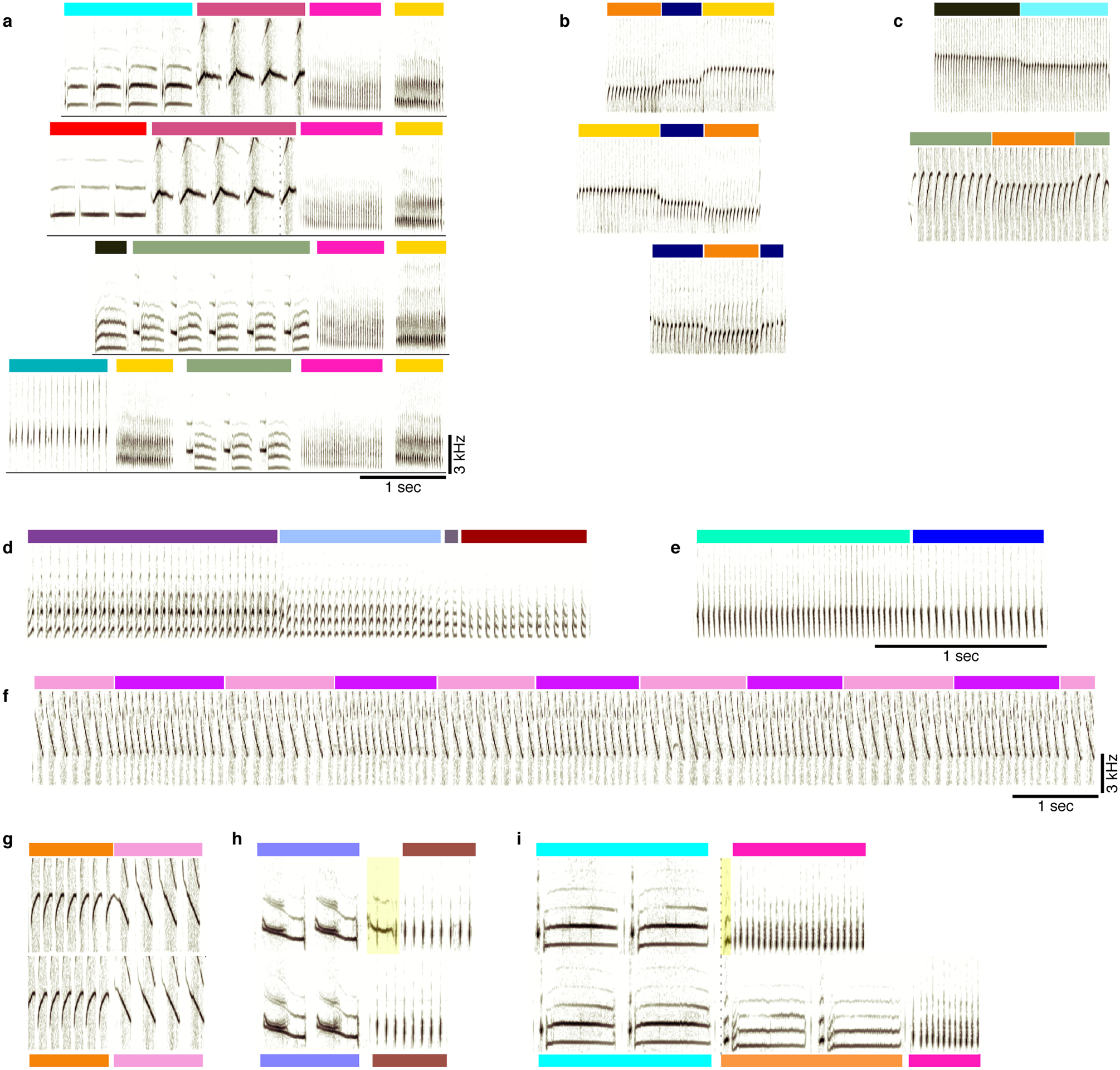
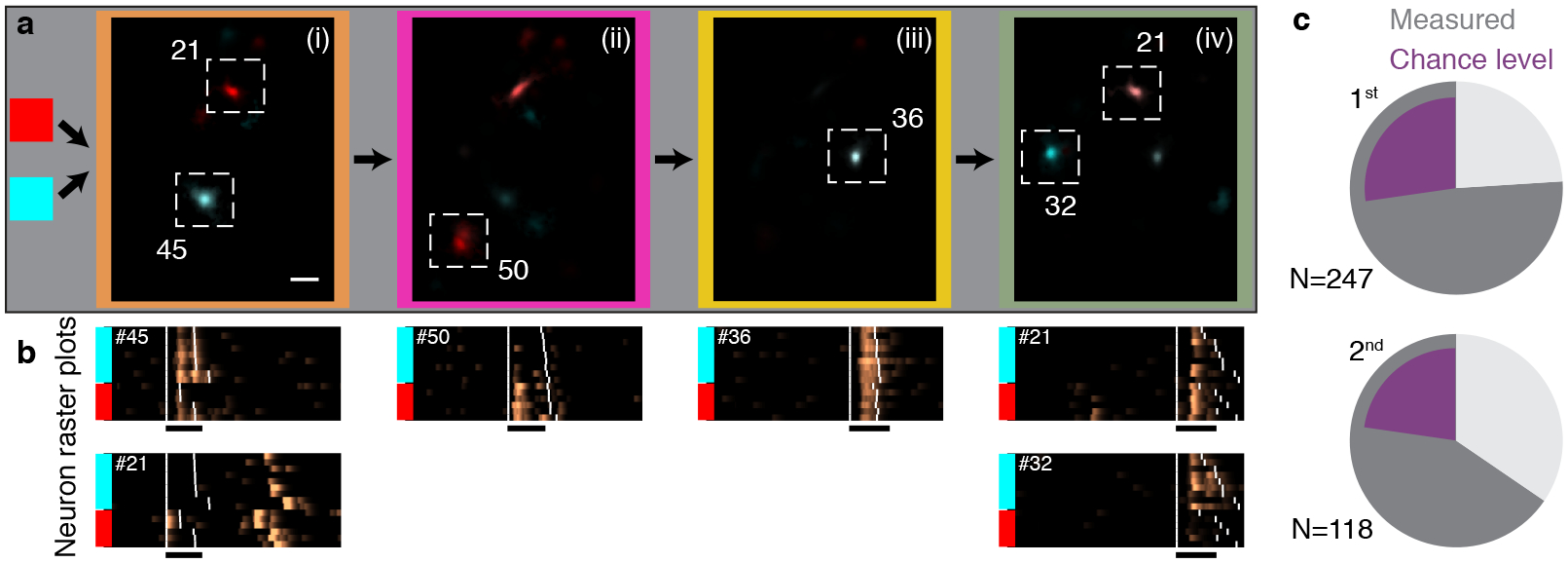
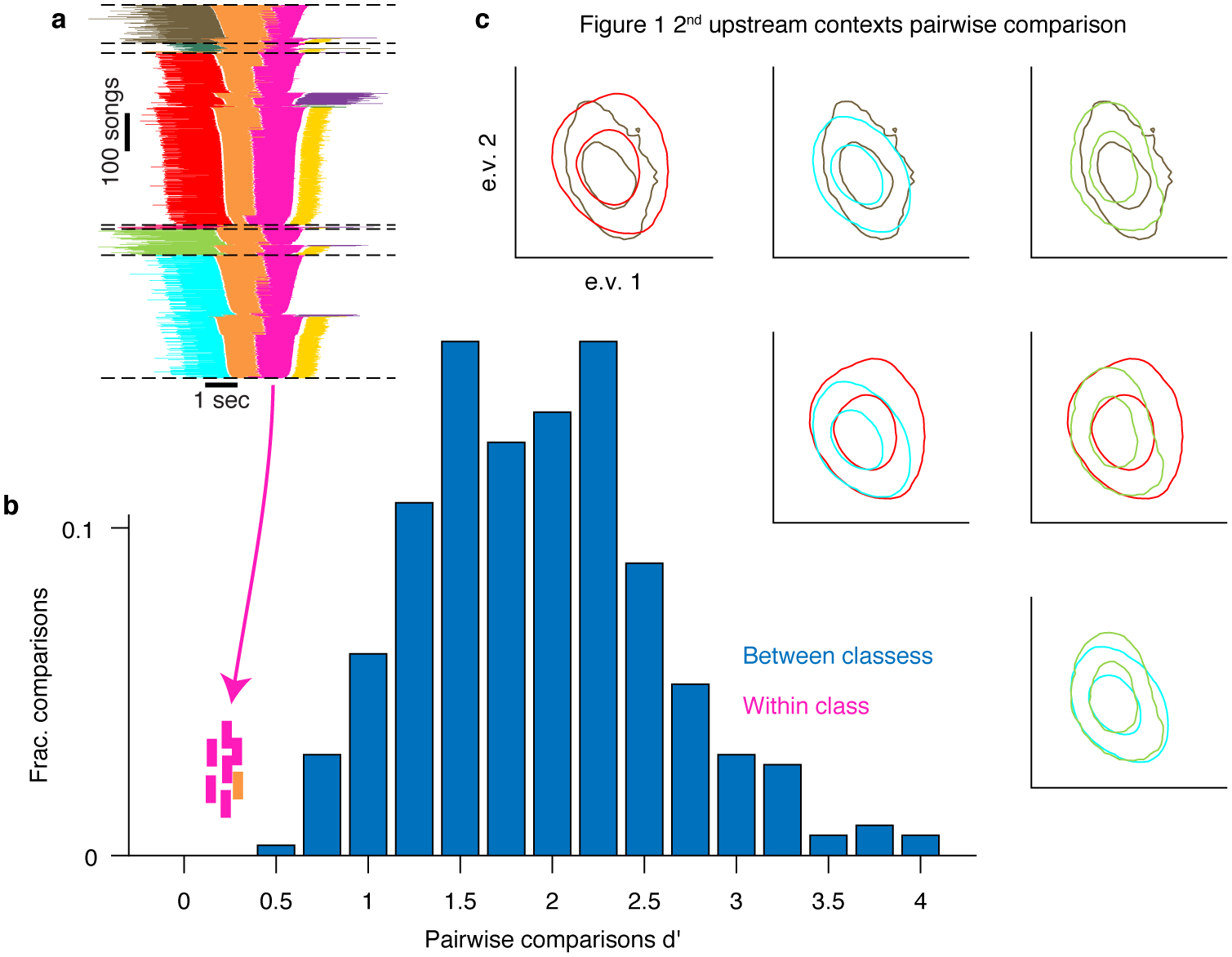
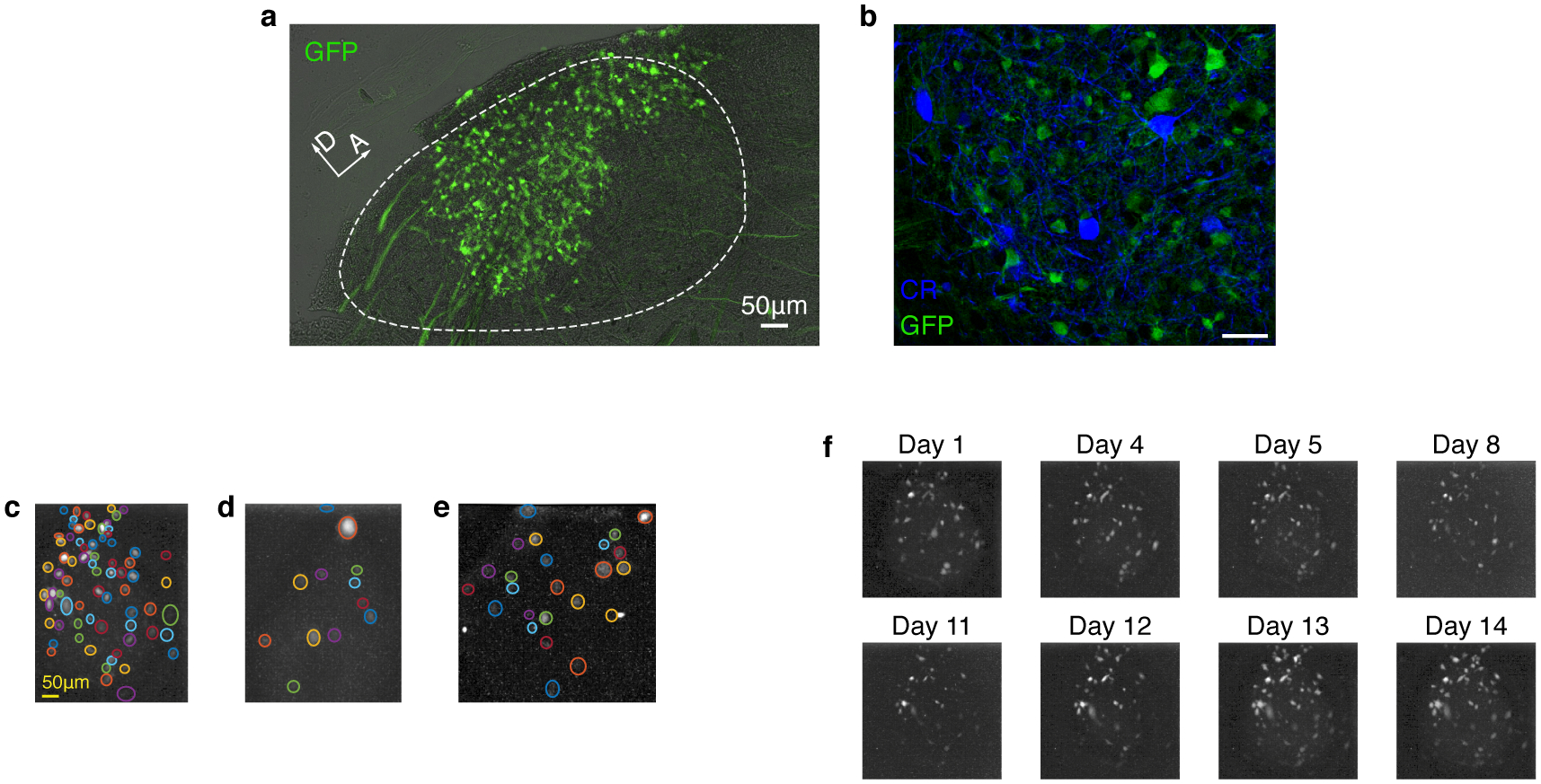
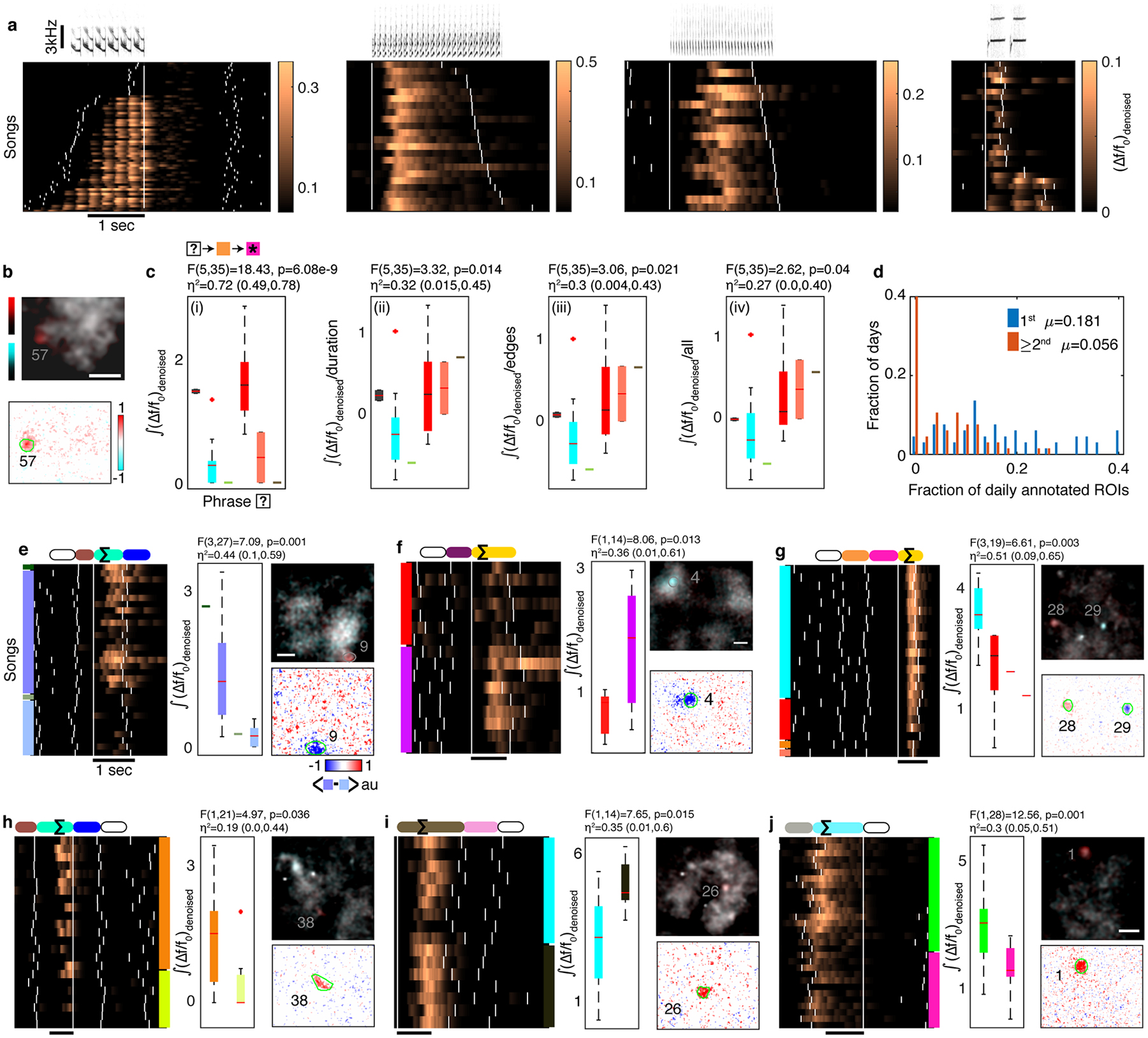
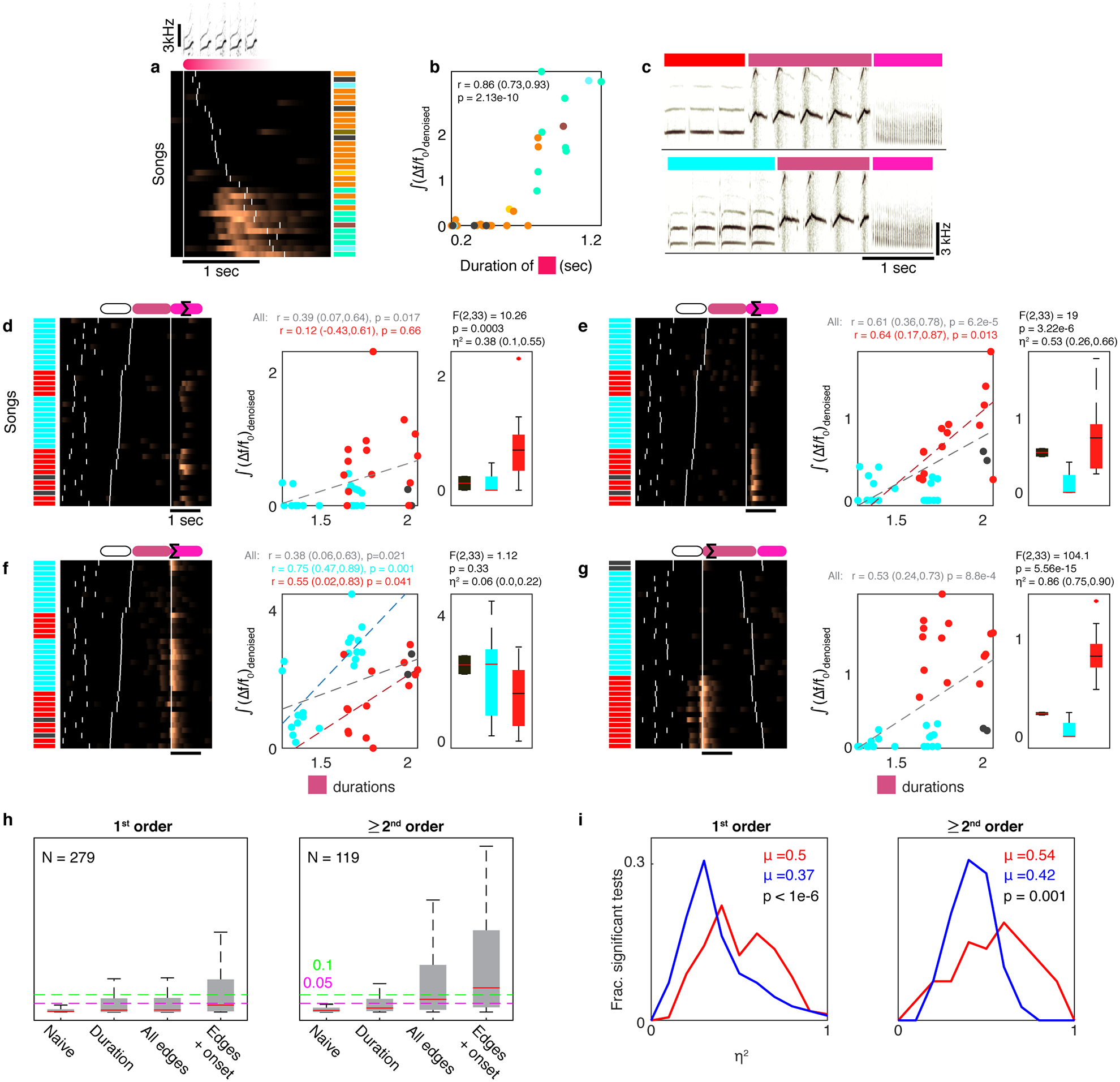
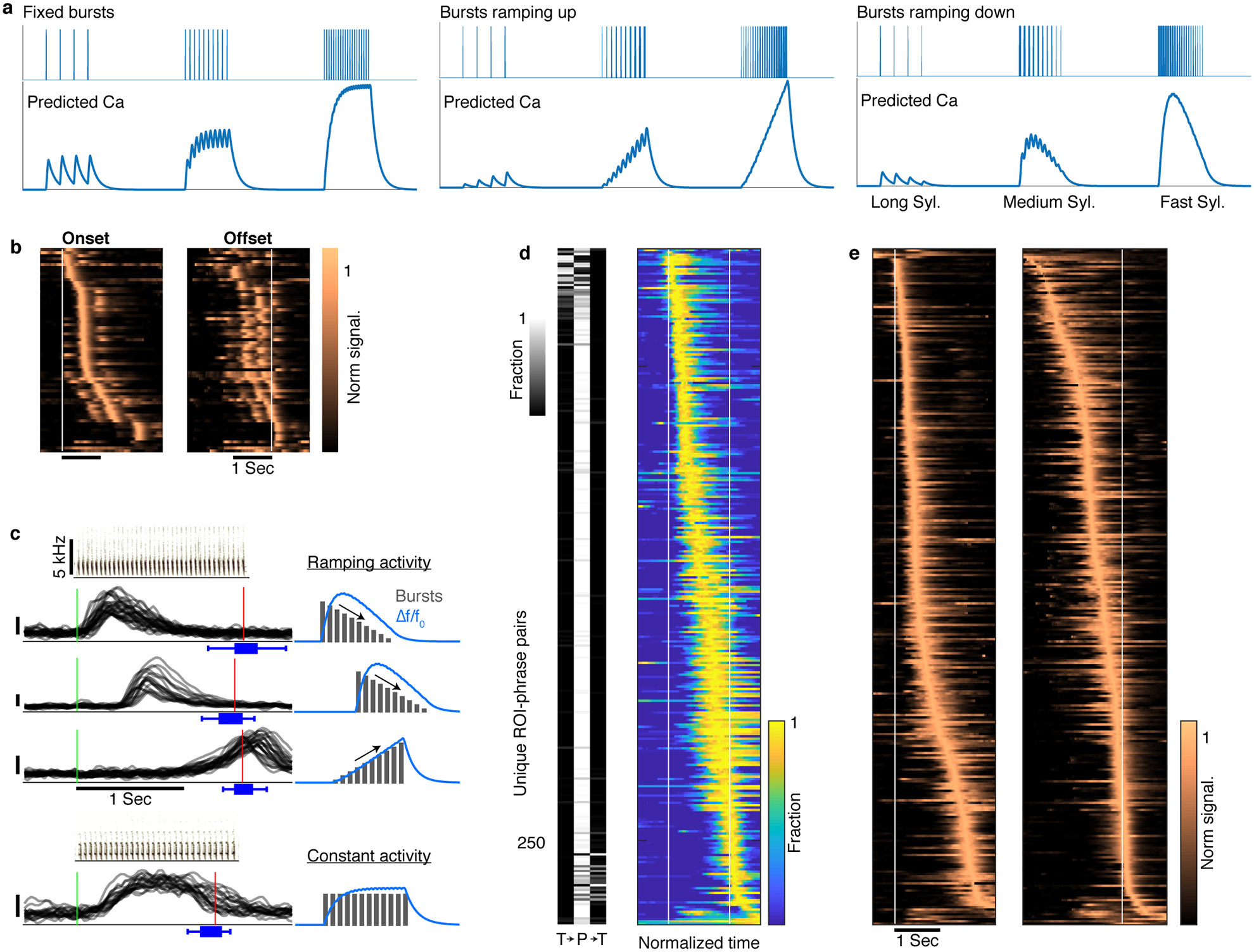
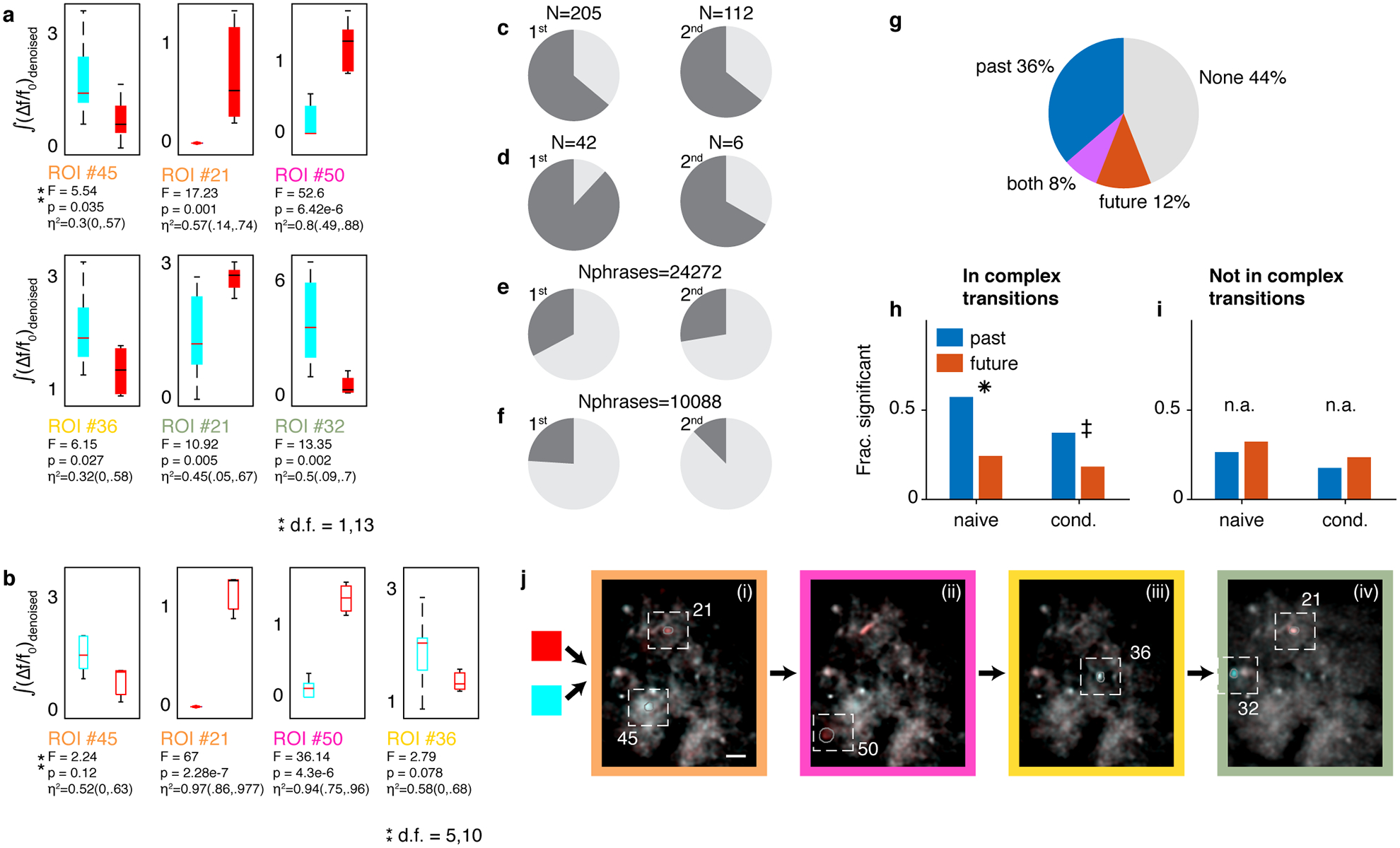
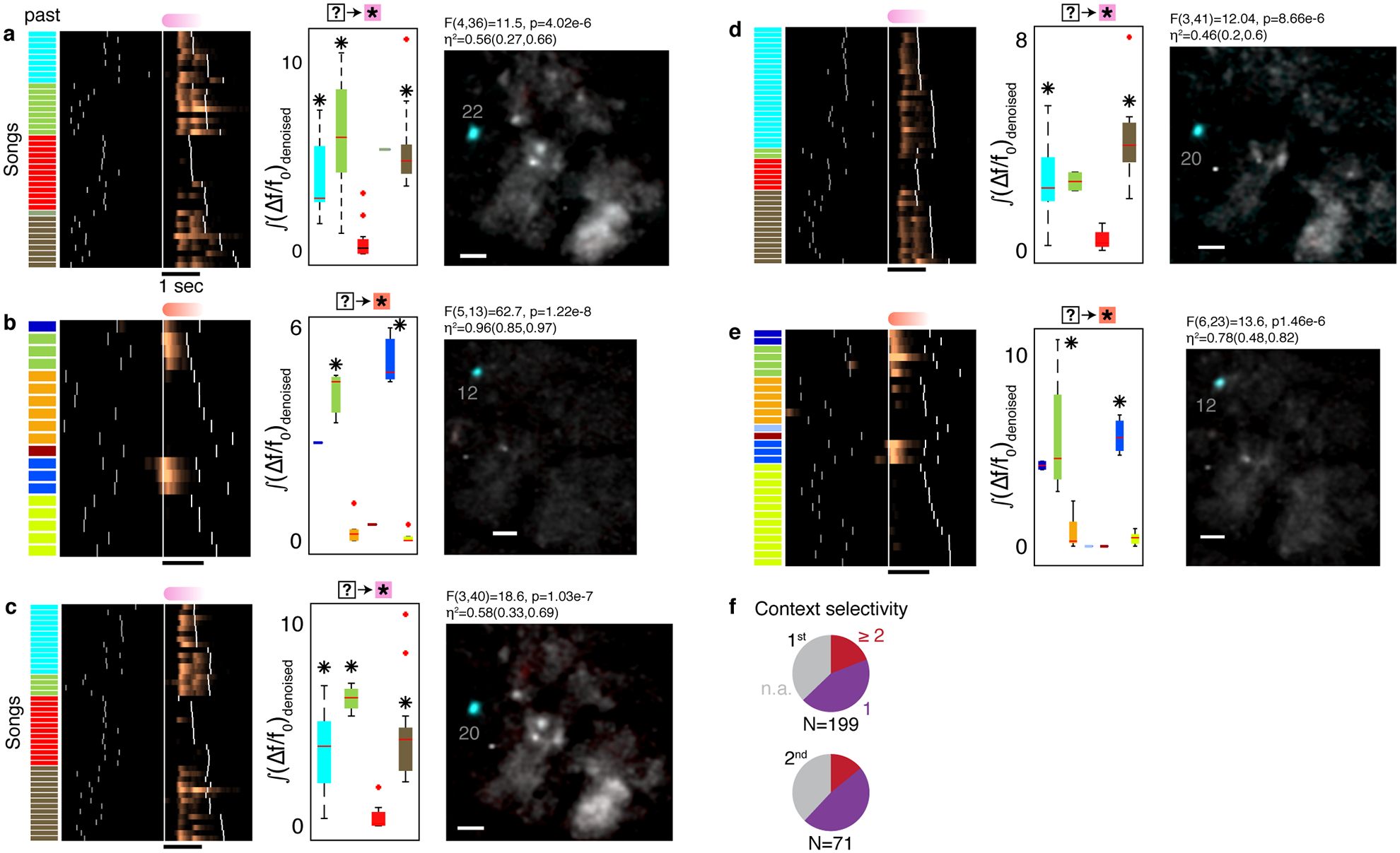
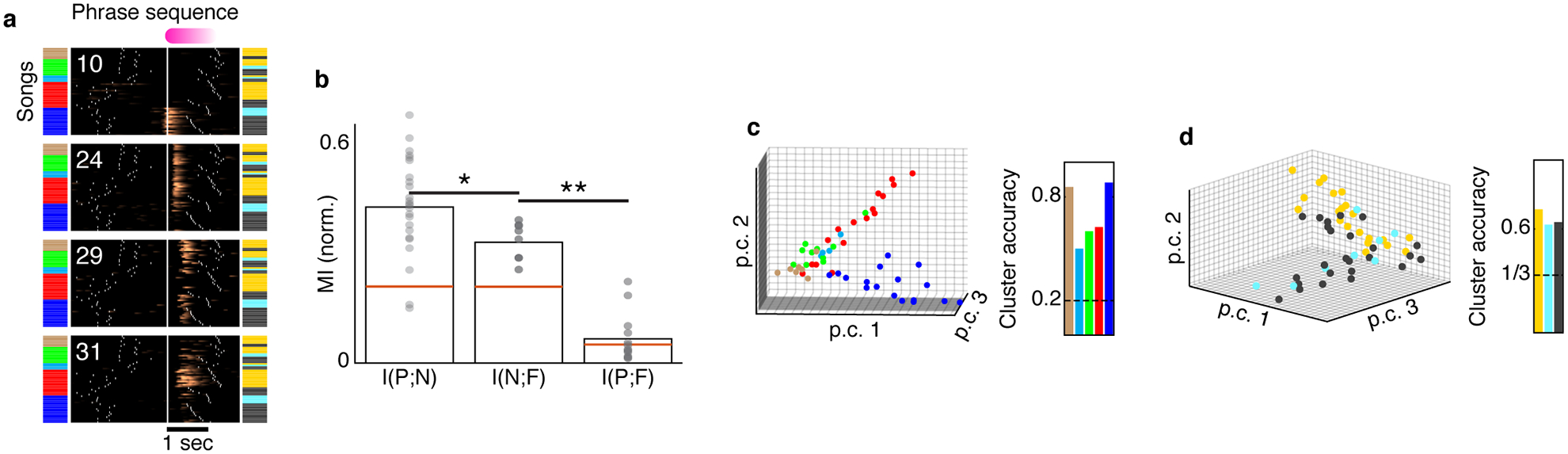
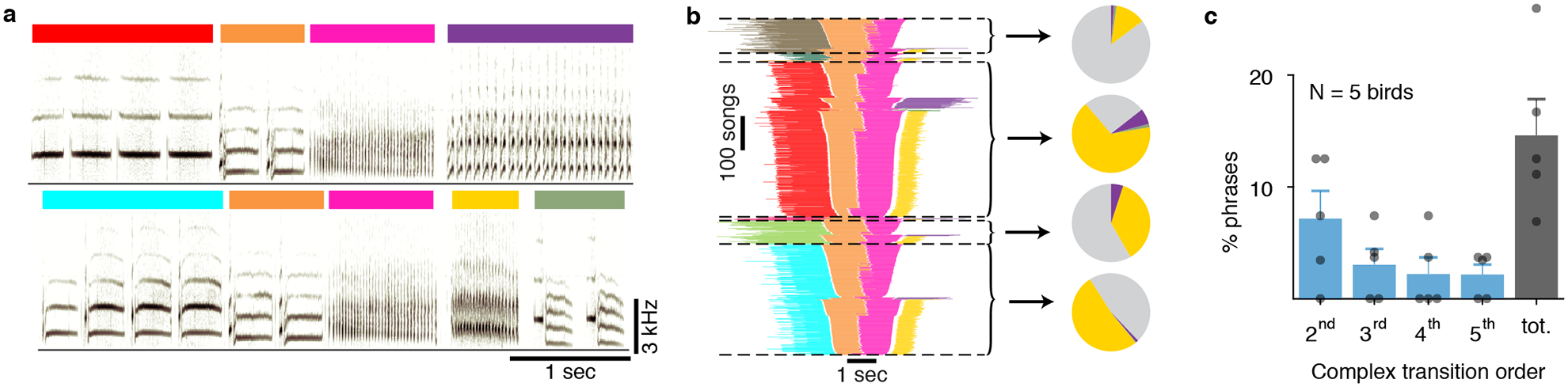
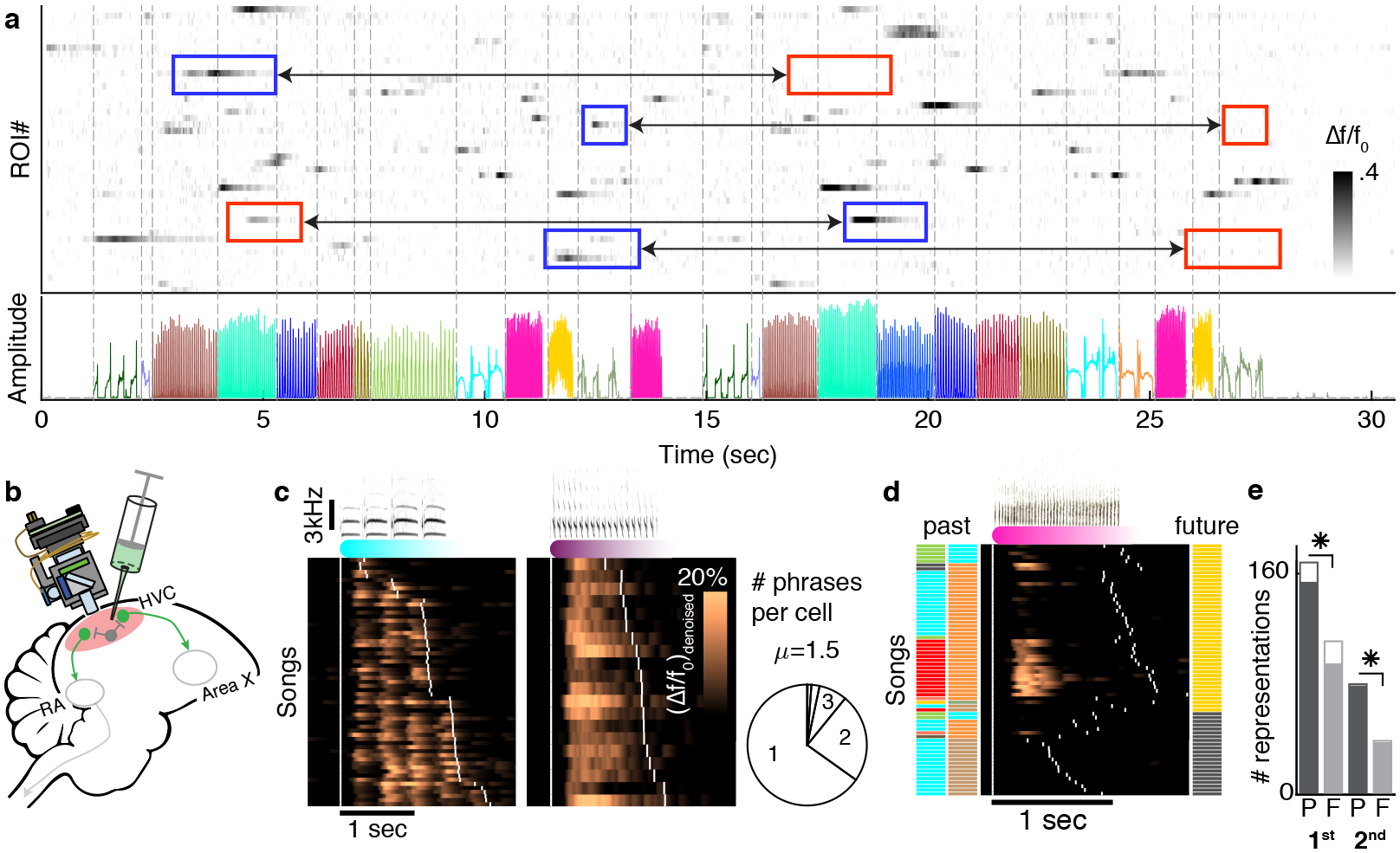
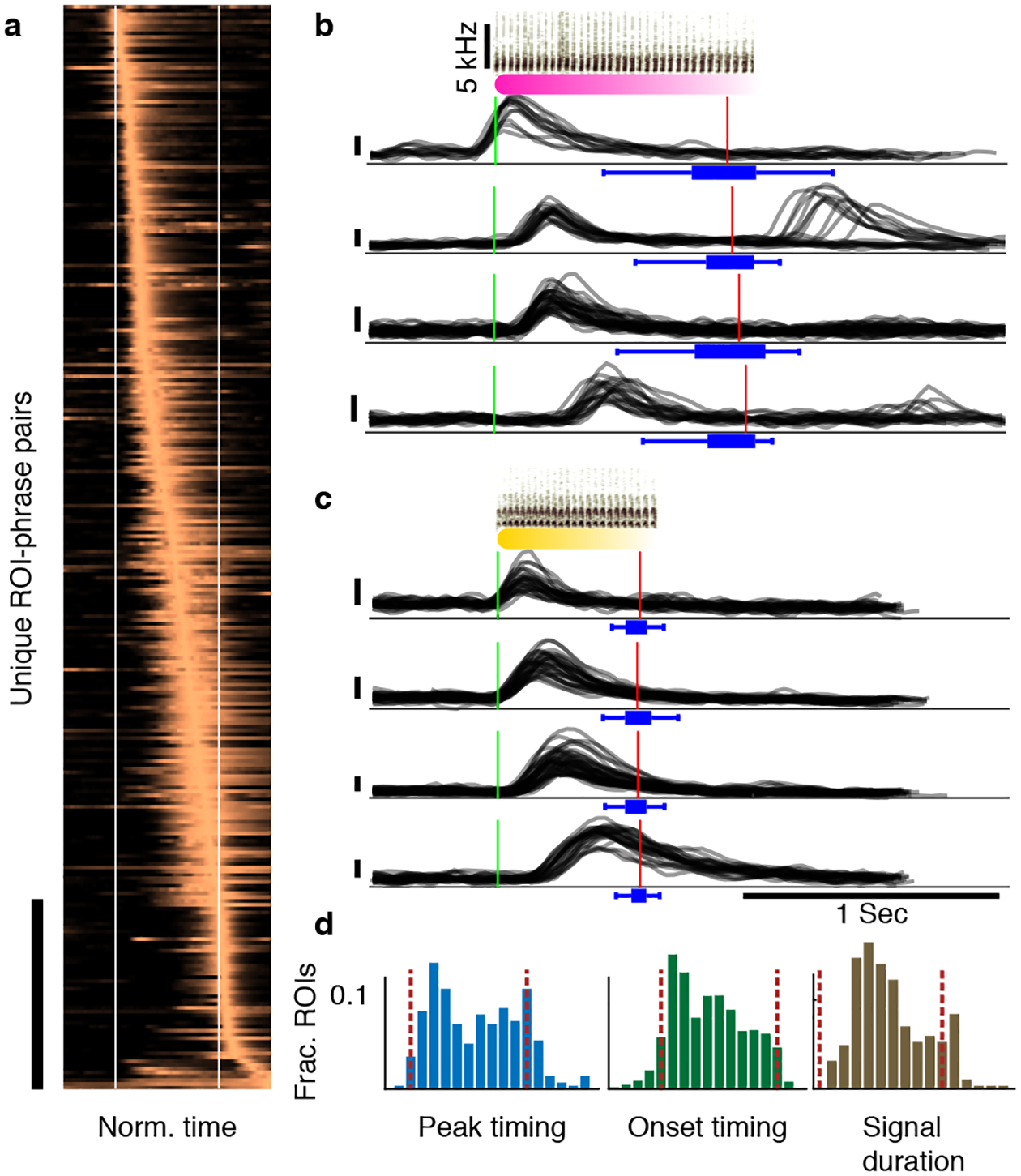
Coordinated skills such as speech or dance involve sequences of actions that follow syntactic rules in which transitions between elements depend on the identities and order of past actions. Canary songs consist of repeated syllables called phrases, and the ordering of these phrases follows long-range rules in which the choice of what to sing depends on the song structure many seconds prior. The neural substrates that support these long-range correlations are unknown. Here, using miniature head-mounted microscopes and cell-type-specific genetic tools, we observed neural activity in the premotor nucleus HVC as canaries explored various phrase sequences in their repertoire. We identified neurons that encode past transitions, extending over four phrases and spanning up to four seconds and forty syllables. These neurons preferentially encode past actions rather than future actions, can reflect more than one song history, and are active mostly during the rare phrases that involve history-dependent transitions in song. These findings demonstrate that the dynamics of HVC include 'hidden states' that are not reflected in ongoing behaviour but rather carry information about prior actions. These states provide a possible substrate for the control of syntax transitions governed by long-range rules.
协调技能,如演讲或舞蹈,涉及到遵循句法规则的动作序列,其中元素之间的转换取决于过去动作的身份和顺序。金丝雀的歌声由称为短语的重复音节组成,这些短语的排序遵循长程规则,其中要唱什么取决于前几秒钟的歌曲结构。支持这些长程相关性的神经基质尚不清楚。在这里,我们使用微型头戴显微镜和细胞类型特异性遗传工具,观察了鸣禽在探索其曲目中各种短语序列时前运动核 HVC 中的神经活动。我们鉴定出编码过去转换的神经元,这些转换可以延伸到四个短语,跨越四秒和四十个音节。这些神经元优先编码过去的动作,而不是未来的动作,可以反映多个歌曲历史,并且主要在涉及歌曲中依赖历史的转换的罕见短语中活跃。这些发现表明,HVC 的动态包括“隐藏状态”,这些状态不会反映在正在进行的行为中,而是携带有关过去动作的信息。这些状态为受长程规则控制的句法转换的控制提供了一个可能的基础。