Department of Brain Sciences, Faculty of Medicine, Imperial College London, London, W6 8RP, UK.
Department of Neurology, Imperial College Healthcare NHS Trust, London, UK.
J Neurol. 2020 Nov;267(11):3268-3273. doi: 10.1007/s00415-020-09969-z. Epub 2020 Jun 18.
Cognitive dysfunction affects 40-60% of individuals with multiple sclerosis (MS). The neuropsychological profile commonly consists of a subcortical pattern of deficits, although a proportion of patients have a severe progressive cortical dementia. However, patients with MS can be affected by other neurodegenerative diseases, such as Alzheimer's disease (AD). Little is known about the co-existence of these two conditions but distinguishing dementia due to MS alone from a coexisting neurodegenerative disease is challenging. Amyloid PET imaging has allowed improved AD diagnosis, especially in patients with atypical presentations or multiple possible causes of cognitive impairment. Amyloid PET demonstrates increased cortical signal in AD, whereas reductions in subcortical uptake are associated with demyelination. To the authors knowledge, there are no reports of clinical Amyloid PET use in MS patients with dementia.
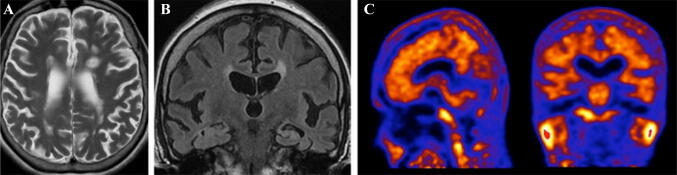
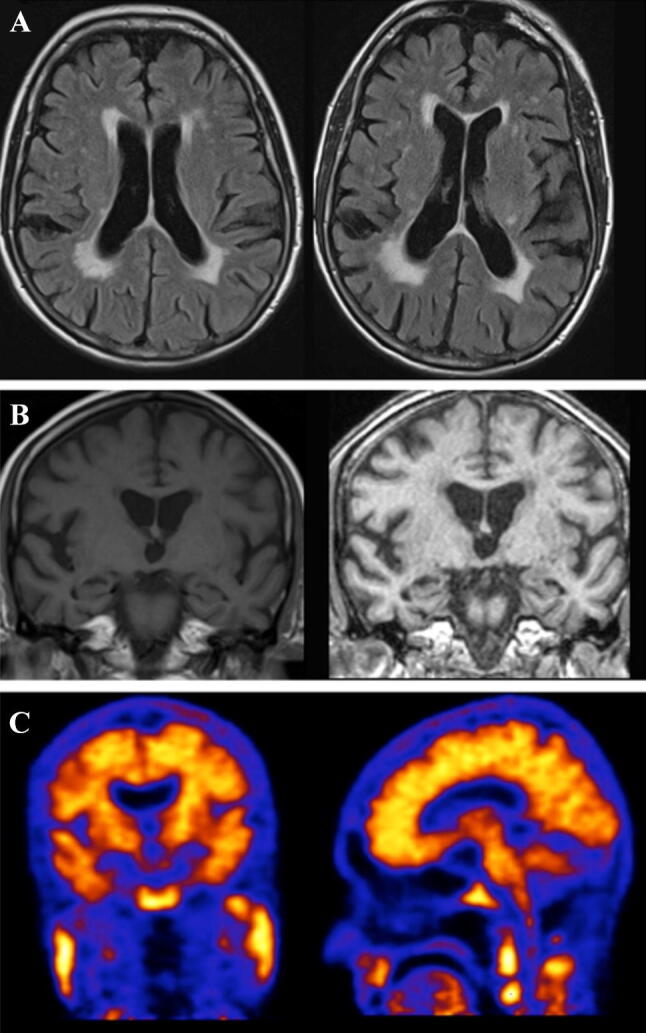
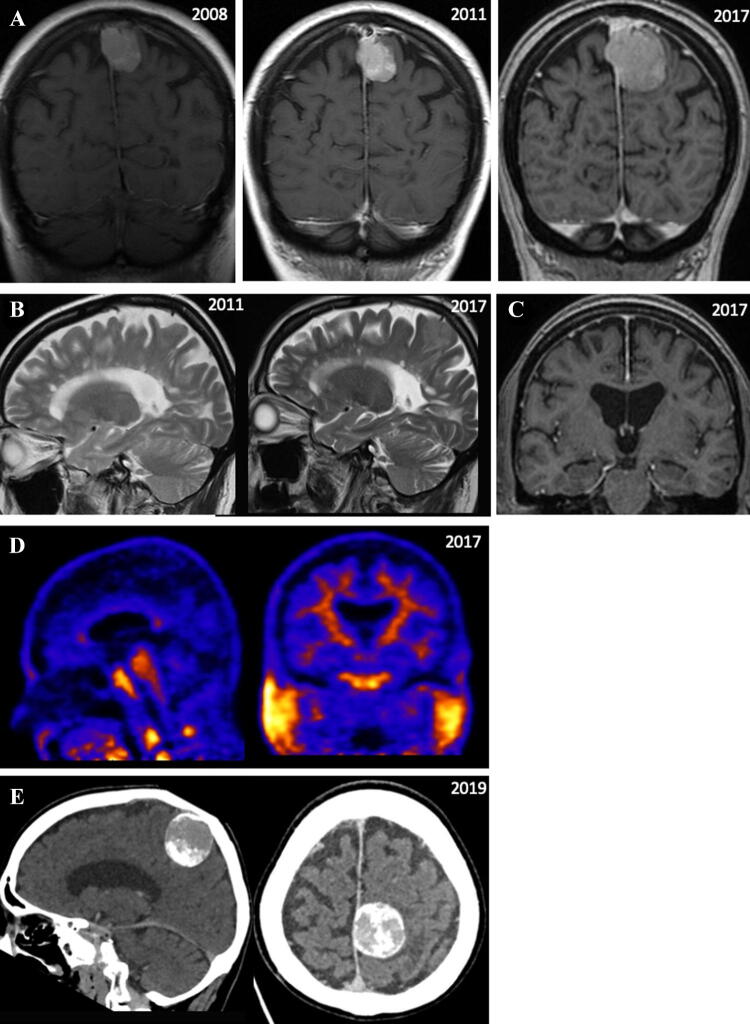
Here, three MS patients presenting to the Cognitive Neurology Clinic with progressive cognitive impairment are described. Due to lack of diagnostic clarity from standard investigations, they underwent Amyloid PET Imaging with F-florbetapir according to established appropriate use criteria and after review by a multidisciplinary team.
Two patients were diagnosed with AD based on positive Amyloid PET imaging and were subsequently started on cholinesterase inhibitor treatment. The other patient had a negative scan, leading to further investigations and identification of another potential cause of worsening cognitive impairment.
The experience from this case series suggests that Amyloid PET Imaging may be of diagnostic value in selected patients with MS and dementia. In these individuals, it may provide diagnostic clarity and assist with therapeutic decisions.
认知功能障碍影响 40-60%的多发性硬化症(MS)患者。神经心理学特征通常表现为皮质下缺损模式,尽管部分患者存在严重的进行性皮质痴呆。然而,MS 患者可能会受到其他神经退行性疾病的影响,如阿尔茨海默病(AD)。目前对于这两种疾病的共存情况了解甚少,但区分由 MS 引起的痴呆与共存的神经退行性疾病具有挑战性。淀粉样蛋白 PET 成像可以改善 AD 的诊断,特别是在表现不典型或存在多种认知障碍原因的患者中。AD 患者的皮质信号增加,而皮质下摄取减少与脱髓鞘有关。据作者所知,尚无 MS 痴呆患者临床使用淀粉样蛋白 PET 的报道。
这里描述了三位在认知神经科诊所就诊的认知功能进行性下降的 MS 患者。由于标准检查无法明确诊断,根据既定的适当使用标准,并经多学科团队审查,他们进行了 F-氟比他滨淀粉样蛋白 PET 成像。
两名患者根据阳性淀粉样蛋白 PET 成像被诊断为 AD,并随后开始接受胆碱酯酶抑制剂治疗。另一名患者扫描结果为阴性,随后进行了进一步的检查,并确定了认知功能恶化的另一个潜在原因。
该病例系列的经验表明,淀粉样蛋白 PET 成像在特定的 MS 和痴呆患者中可能具有诊断价值。在这些患者中,它可以提供明确的诊断并有助于治疗决策。