Department of Medicine, Division of Internal Medicine, University of Texas Health San Antonio, 7703 Floyd Curl Drive, San Antonio, TX, 78229, USA.
Department of Medicine, Division of Cardiovascular Diseases, University of Texas Health San Antonio, San Antonio, TX, 78229, USA.
Curr Cardiol Rep. 2020 Jun 17;22(7):53. doi: 10.1007/s11886-020-01328-8.
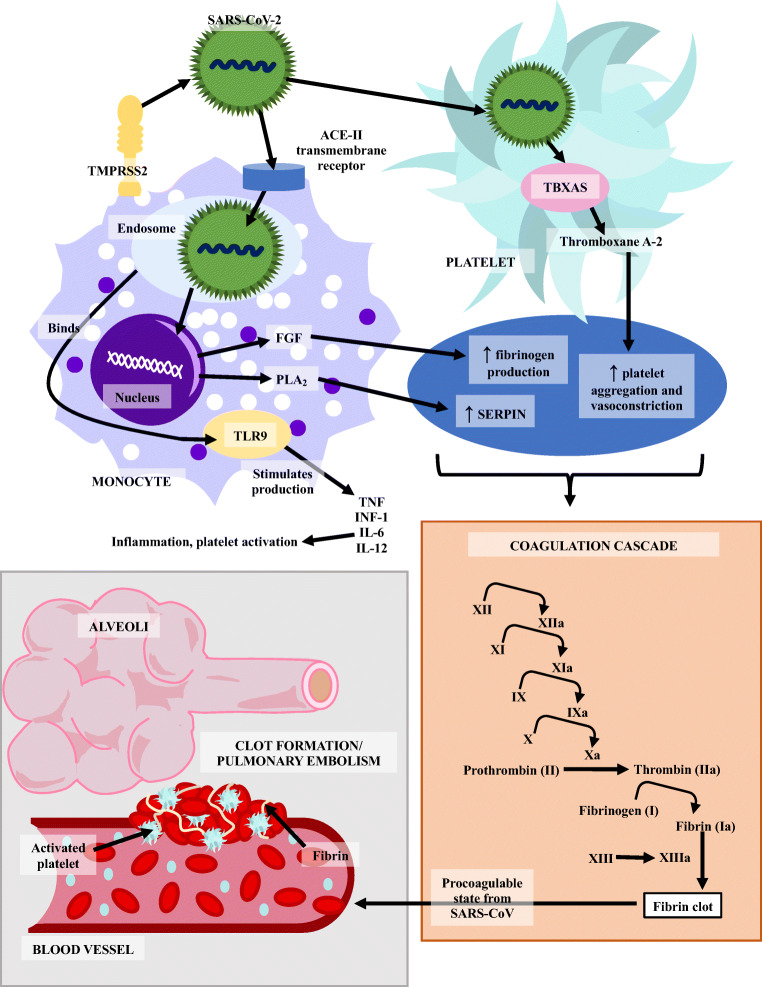
We aim to provide a comprehensive analysis of hypercoagulability in individuals affected by COVID-19. Our goal is to describe the hypercoagulable state related to the infection and provide guidance regarding the possible benefits of anti-coagulation with the support of evidence from current literature.
The incidence of thrombotic disease in individuals affected by COVID-19 is reported as high as 31%. A significant mortality benefit has been observed with the use of therapeutic anticoagulation in high-risk individuals. Literature supports the use of scoring systems, such as the sepsis-induced coagulopathy score, to risk-stratify individuals who might benefit from anticoagulation. COVID-19-induced hypercoagulability has been demonstrated to play a significant role in overall COVID-19 outcomes. Current literature shows promising evidence with the use of therapeutic anticoagulation in high-risk individuals. Further studies are needed to better analyze the risks and benefits of anticoagulation in this specific patient population.
本综述旨在全面分析 COVID-19 感染者的高凝状态。我们的目标是描述与感染相关的高凝状态,并结合现有文献证据,就抗凝治疗的可能获益提供指导。
COVID-19 感染者的血栓性疾病发生率高达 31%。高危人群使用治疗性抗凝治疗可显著降低死亡率。文献支持使用评分系统(如脓毒症诱导的凝血障碍评分)对可能从抗凝治疗中获益的人群进行风险分层。COVID-19 诱导的高凝状态在 COVID-19 患者的整体预后中起着重要作用。目前的文献证据表明,在高危人群中使用治疗性抗凝治疗具有良好的前景。需要进一步的研究来更好地分析该特定患者人群抗凝治疗的风险和获益。