Saleem Muhammad Hamzah, Ali Shafaqat, Kamran Muhammad, Iqbal Naeem, Azeem Muhammad, Tariq Javed Muhammad, Ali Qasim, Zulqurnain Haider Muhammad, Irshad Sana, Rizwan Muhammad, Alkahtani Saad, M Abdel-Daim Mohamed
MOA Key Laboratory of Crop Ecophysiology and Farming System Core in the Middle Reaches of the Yangtze River, College of Plant Science and Technology, Huazhong Agricultural University, Wuhan 430070, China.
Department of Environmental Sciences and Engineering, Government College University Allama Iqbal Road, Faisalabad 38000, Pakistan.
Plants (Basel). 2020 Jun 16;9(6):756. doi: 10.3390/plants9060756.
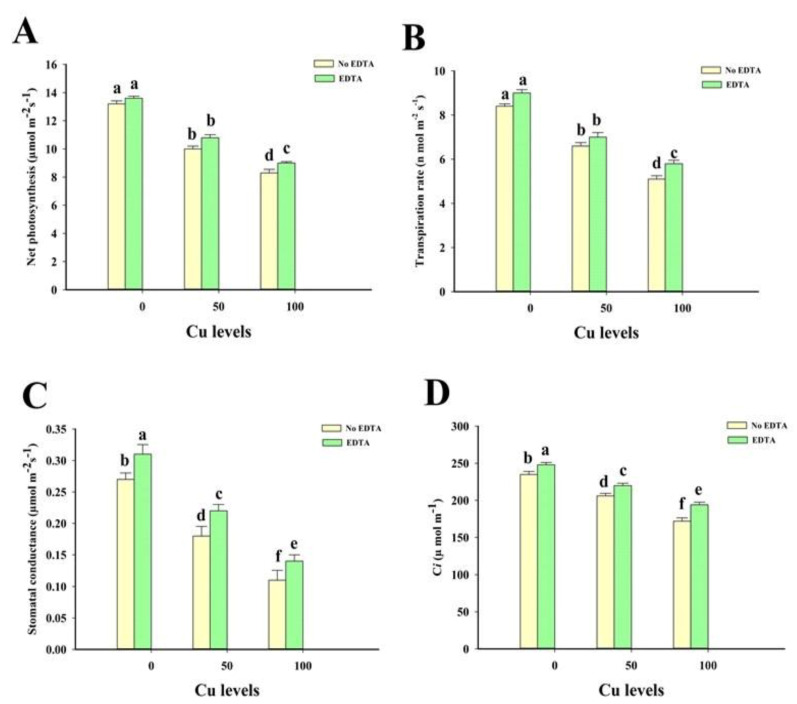
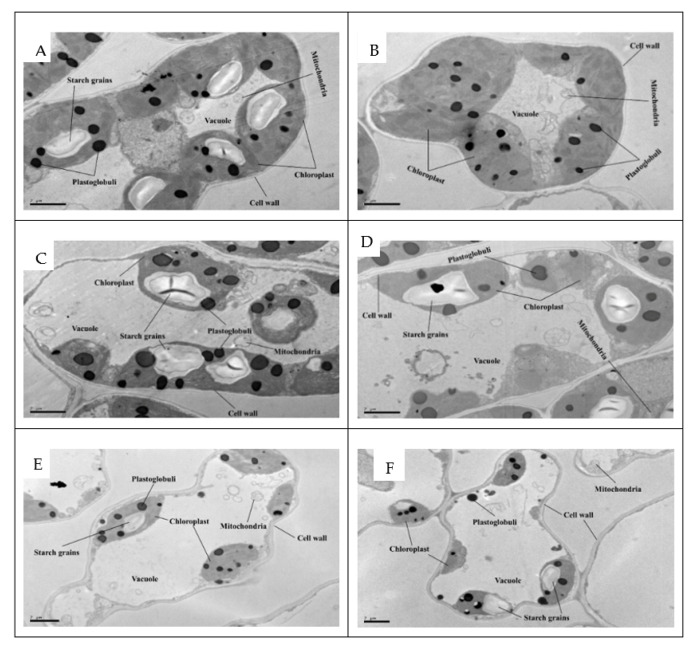
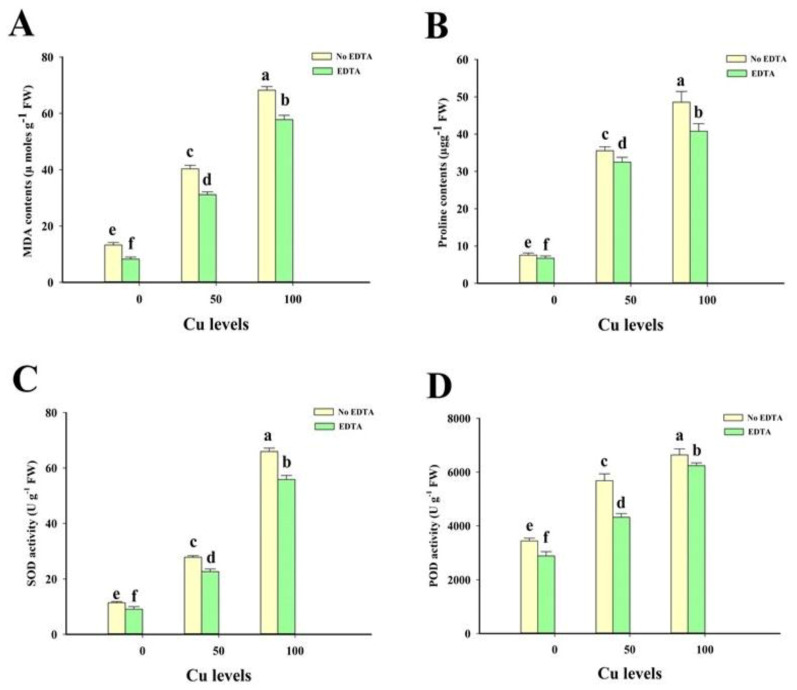
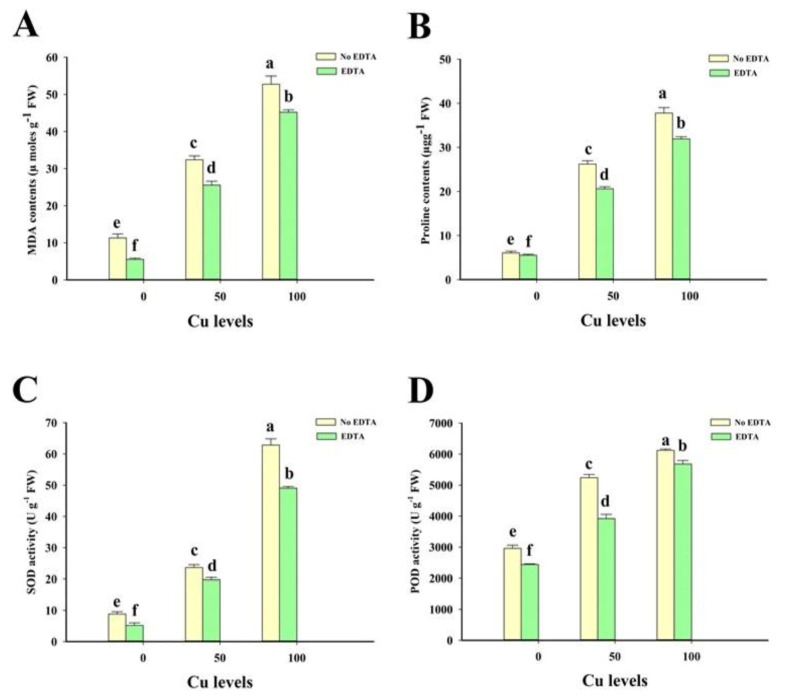
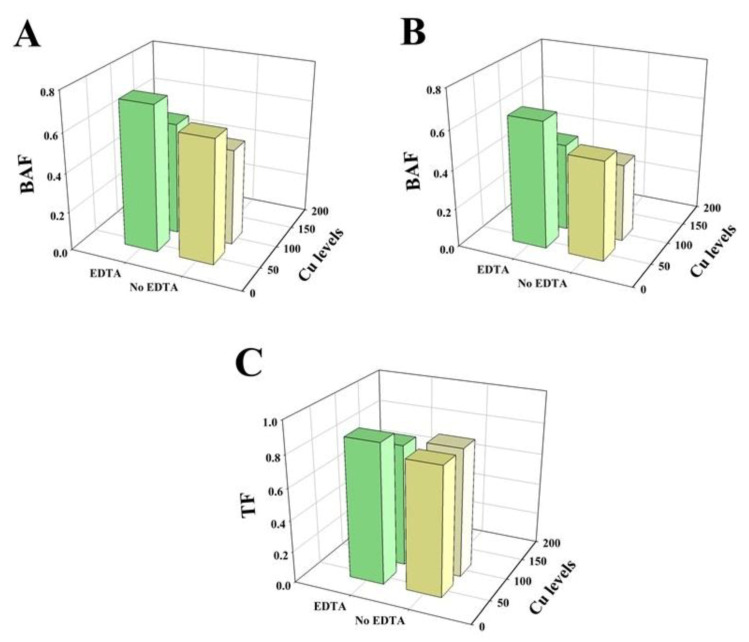
Copper (Cu) is an important micronutrient for a plant's normal growth and development. However, excess amount of Cu in the soil causes many severe problems in plants-which ultimately affect crop productivity and yield. Moreover, excess of Cu contents causes oxidative damage in the plant tissues by generating excess of reactive oxygen species (ROS). The present experiment was designed to investigate the phytoextraction potential of Cu, morpho-physiological features and biochemical reaction of jute ( L.) seedlings using ethylenediaminetetraacetic acid (EDTA) of 3 mM under different Cu levels (0 (control), 50 and 100 μM) in a hydroponic nutrient solution (Hoagland). Our results showed that elevated Cu rates (50 and 100 μM) in the nutrient solution significantly reduced plant height, fresh and dry biomass, total chlorophyll content and gaseous exchange attributes in seedlings. As the concentration of Cu in the medium increased (50 and 100 μM), the level of malondialdehyde (MDA) and oxidative stress in seedlings also increased, which could have been controlled by antioxidant activity in particular plant cells. In addition, rising Cu concentration in the nutrient solution also increased Cu uptake and accumulation in roots and leaves as well as affected the ultrastructure of chloroplast of seedlings. The addition of EDTA to the nutrient solution significantly alleviated Cu toxicity in seedlings, showing a significantly increase in plant growth and biomass. MDA contents was not significantly increased in EDTA-induced plants, suggesting that this treatment was helpful in capturing ROS and thereby reducing ROS in in seedlings. EDTA modification with Cu, although the bioaccumulation factor in roots and leaves and translocation factor for the leaves of seedlings has significantly increased. These results indicate that has considerable potential to cope with Cu stress and is capable of removing a large quantity of Cu from the Cu-contaminated soil while using EDTA is a useful strategy to increase plant growth and biomass with Cu absorption capabilities.
铜(Cu)是植物正常生长和发育所需的重要微量营养素。然而,土壤中过量的铜会给植物带来许多严重问题,最终影响作物的生产力和产量。此外,过量的铜含量会通过产生过量的活性氧(ROS)对植物组织造成氧化损伤。本实验旨在研究在水培营养液(霍格兰营养液)中,不同铜水平(0(对照)、50和100 μM)下,3 mM乙二胺四乙酸(EDTA)对黄麻(L.)幼苗的铜植物提取潜力、形态生理特征和生化反应的影响。我们的结果表明,营养液中铜含量升高(50和100 μM)显著降低了黄麻幼苗的株高、鲜重和干重、总叶绿素含量以及气体交换特性。随着培养基中铜浓度的增加(50和100 μM),黄麻幼苗中丙二醛(MDA)水平和氧化应激也增加,这可以通过特定植物细胞中的抗氧化活性来控制。此外,营养液中铜浓度的升高还增加了黄麻幼苗根和叶中铜的吸收和积累,并影响了叶绿体的超微结构。向营养液中添加EDTA显著减轻了黄麻幼苗的铜毒性,植物生长和生物量显著增加。在EDTA处理的植物中,MDA含量没有显著增加,这表明该处理有助于捕获ROS,从而减少黄麻幼苗中的ROS。用铜修饰EDTA后,黄麻幼苗根和叶中的生物积累因子以及叶的转运因子显著增加。这些结果表明,黄麻具有应对铜胁迫的相当潜力,能够从受铜污染的土壤中去除大量的铜,而使用EDTA是提高植物生长和生物量以及铜吸收能力的有效策略。