Department of Human Genetics, University of Utah, Salt Lake City, UT, United States.
Population Science, Huntsman Cancer Institute, University of Utah Health, Salt Lake City, UT, United States.
Sci Rep. 2020 Jun 19;10(1):10001. doi: 10.1038/s41598-020-66867-0.
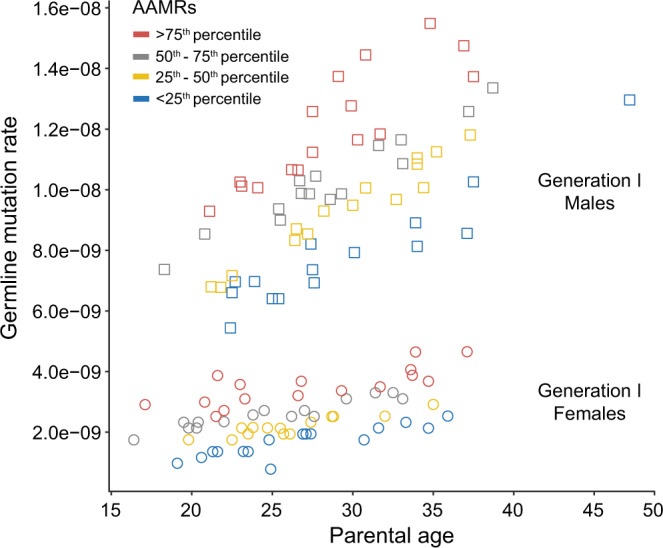
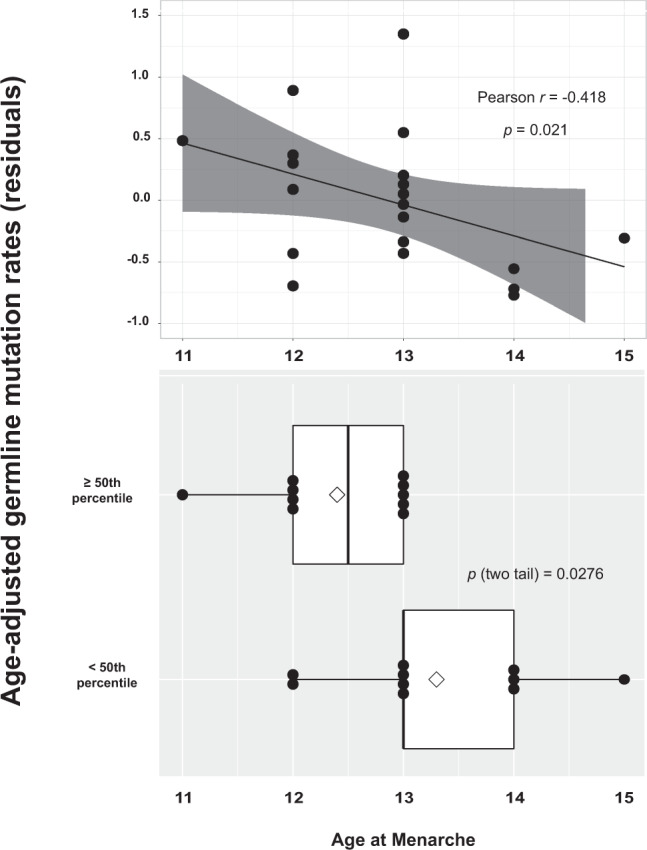
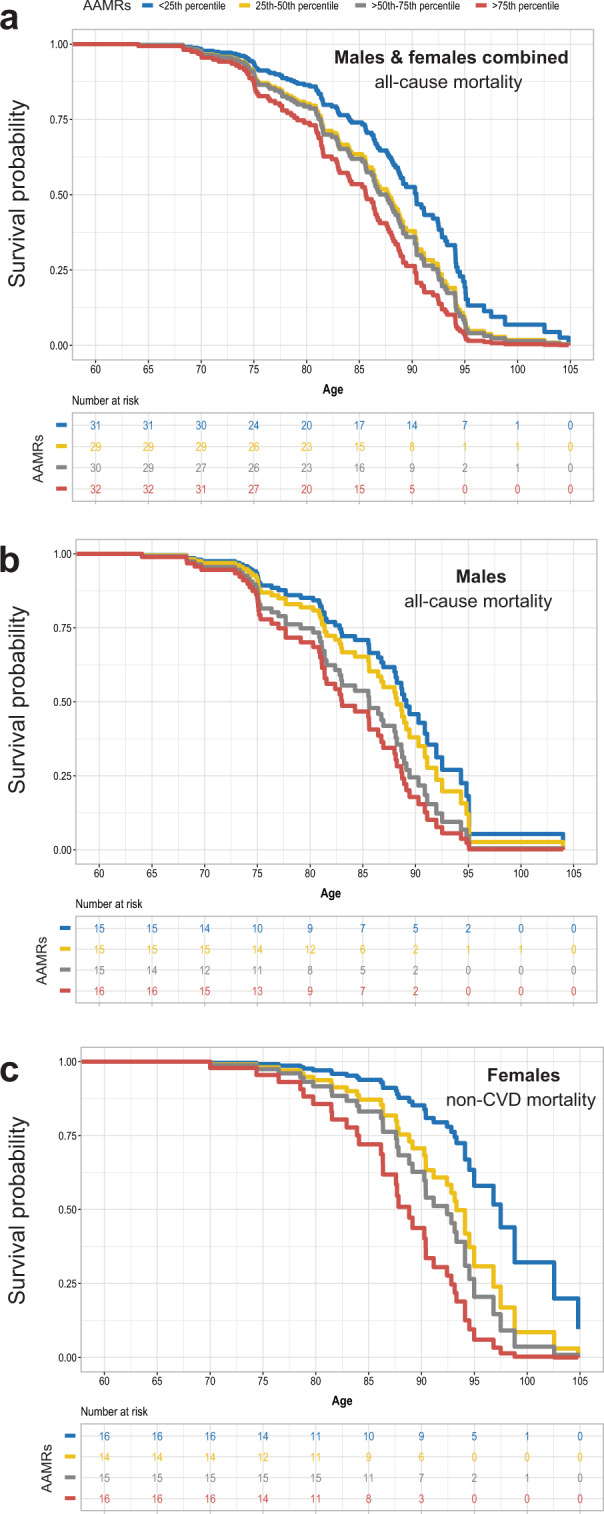
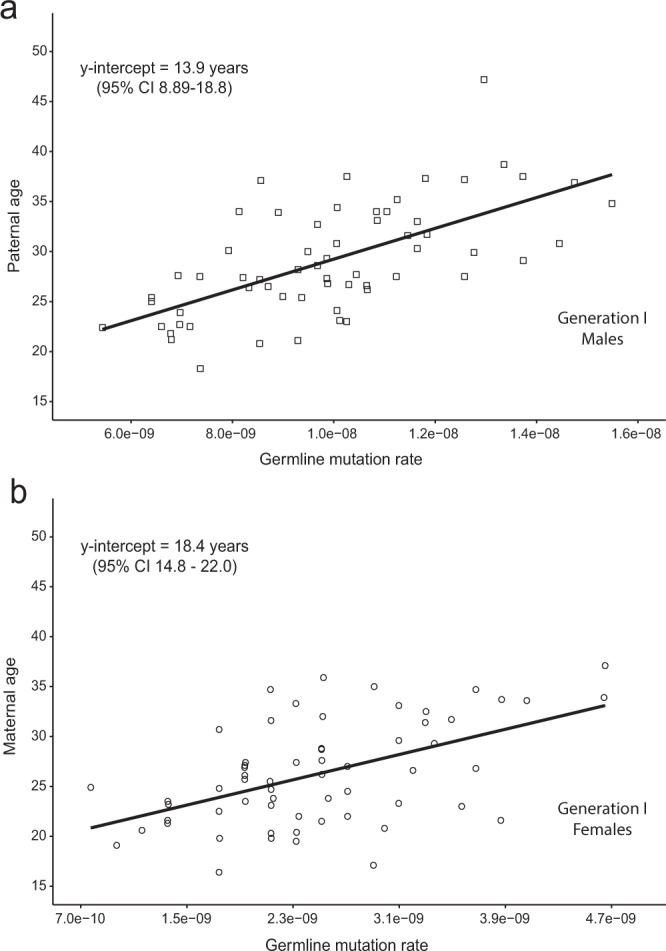
Ageing may be due to mutation accumulation across the lifespan, leading to tissue dysfunction, disease, and death. We tested whether germline autosomal mutation rates in young adults predict their remaining survival, and, for women, their reproductive lifespans. Age-adjusted mutation rates (AAMRs) in 61 women and 61 men from the Utah CEPH (Centre d'Etude du Polymorphisme Humain) families were determined. Age at death, cause of death, all-site cancer incidence, and reproductive histories were provided by the Utah Population Database, Utah Cancer Registry, and Utah Genetic Reference Project. Higher AAMRs were significantly associated with higher all-cause mortality in both sexes combined. Subjects in the top quartile of AAMRs experienced more than twice the mortality of bottom quartile subjects (hazard ratio [HR], 2.07; 95% confidence interval [CI], 1.21-3.56; p = 0.008; median survival difference = 4.7 years). Fertility analyses were restricted to women whose age at last birth (ALB) was ≥ 30 years, the age when fertility begins to decline. Women with higher AAMRs had significantly fewer live births and a younger ALB. Adult germline mutation accumulation rates are established in adolescence, and later menarche in women is associated with delayed mutation accumulation. We conclude that germline mutation rates in healthy young adults may provide a measure of both reproductive and systemic ageing. Puberty may induce the establishment of adult mutation accumulation rates, just when DNA repair systems begin their lifelong decline.
衰老是由于寿命过程中积累的突变导致的,从而引起组织功能障碍、疾病和死亡。我们测试了年轻人的种系常染色体突变率是否可以预测他们的剩余存活时间,以及女性的生殖寿命。从犹他州 CEPH(人类多态性研究中心)家族的 61 名女性和 61 名男性中确定了年龄调整后的突变率(AAMR)。死亡年龄、死因、所有部位癌症发病率以及生殖史均由犹他州人口数据库、犹他州癌症登记处和犹他州遗传参考项目提供。两性中 AAMR 越高,全因死亡率越高。AAMR 处于前四分之一的受试者的死亡率是处于后四分之一的受试者的两倍多(危险比[HR],2.07;95%置信区间[CI],1.21-3.56;p=0.008;中位生存差异=4.7 年)。生育能力分析仅限于最后一次生育年龄(ALB)≥30 岁的女性,这是生育能力开始下降的年龄。AAMR 较高的女性活产婴儿明显较少,ALB 也较早。成人种系突变积累率在青春期确立,而女性的初潮较晚与突变积累的延迟有关。我们得出的结论是,健康年轻成年人的种系突变率可能提供生殖和系统衰老的衡量标准。青春期可能会诱导成人突变积累率的建立,而此时 DNA 修复系统开始终生下降。