State Environment Protection Key Laboratory of Regional Eco-processand Function Assessment, Chinese Research Academy of Environmental Sciences, Beijing, 100012, China.
State Key Laboratory of Environmental Criteria and Risk Assessment, Beijing, 100012, China.
Sci Rep. 2020 Jun 19;10(1):9967. doi: 10.1038/s41598-020-67025-2.
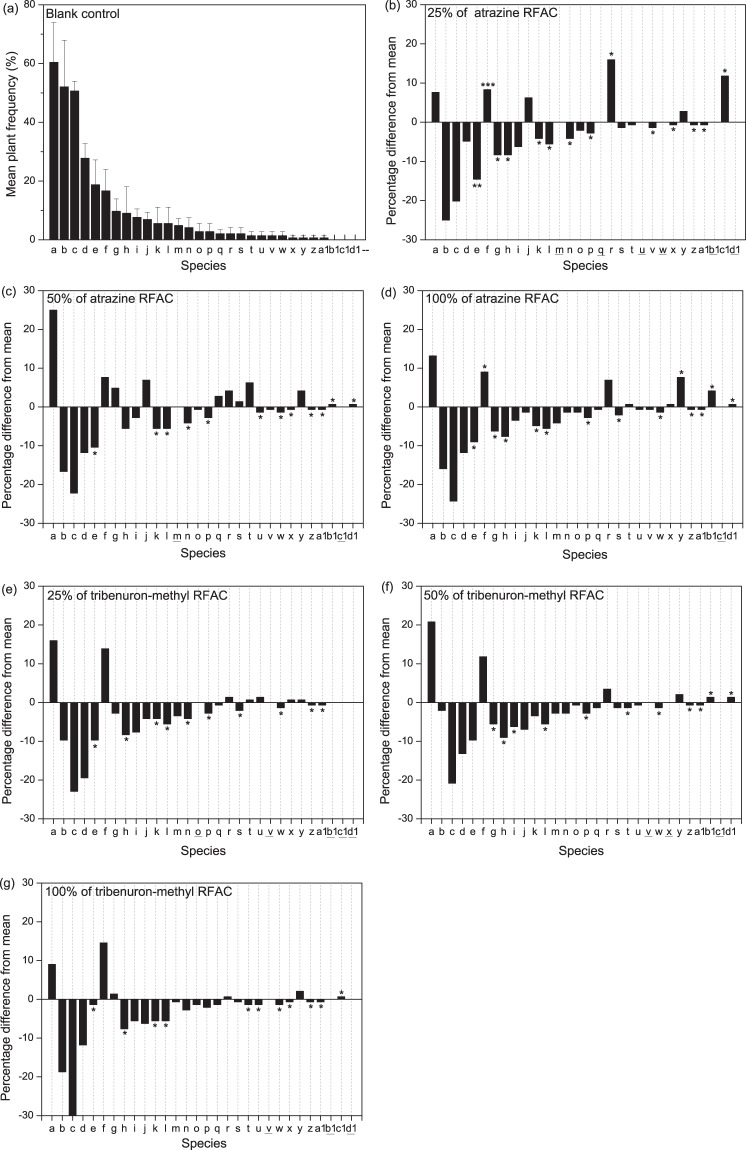
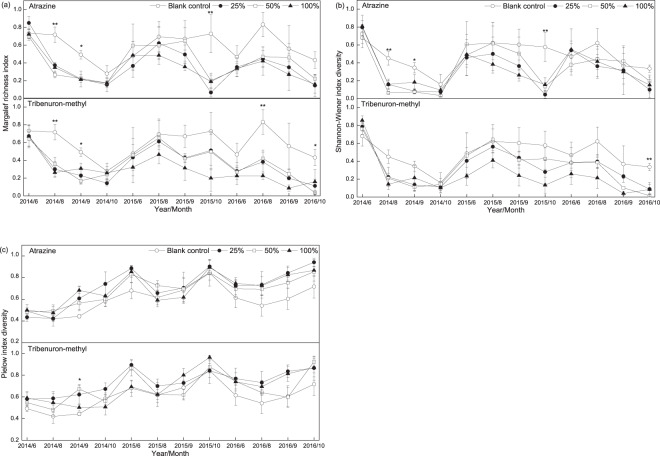
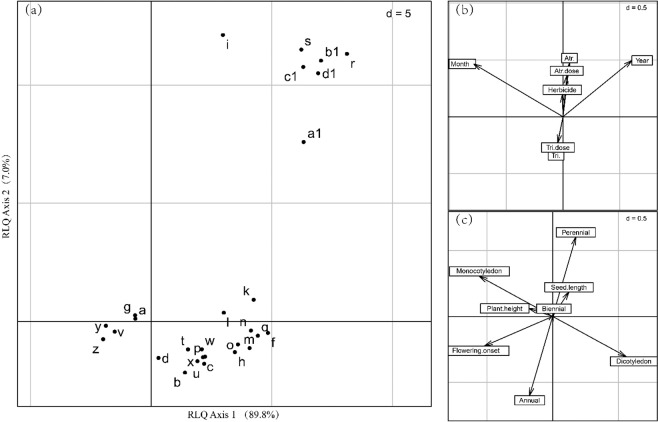
Despite the important ecological and agricultural production value of fallow field vegetation in agricultural landscapes, it is often affected by herbicide drift and runoff from neighboring sprayed fields. However, little is known about the impact of herbicides on the non-target plant community of fallow fields. In this study, the plant community of fallow fields was investigated following annual sublethal exposure to atrazine or tribenuron-methyl by a 3-year (2014-2016) randomized block field study. The two herbicides both changed the species composition, reduced the number of plant species and the relative frequencies of some plants, and significantly reduced the Margalef species richness index and Shannon's diversity index of the plant community in the fallow field. The effects of the two herbicides on species number and community composition were not consistent. The effects of herbicide doses less than the recommended field application concentration (RFAC) on the plant community composition and community diversity of the fallow field were not lower than the effects of the RFAC of the herbicides. Indeed, doses less than the RFAC had an even greater impact on the community diversity than the RFAC of the herbicides. As the number of years of herbicide application increased, the effects of the herbicides on the plant community diversity did not increase compared to the effects of the blank control, and the herbicides did not change the functional composition of the plant communities in the fallow field. Our results suggest that the ecological risks of herbicides, even at low concentrations, on non-target wild plant communities in agricultural landscapes should not be neglected in the development of practical plant diversity conservation strategies.
尽管休耕农田植被在农业景观中具有重要的生态和农业生产价值,但它经常受到邻近施药农田的除草剂飘移和径流的影响。然而,人们对除草剂对休耕农田非靶标植物群落的影响知之甚少。在这项研究中,通过 3 年(2014-2016 年)的随机区组田间试验,研究了休耕农田在每年亚致死浓度的莠去津或唑草酮暴露下的植物群落。这两种除草剂都改变了物种组成,减少了植物物种数量和某些植物的相对频率,显著降低了休耕农田植物群落的Margalef 物种丰富度指数和 Shannon 多样性指数。两种除草剂对物种数量和群落组成的影响不一致。低于推荐田间施用量(RFAC)的除草剂剂量对休耕农田植物群落组成和群落多样性的影响并不低于除草剂 RFAC 的影响。事实上,低于 RFAC 的剂量对群落多样性的影响甚至大于除草剂 RFAC 的影响。随着除草剂施用量的增加,与空白对照相比,除草剂对植物群落多样性的影响并没有增加,而且除草剂也没有改变休耕农田植物群落的功能组成。我们的研究结果表明,在制定实际的植物多样性保护策略时,不应忽视除草剂即使在低浓度下对农业景观中非靶标野生植物群落的生态风险。