Department of Neuroscience, University of Pennsylvania, Philadelphia, United States.
Department of Psychology, University of Pennsylvania, Philadelphia, United States.
Elife. 2020 Jun 22;9:e56694. doi: 10.7554/eLife.56694.
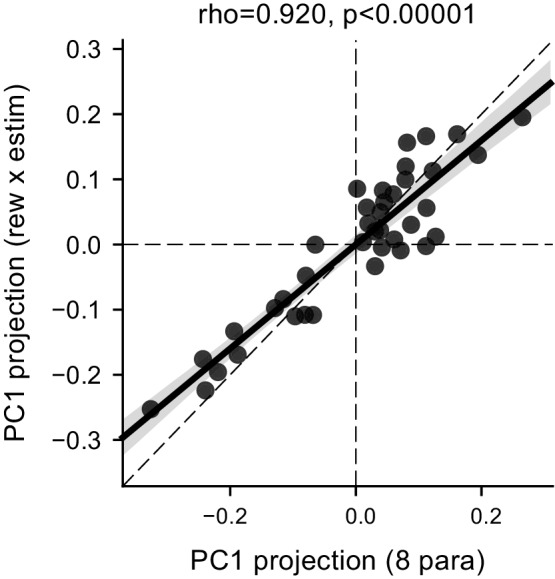
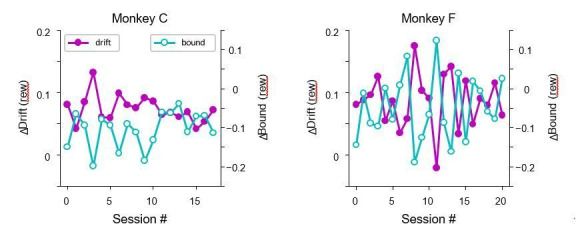
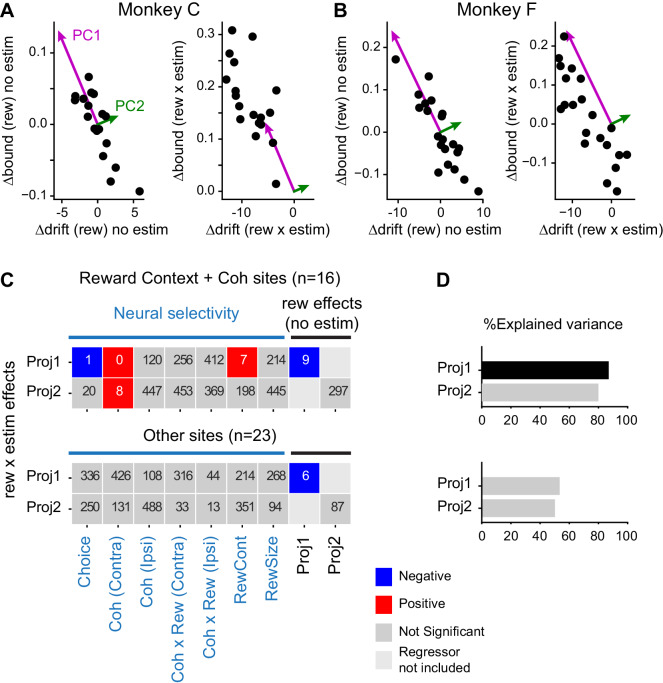
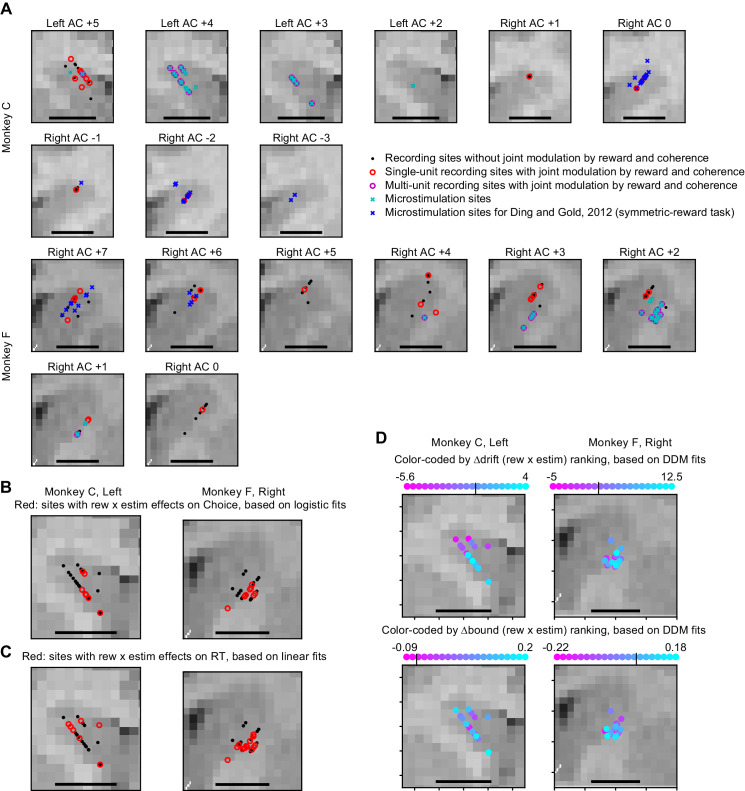
Our decisions often balance what we observe and what we desire. A prime candidate for implementing this complex balancing act is the basal ganglia pathway, but its roles have not yet been examined experimentally in detail. Here, we show that a major input station of the basal ganglia, the caudate nucleus, plays a causal role in integrating uncertain visual evidence and reward context to guide adaptive decision-making. In monkeys making saccadic decisions based on motion cues and asymmetric reward-choice associations, single caudate neurons encoded both sources of information. Electrical microstimulation at caudate sites during motion viewing affected the monkeys' decisions. These microstimulation effects included coordinated changes in multiple computational components of the decision process that mimicked the monkeys' similarly coordinated voluntary strategies for balancing visual and reward information. These results imply that the caudate nucleus plays causal roles in coordinating decision processes that balance external evidence and internal preferences.
我们的决策常常需要平衡我们所观察到的和我们所期望的。基底神经节通路是实施这种复杂平衡行为的主要候选者,但它的作用尚未在实验中详细研究。在这里,我们表明基底神经节的一个主要输入站,尾状核,在整合不确定的视觉证据和奖励背景以指导适应性决策方面起着因果作用。在基于运动线索和不对称奖励选择关联进行扫视决策的猴子中,单个尾状核神经元编码了这两种信息源。在运动观察期间对尾状核部位进行电微刺激会影响猴子的决策。这些微刺激效应包括决策过程中多个计算成分的协调变化,这些变化模拟了猴子为平衡视觉和奖励信息而协调使用的自愿策略。这些结果表明,尾状核在协调平衡外部证据和内部偏好的决策过程中起着因果作用。