Sudars Kaspars, Jasko Janis, Namatevs Ivars, Ozola Liva, Badaukis Niks
Institute of Electronics and Computer Science, Dzērbenes str.14, Riga LV-1006, Latvia.
Institute for Plant Protection Research `Agrihorts', Latvia University of Life Sciences and Technologies, P. Lejiņa str. 2, LV-3004 Jelgava, Latvia.
Data Brief. 2020 Jun 11;31:105833. doi: 10.1016/j.dib.2020.105833. eCollection 2020 Aug.
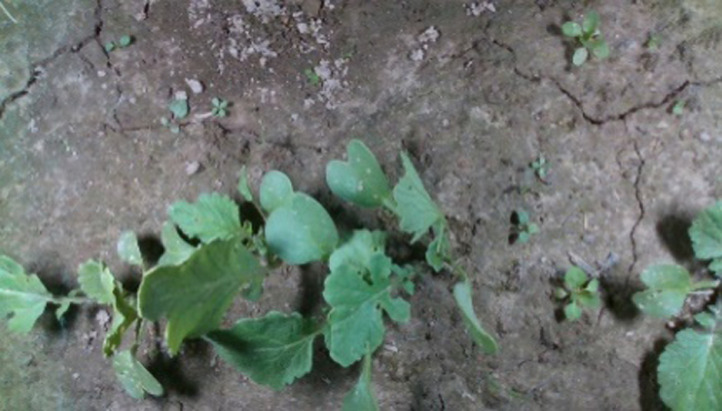
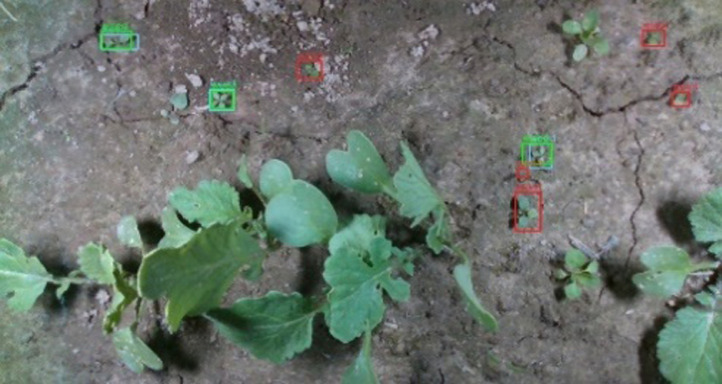
Weed management technologies that can identify weeds and distinguish them from crops are in need of artificial intelligence solutions based on a computer vision approach, to enable the development of precisely targeted and autonomous robotic weed management systems. A prerequisite of such systems is to create robust and reliable object detection that can unambiguously distinguish weed from food crops. One of the essential steps towards precision agriculture is using annotated images to train convolutional neural networks to distinguish weed from food crops, which can be later followed using mechanical weed removal or selected spraying of herbicides. In this data paper, we propose an open-access dataset with manually annotated images for weed detection. The dataset is composed of 1118 images in which 6 food crops and 8 weed species are identified, altogether 7853 annotations were made in total. Three RGB digital cameras were used for image capturing: Intel RealSense D435, Canon EOS 800D, and Sony W800. The images were taken on food crops and weeds grown in controlled environment and field conditions at different growth stages.
能够识别杂草并将其与作物区分开来的杂草管理技术需要基于计算机视觉方法的人工智能解决方案,以推动精确靶向和自主机器人杂草管理系统的发展。此类系统的一个先决条件是创建强大且可靠的目标检测,能够明确区分杂草和粮食作物。迈向精准农业的关键步骤之一是使用带注释的图像来训练卷积神经网络,以区分杂草和粮食作物,随后可采用机械除草或选择性喷洒除草剂的方式。在本数据论文中,我们提出了一个用于杂草检测的、带有手动注释图像的开放获取数据集。该数据集由1118张图像组成,其中识别出了6种粮食作物和8种杂草物种,总共进行了7853次注释。使用了三台RGB数码相机进行图像采集:英特尔实感D435、佳能EOS 800D和索尼W800。这些图像拍摄于不同生长阶段的、在受控环境和田间条件下种植的粮食作物和杂草。