
髋关节半关节置换术中骨水泥注入后发生的深静脉血栓形成
Deep Vein Thrombosis after Cement Intravasation during Hip Hemiarthroplasty.
作者信息
Mathur Abhay, Fassihi Safa C, Ramamurti Pradip, Doerre Teresa
机构信息
Department of Orthopaedic Surgery, George Washington University, Washington, DC, USA.
George Washington University, School of Medicine, Washington, DC, USA.
出版信息
Arthroplast Today. 2020 Apr 13;6(2):283-287. doi: 10.1016/j.artd.2020.03.007. eCollection 2020 Jun.
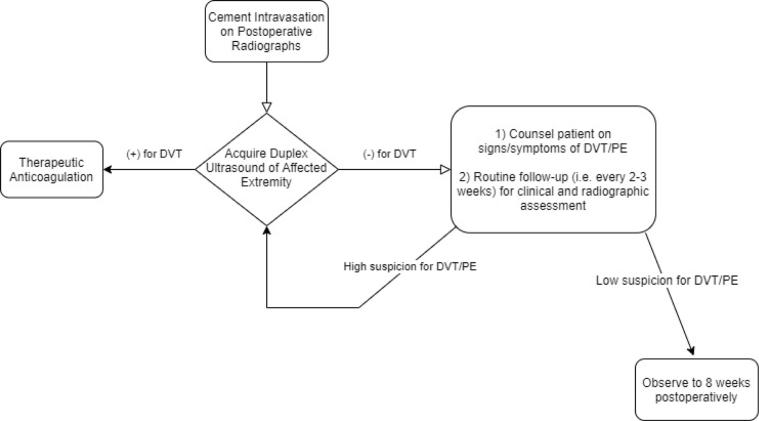
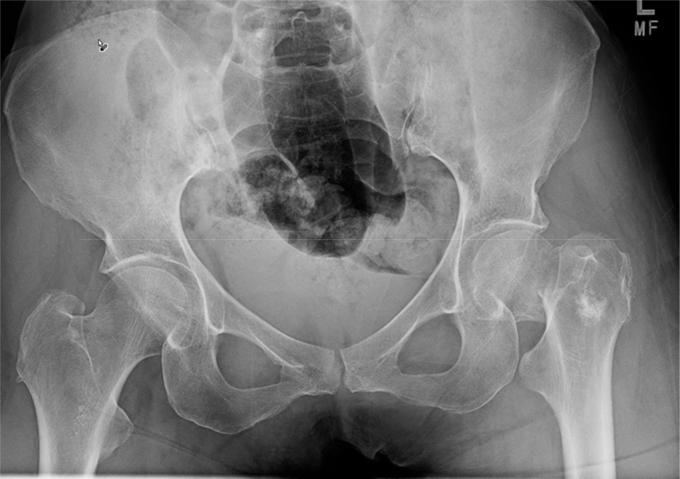
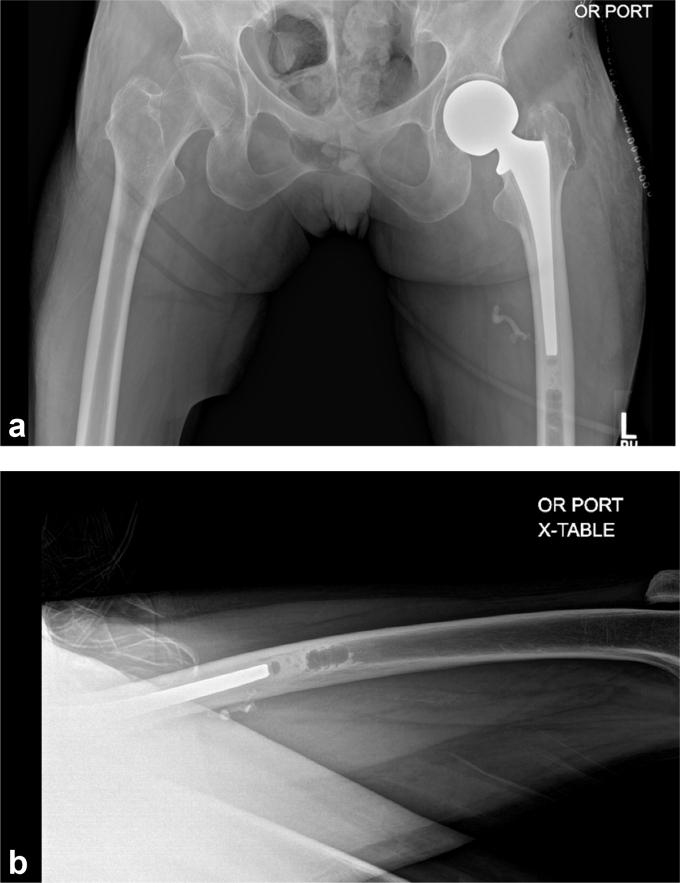
Cement intravasation occurs in hemiarthroplasty when pressurization of cement through the medullary canal backflows through the nutrient vessels. This case report describes a 70-year-old woman who underwent hip hemiarthroplasty for a displaced left femoral neck fracture. Postoperative radiographs demonstrated radio-opacity consistent with local cement intravasation. A Doppler ultrasound study subsequently revealed a mobile thrombus at the confluence of the femoral and profunda femoris veins, as well as a nonmobile thrombus within the profunda femoris vein. The more proximal thrombus was determined to be cement that had intravasated during the index operation. The cement likely impeded venous flow, ultimately leading to the development of deep vein thrombosis just distal to the site of cement occlusion.
在半髋关节置换术中,当通过髓腔对骨水泥进行加压时,骨水泥通过营养血管反流,就会发生骨水泥血管内渗入。本病例报告描述了一名70岁女性,因左股骨颈移位骨折接受了半髋关节置换术。术后X线片显示有与局部骨水泥血管内渗入相符的不透射线影像。随后的多普勒超声检查显示,在股静脉和股深静脉汇合处有一个活动血栓,股深静脉内还有一个非活动血栓。较近端的血栓被确定为在初次手术期间血管内渗入的骨水泥。骨水泥可能阻碍了静脉血流,最终导致在骨水泥阻塞部位的远侧发生深静脉血栓形成。



 Zotero 插件