Department of Molecular Medicine, University of Texas Health Science Center at San Antonio, San Antonio, TX 78229, USA.
Howard Hughes Medical Institute, Department of Medicine, University of California, San Diego, CA 92093, USA.
Cell Rep. 2020 Jun 23;31(12):107803. doi: 10.1016/j.celrep.2020.107803.
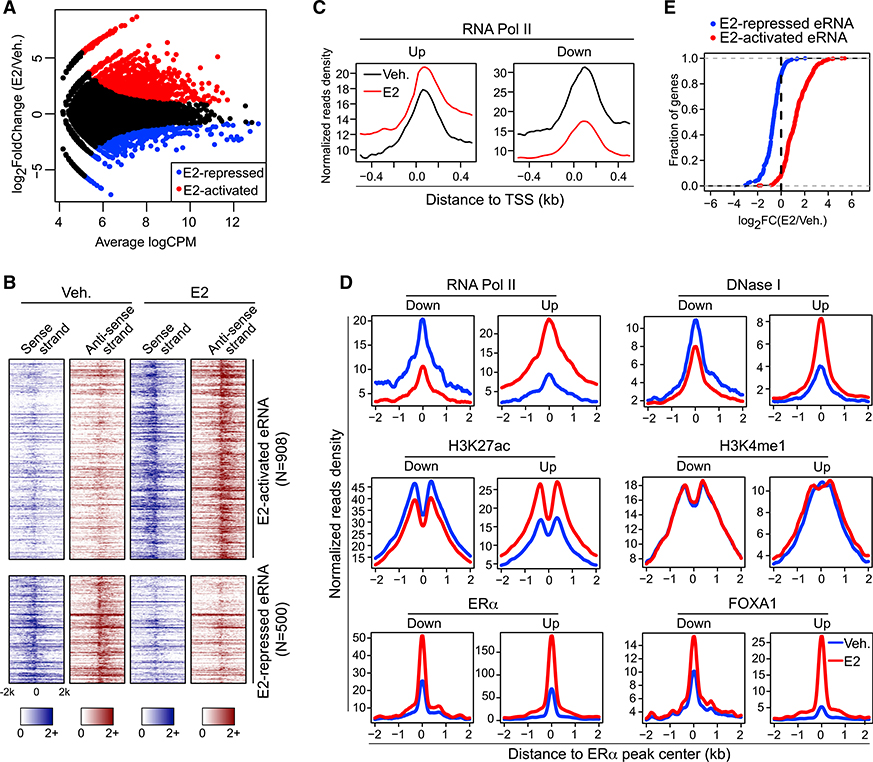
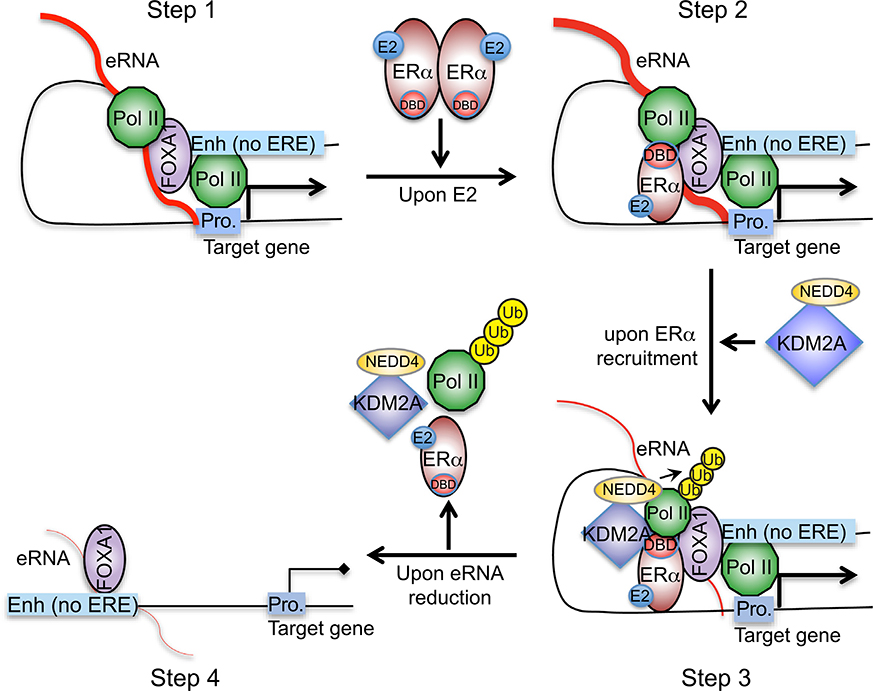
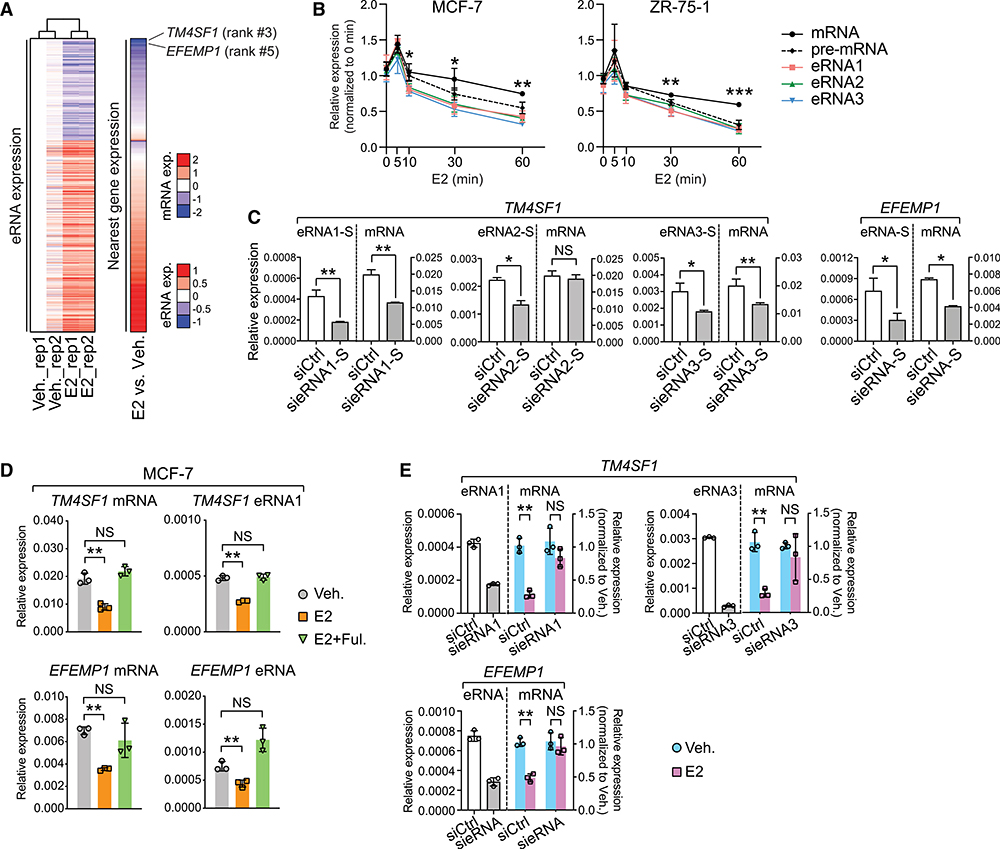
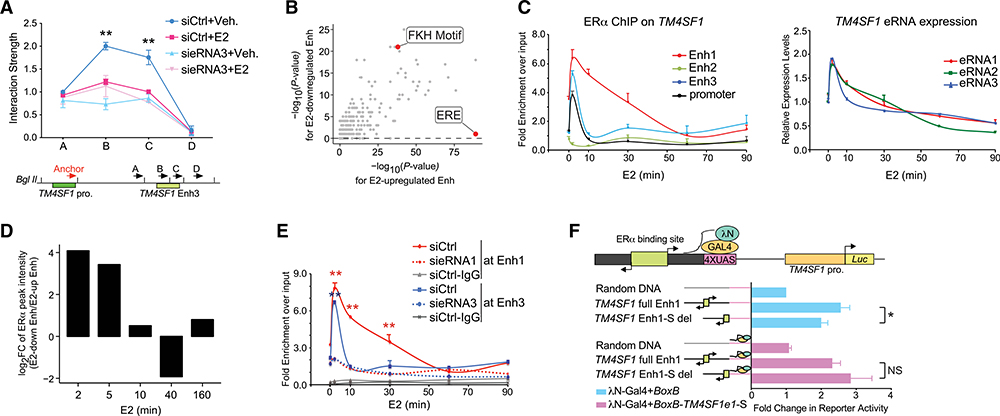
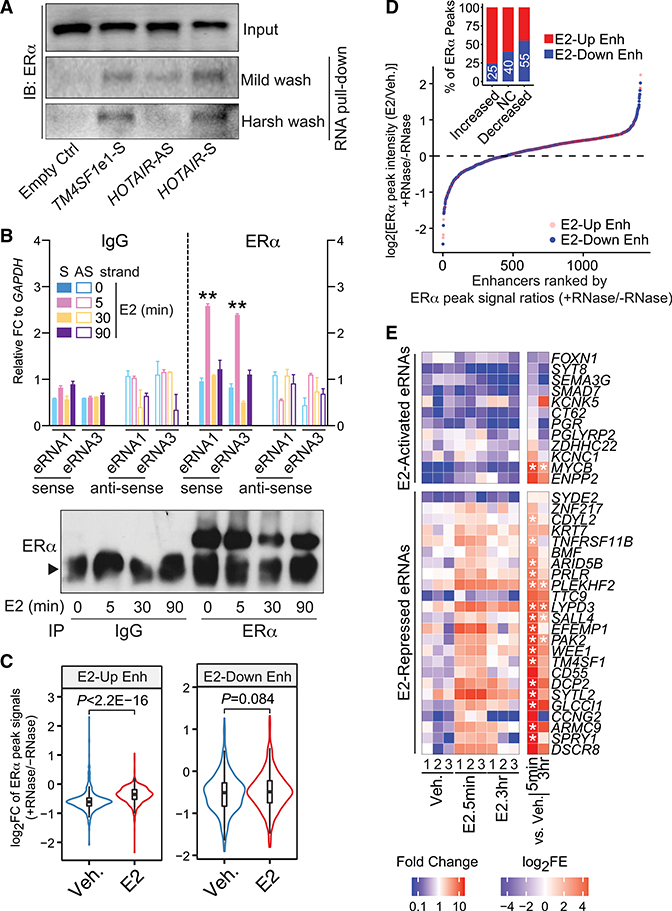
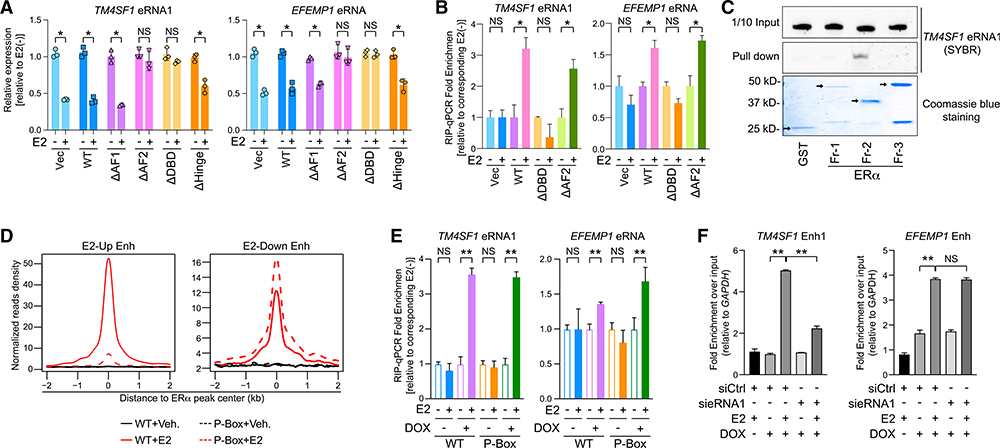
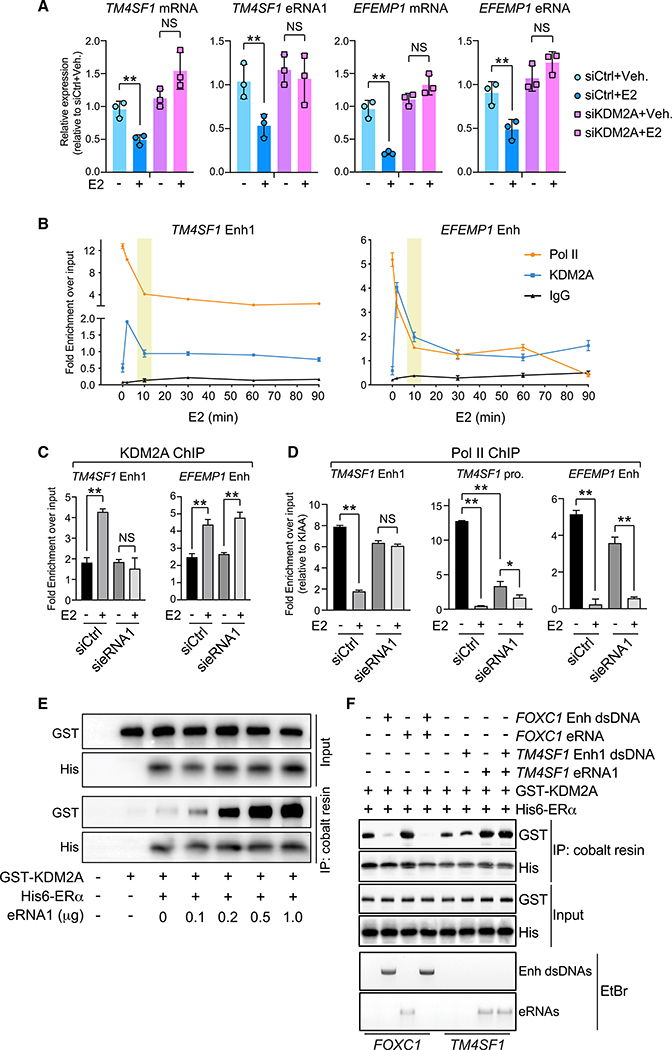
The function of enhancer RNAs (eRNAs) in transcriptional regulation remains obscure. By analyzing the genome-wide nascent transcript profiles in breast cancer cells, we identify a special group of eRNAs that are essential for estrogen-induced transcriptional repression. Using eRNAs of TM4SF1 and EFEMP1 as the paradigms, we find that these RNA molecules not only stabilize promoter-enhancer interactions but also recruit liganded estrogen receptor α (ERα) to particular enhancer regions, facilitate the formation of a functional transcriptional complex, and cause gene silencing. Interestingly, ERα is shown to directly bind with eRNAs by its DNA-binding domain. These eRNAs help with the formation of a specific ERα-centered transcriptional complex and promote the association of the histone demethylase KDM2A, which dismisses RNA polymerase II from designated enhancers and suppresses the transcription of target genes. Our work demonstrates a complete mechanism underlying the action of eRNAs in modulating and refining the locus-specific transcriptional program.
增强子 RNA(eRNAs)在转录调控中的功能仍然不清楚。通过分析乳腺癌细胞中的全基因组新生转录谱,我们鉴定出一组特殊的 eRNAs,它们对于雌激素诱导的转录抑制是必需的。我们以 TM4SF1 和 EFEMP1 的 eRNAs 作为范例,发现这些 RNA 分子不仅稳定启动子-增强子相互作用,而且还募集配体结合的雌激素受体 α(ERα)到特定的增强子区域,促进功能性转录复合物的形成,并导致基因沉默。有趣的是,ERα 被证明可以通过其 DNA 结合结构域直接与 eRNAs 结合。这些 eRNAs 有助于形成一个特定的以 ERα 为中心的转录复合物,并促进组蛋白去甲基酶 KDM2A 的结合,从而将 RNA 聚合酶 II 从指定的增强子上排斥,并抑制靶基因的转录。我们的工作展示了 eRNAs 在调节和完善特定基因座转录程序中的作用的完整机制。