Division of Pathology, ICAR-Indian Veterinary Research Institute, Izatnagar, Bareilly, Uttar Pradesh, India.
Division of Surgery, ICAR-Indian Veterinary Research Institute, Izatnagar, Bareilly, Uttar Pradesh, India.
Clin Microbiol Rev. 2020 Jun 24;33(4). doi: 10.1128/CMR.00028-20. Print 2020 Sep 16.
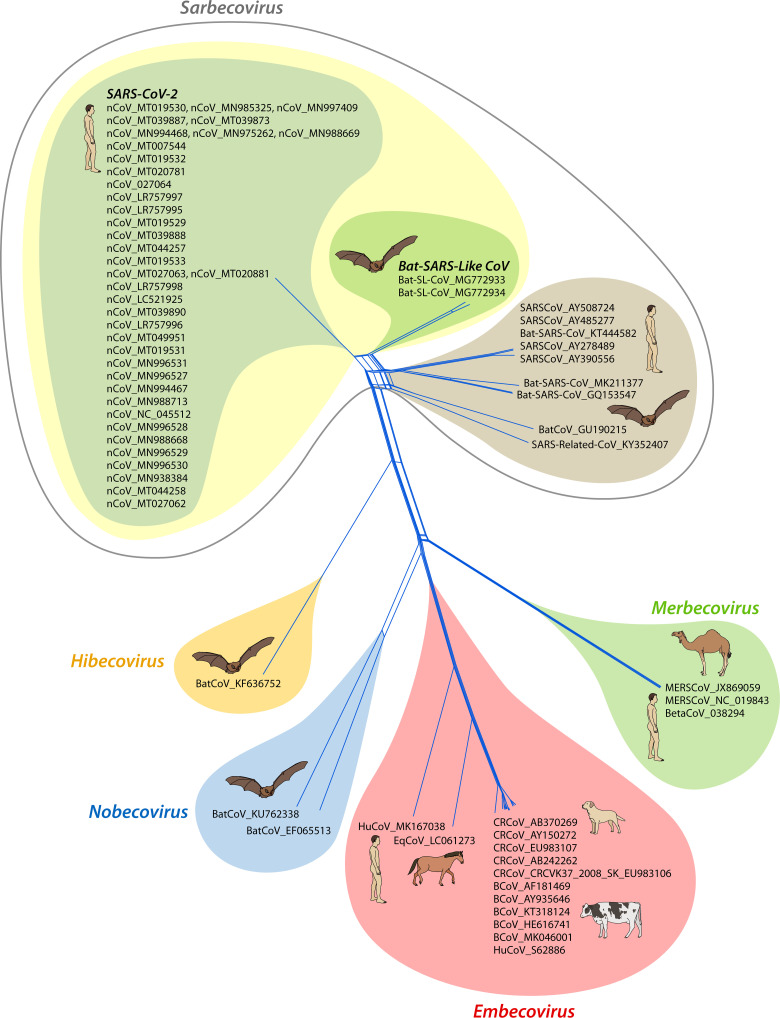
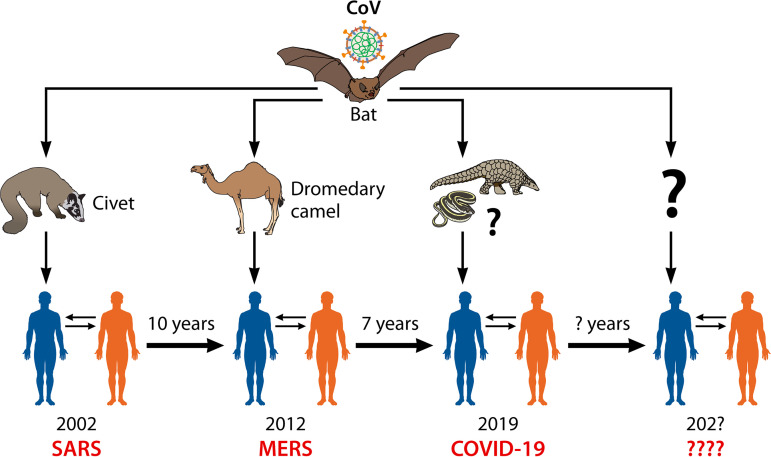
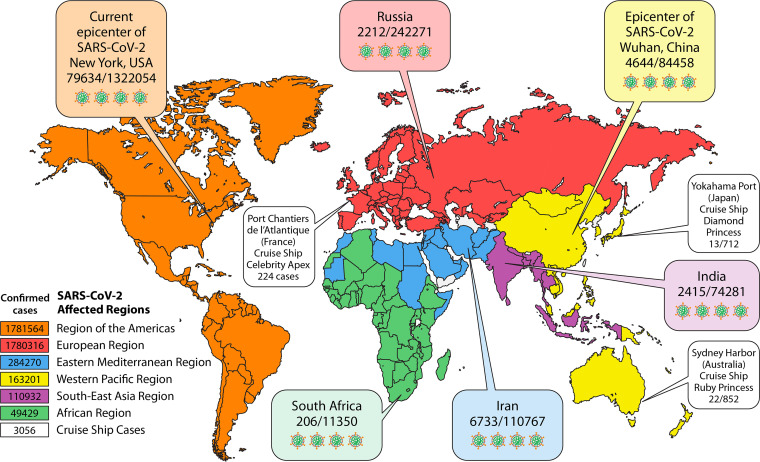
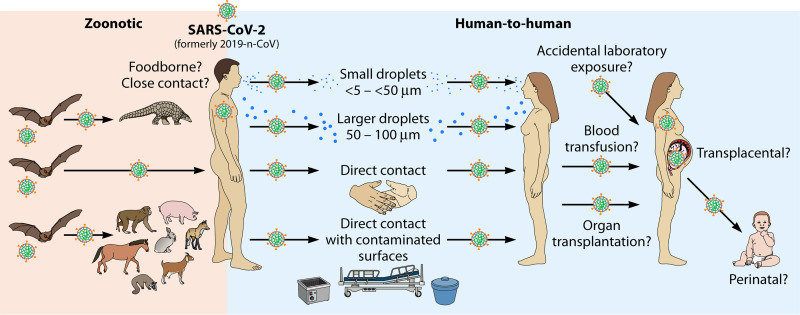
SUMMARYIn recent decades, several new diseases have emerged in different geographical areas, with pathogens including Ebola virus, Zika virus, Nipah virus, and coronaviruses (CoVs). Recently, a new type of viral infection emerged in Wuhan City, China, and initial genomic sequencing data of this virus do not match with previously sequenced CoVs, suggesting a novel CoV strain (2019-nCoV), which has now been termed severe acute respiratory syndrome CoV-2 (SARS-CoV-2). Although coronavirus disease 2019 (COVID-19) is suspected to originate from an animal host (zoonotic origin) followed by human-to-human transmission, the possibility of other routes should not be ruled out. Compared to diseases caused by previously known human CoVs, COVID-19 shows less severe pathogenesis but higher transmission competence, as is evident from the continuously increasing number of confirmed cases globally. Compared to other emerging viruses, such as Ebola virus, avian H7N9, SARS-CoV, and Middle East respiratory syndrome coronavirus (MERS-CoV), SARS-CoV-2 has shown relatively low pathogenicity and moderate transmissibility. Codon usage studies suggest that this novel virus has been transferred from an animal source, such as bats. Early diagnosis by real-time PCR and next-generation sequencing has facilitated the identification of the pathogen at an early stage. Since no antiviral drug or vaccine exists to treat or prevent SARS-CoV-2, potential therapeutic strategies that are currently being evaluated predominantly stem from previous experience with treating SARS-CoV, MERS-CoV, and other emerging viral diseases. In this review, we address epidemiological, diagnostic, clinical, and therapeutic aspects, including perspectives of vaccines and preventive measures that have already been globally recommended to counter this pandemic virus.
摘要
近几十年来,几种新的疾病出现在不同的地理区域,病原体包括埃博拉病毒、寨卡病毒、尼帕病毒和冠状病毒(CoVs)。最近,一种新型病毒感染在中国武汉市出现,该病毒的初步基因组测序数据与以前测序的 CoVs 不匹配,提示存在一种新型 CoV 株(2019-nCoV),现已将其命名为严重急性呼吸综合征 CoV-2(SARS-CoV-2)。虽然 2019 年冠状病毒病(COVID-19)被怀疑起源于动物宿主(动物源),然后发生人际传播,但不能排除其他传播途径的可能性。与以前已知的人类 CoVs 引起的疾病相比,COVID-19 的发病机制较轻,但传播能力较强,这从全球确诊病例数量的持续增加就可以看出。与其他新兴病毒(如埃博拉病毒、禽流感 H7N9、SARS-CoV 和中东呼吸综合征冠状病毒(MERS-CoV))相比,SARS-CoV-2 的致病性相对较低,传播能力适中。密码子使用研究表明,这种新型病毒已从动物(如蝙蝠)转移而来。实时 PCR 和下一代测序的早期诊断有助于在早期识别病原体。由于没有治疗或预防 SARS-CoV-2 的抗病毒药物或疫苗,目前正在评估的潜在治疗策略主要来自以前治疗 SARS-CoV、MERS-CoV 和其他新发病毒性疾病的经验。在这篇综述中,我们讨论了流行病学、诊断、临床和治疗方面的问题,包括已被全球推荐用于应对这种大流行病毒的疫苗和预防措施的观点。