d'Aldebert Emilie, Quaranta Muriel, Sébert Morgane, Bonnet Delphine, Kirzin Sylvain, Portier Guillaume, Duffas Jean-Pierre, Chabot Sophie, Lluel Philippe, Allart Sophie, Ferrand Audrey, Alric Laurent, Racaud-Sultan Claire, Mas Emmanuel, Deraison Céline, Vergnolle Nathalie
IRSD, INSERM, INRA, ENVT, UPS, Université de Toulouse, Toulouse, France.
Department of Internal Medicine and Digestive Diseases, CHU Purpan, Toulouse, France.
Front Cell Dev Biol. 2020 Jun 4;8:363. doi: 10.3389/fcell.2020.00363. eCollection 2020.
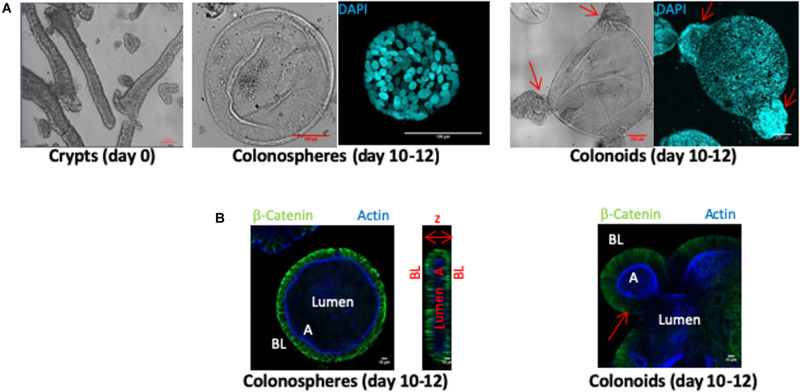
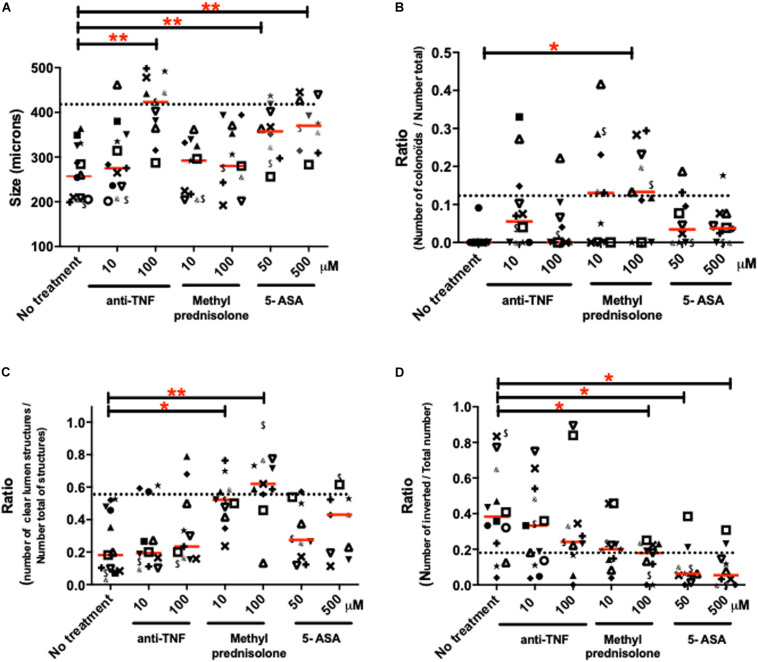
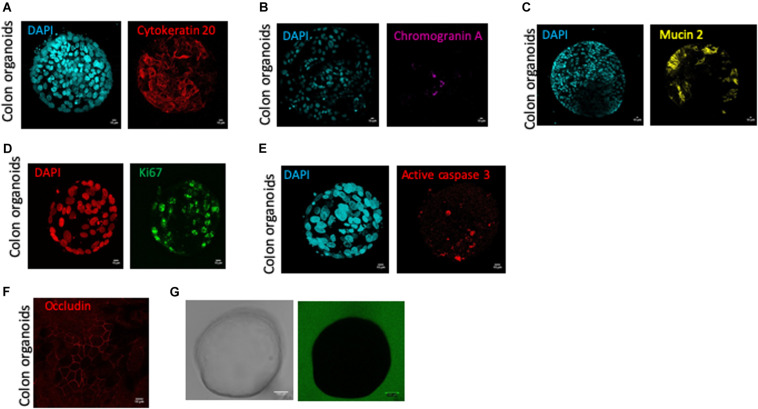
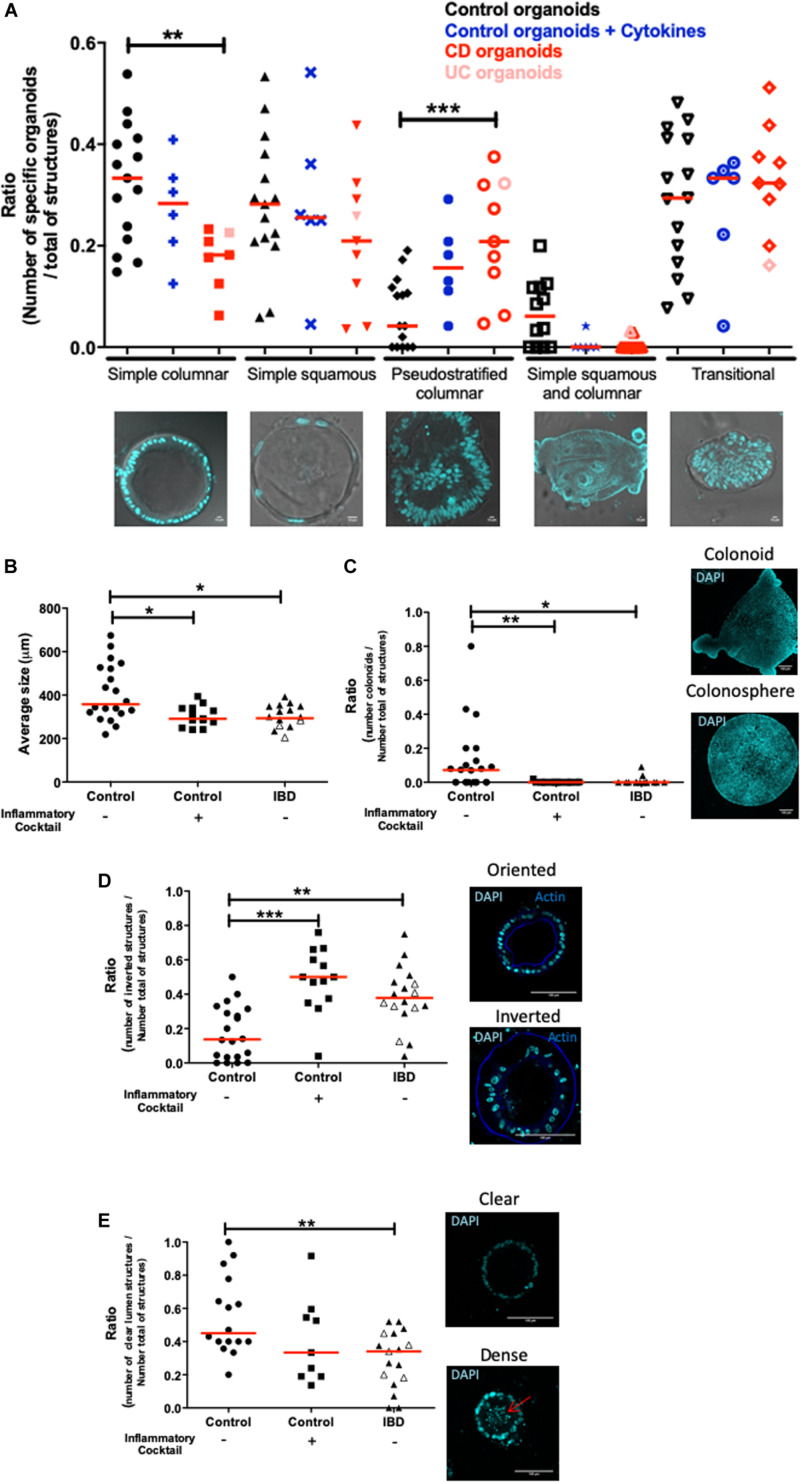
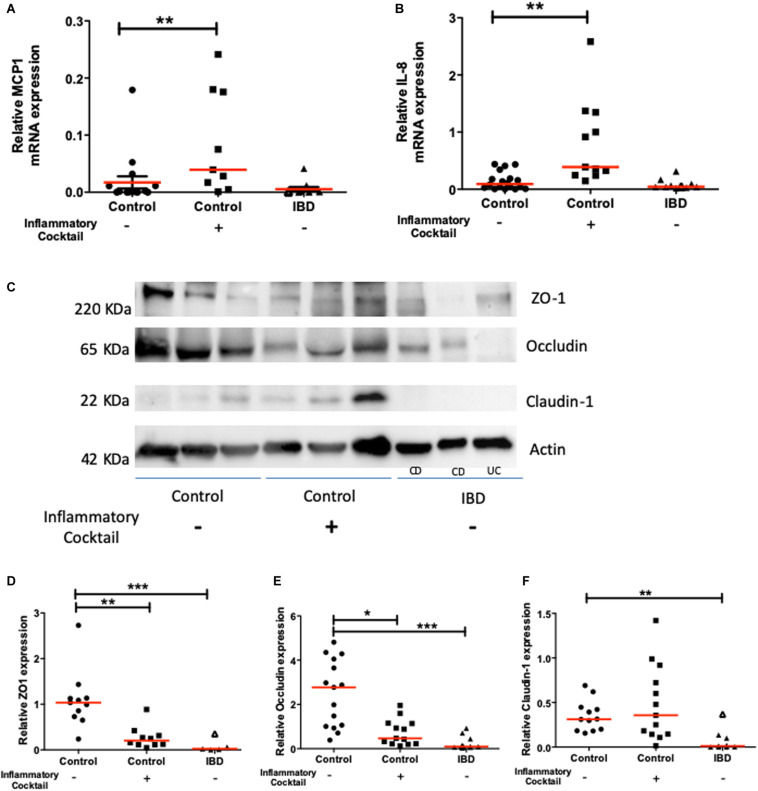
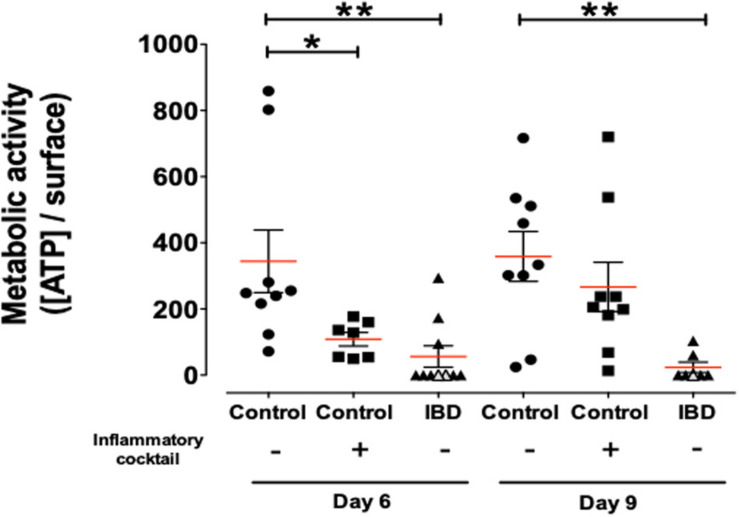
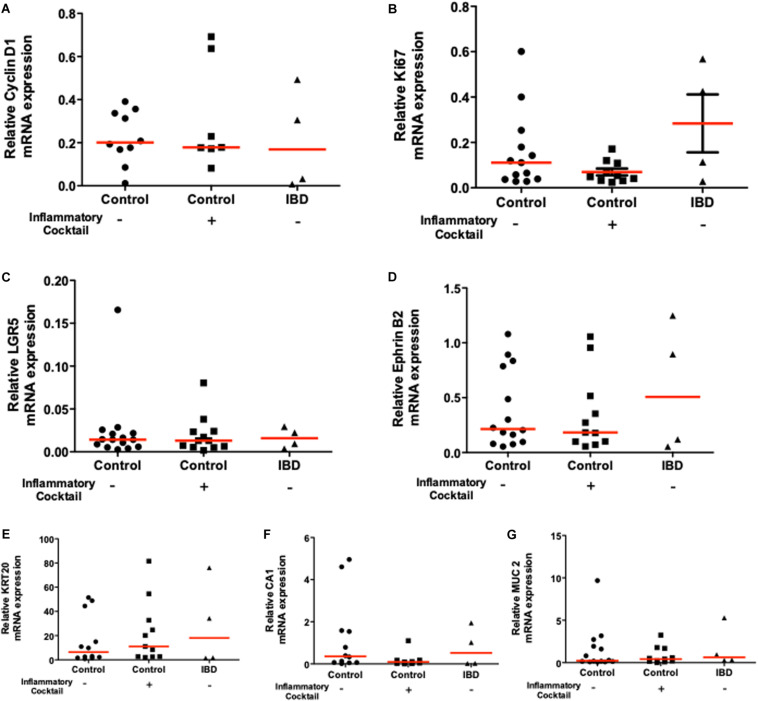
Inflammatory Bowel Diseases (IBD) are chronic inflammatory disorders, where epithelial defects drive, at least in part, some of the pathology. We reconstituted human intestinal epithelial organ, by using three-dimension culture of human colon organoids. Our aim was to characterize morphological and functional phenotypes of control (non-IBD) organoids, compared to inflamed organoids from IBD patients. The results generated describe the epithelial defects associated with IBD in primary organoid cultures, and evaluate the use of this model for pharmacological testing of anti-inflammatory approaches. Human colonic tissues were obtained from either surgical resections or biopsies, all harvested in non-inflammatory zones. Crypts were isolated from controls (non-IBD) and IBD patients and were cultured up to 12-days. Morphological (size, budding formation, polarization, luminal content), cell composition (proliferation, differentiation, immaturity markers expression), and functional (chemokine and tight junction protein expression) parameters were measured by immunohistochemistry, RT-qPCR or western-blot. The effects of inflammatory cocktail or anti-inflammatory treatments were studied in controls and IBD organoid cultures respectively. Organoid cultures from controls or IBD patients had the same cell composition after 10 to 12-days of culture, but IBD organoid cultures showed an inflammatory phenotype with decreased size and budding capacity, increased cell death, luminal debris, and inverted polarization. Tight junction proteins were also significantly decreased in IBD organoid cultures. Inflammatory cytokine cocktail reproduced this inflammatory phenotype in non-IBD organoids. Clinically used treatments (5-ASA, glucocorticoids, anti-TNF) reduced some, but not all parameters. Inflammatory phenotype is associated with IBD epithelium, and can be studied in organoid cultures. This model constitutes a reliable human pre-clinical model to investigate new strategies targeting epithelial repair.
炎症性肠病(IBD)是慢性炎症性疾病,其中上皮缺陷至少在一定程度上驱动了部分病理过程。我们通过人结肠类器官的三维培养重建了人肠道上皮器官。我们的目的是与IBD患者的炎症性类器官相比,表征对照(非IBD)类器官的形态和功能表型。所产生的结果描述了原代类器官培养中与IBD相关的上皮缺陷,并评估了该模型在抗炎方法药理学测试中的应用。人结肠组织取自手术切除或活检样本,均在非炎症区域采集。从对照(非IBD)和IBD患者中分离出隐窝,并培养长达12天。通过免疫组织化学、RT-qPCR或蛋白质免疫印迹法测量形态学(大小、芽形成、极化、管腔内容物)、细胞组成(增殖、分化、未成熟标志物表达)和功能(趋化因子和紧密连接蛋白表达)参数。分别在对照和IBD类器官培养中研究了炎症鸡尾酒或抗炎治疗的效果。对照或IBD患者的类器官培养在培养10至12天后具有相同的细胞组成,但IBD类器官培养表现出炎症表型,大小和芽形成能力降低,细胞死亡增加,管腔碎片增多,极化倒置。紧密连接蛋白在IBD类器官培养中也显著减少。炎症细胞因子鸡尾酒在非IBD类器官中重现了这种炎症表型。临床使用的治疗方法(5-氨基水杨酸、糖皮质激素、抗TNF)降低了一些但不是所有参数。炎症表型与IBD上皮相关,并且可以在类器官培养中进行研究。该模型构成了一个可靠的人类临床前模型,用于研究针对上皮修复的新策略。