Health Sciences Research Unit: Nursing (UICISA:E), Nursing School of Coimbra (ESEnfC), Coimbra, Portugal.
Coimbra Institute for Clinical and Biomedical Research (iCBR) area of CIMAGO, CNC.IBILI, Faculty of Medicine, University of Coimbra, Coimbra, Portugal.
PLoS One. 2020 Jun 25;15(6):e0235087. doi: 10.1371/journal.pone.0235087. eCollection 2020.
In nursing practice, flushing the catheters pre and post-drug administration is considered an important clinical procedure to prevent complications, and requires the use of several syringes to comply with international standards of care. We envisioned an innovative double-chamber syringe that enables the filling and administration of both solutions. Following current international recommendations, the development of new medical devices should integrate Health Technology Assessment. The Human-centred design is usually used for that assessment purposes, as a method that actively include end-users in the devices development process.
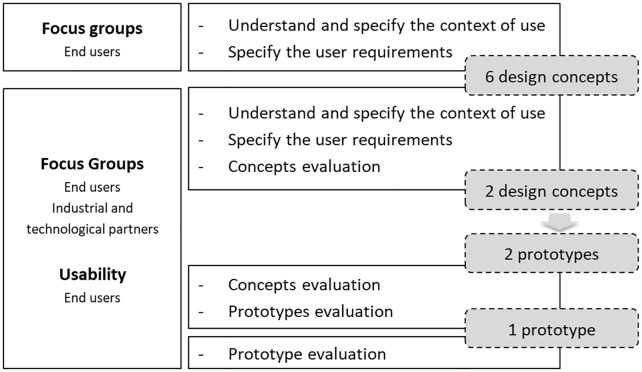
Application of the Human-Centred Design through the involvement of nurses in the initial stages of the device development in order to accomplish the initial stages of Technology Readiness Level. A multi-method approach was used, including literature/guidelines review, focus groups with end-users and expert panels.
The involvement of nurses enabled the definition of user requirements and contexts of use, as well as the evaluation of design solutions and prototypes in order to accomplish with usability and ergonomic features of the medical device.
Significant contributions were made regarding the final design solution of this innovative double-chamber syringe.
在护理实践中,在给药前后冲洗导管被认为是预防并发症的重要临床程序,需要使用多个注射器来符合护理的国际标准。我们设想了一种创新的双腔注射器,能够同时填充和管理两种溶液。根据当前的国际建议,新医疗器械的开发应整合健康技术评估。以人为中心的设计通常用于该评估目的,作为一种方法,将最终用户积极纳入设备开发过程。
通过让护士参与设备开发的初始阶段,应用以人为中心的设计,以完成技术准备水平的初始阶段。采用了多种方法,包括文献/指南综述、最终用户焦点小组和专家小组。
护士的参与使我们能够定义用户需求和使用环境,并评估设计方案和原型,以满足医疗器械的可用性和人体工程学特性。
在这种创新的双腔注射器的最终设计解决方案方面做出了重大贡献。