Department of Population Health and Pathobiology, North Carolina State University, Raleigh, NC 27607, USA.
Department of Pathology, Georgetown University Medical Center, Washington, DC 20057, USA.
Viruses. 2020 Jun 23;12(6):677. doi: 10.3390/v12060677.
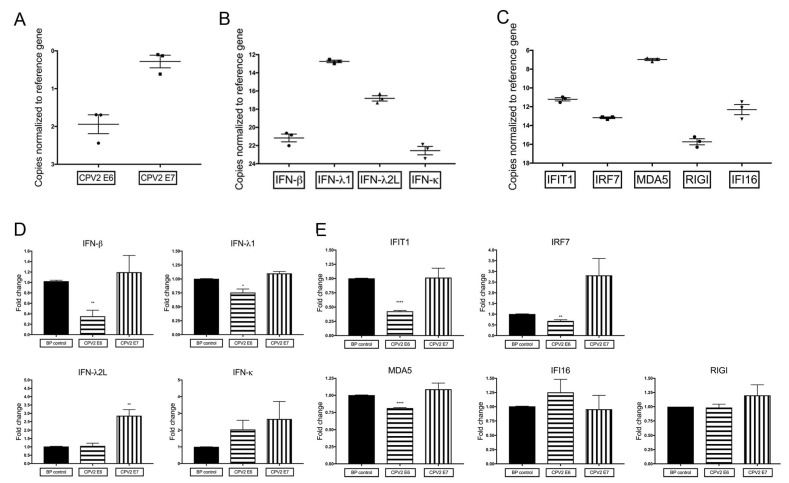
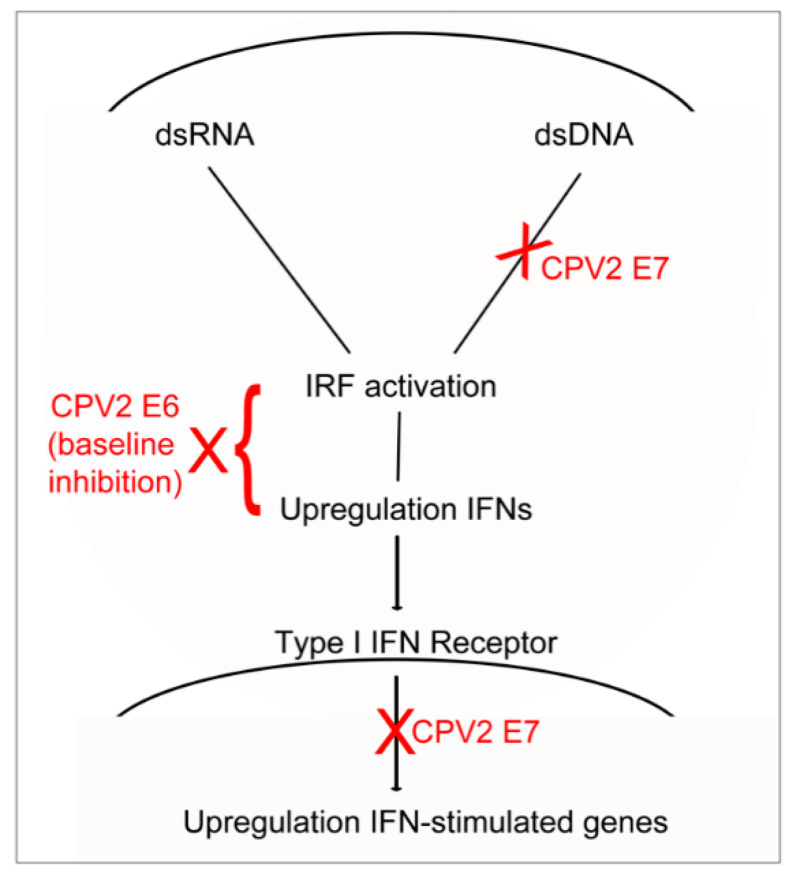
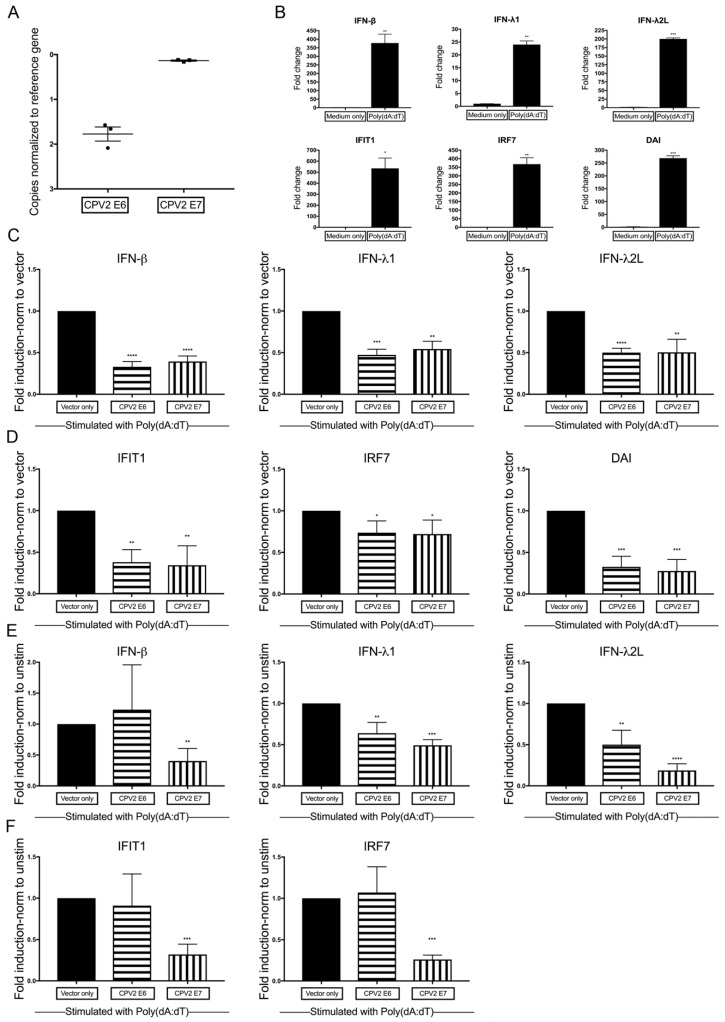
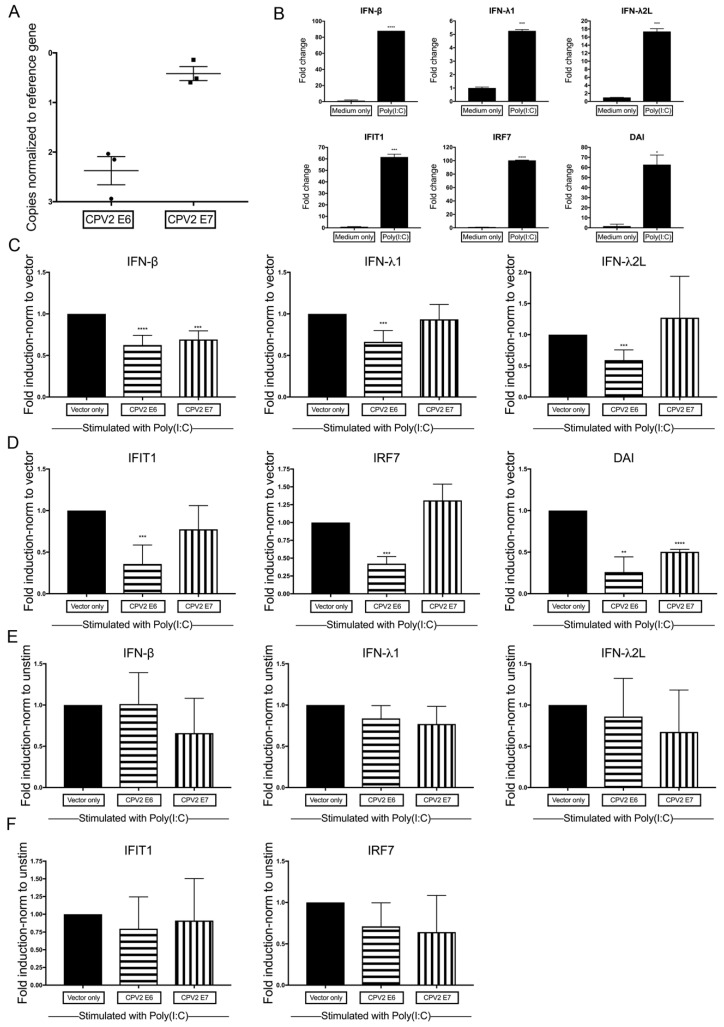
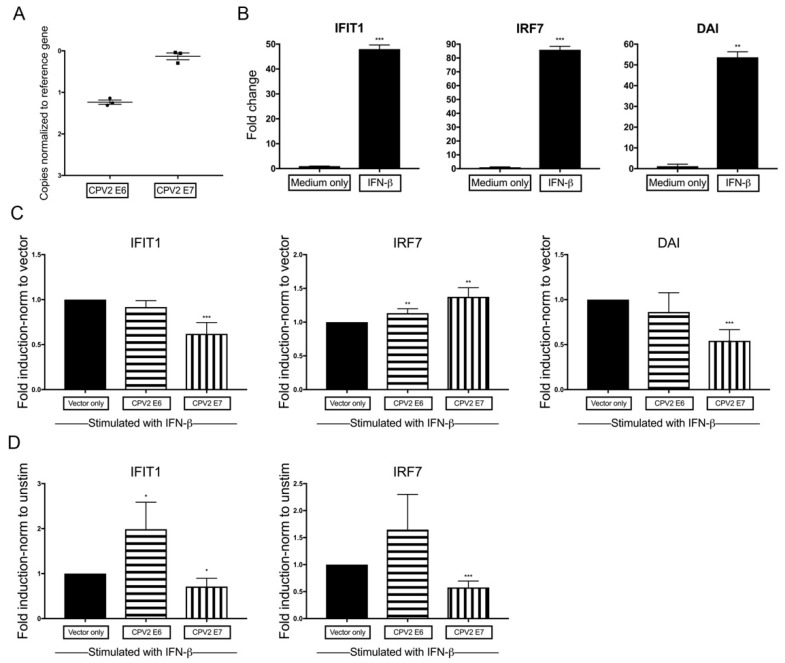
Cutaneous papillomaviruses can cause severe, persistent infections and skin cancer in immunodeficient patients, including people with X-linked severe combined immunodeficiency (XSCID). A similar phenotype is observed in a canine model of XSCID; these dogs acquire severe cutaneous papillomavirus infections that can progress to cancer in association with canine papillomavirus type 2 (CPV2). This canine model system provides a natural spontaneous animal model for investigation of papillomavirus infections in immunodeficient patients. Currently, it is unknown if CPV2 can subvert the innate immune system and interfere with its ability to express antiviral cytokines, which are critical in the host defense against viral pathogens. The aim of the current study was to determine if the oncogenes E6 and E7 from CPV2 interfere with expression of antiviral cytokines in keratinocytes, the target cells of papillomavirus infections. We determined that E6 but not E7 interferes with the constitutive expression of some antiviral cytokines, including interferon (IFN)-β and the IFN-stimulated gene IFIT1. Both E6 and E7 interfere with the transcriptional upregulation of the antiviral cytokines in response to stimulation with the dsDNA Poly(dA:dT). In contrast, while E6 also interferes with the transcriptional upregulation of antiviral cytokines in response to stimulation with the dsRNA Poly(I:C), E7 interferes with only a subset of these antiviral cytokines. Finally, we demonstrated that E7 but not E6 abrogates signaling through the type I IFN receptor. Taken together, CPV2 E6 and E7 both impact expression of antiviral cytokines in canine keratinocytes, albeit likely through different mechanisms.
皮肤乳头瘤病毒可导致严重的持续性感染和免疫缺陷患者的皮肤癌,包括 X 连锁严重联合免疫缺陷(XSCID)患者。在 XSCID 的犬模型中观察到类似的表型;这些狗获得严重的皮肤乳头瘤病毒感染,可与犬乳头瘤病毒 2 型(CPV2)一起进展为癌症。这种犬模型系统为研究免疫缺陷患者的乳头瘤病毒感染提供了自然自发的动物模型。目前尚不清楚 CPV2 是否可以颠覆先天免疫系统并干扰其表达抗病毒细胞因子的能力,而抗病毒细胞因子在宿主防御病毒病原体方面至关重要。目前研究的目的是确定 CPV2 的致癌基因 E6 和 E7 是否会干扰角质形成细胞中抗病毒细胞因子的表达,角质形成细胞是乳头瘤病毒感染的靶细胞。我们确定 E6 但不是 E7 干扰一些抗病毒细胞因子的组成型表达,包括干扰素(IFN)-β和 IFN 刺激基因 IFIT1。E6 和 E7 均干扰抗病毒细胞因子对 dsDNA Poly(dA:dT)刺激的转录上调。相比之下,虽然 E6 也干扰抗病毒细胞因子对 dsRNA Poly(I:C)刺激的转录上调,但 E7 仅干扰其中一部分抗病毒细胞因子。最后,我们证明 E7 但不是 E6 阻断 I 型 IFN 受体的信号转导。总之,CPV2 E6 和 E7 均可影响犬角质形成细胞中抗病毒细胞因子的表达,尽管可能通过不同的机制。