Department of Emergency, Children's Hospital of Nanjing Medical University, 72 Guangzhou Road, Nanjing 210008, PR China.
Department of Critical Care Medicine, Huangshi Hospital of TCM(Infectious Disease Hospital), 12 Guangchang Road, Huangshi 435000, PR China, 12 Guangchang Road, Huangshi 435000, PR China.
Med Clin (Barc). 2020 Sep 11;155(5):191-196. doi: 10.1016/j.medcli.2020.05.012. Epub 2020 Jun 4.
The purpose of our study was to assess organ function in 102 patients with severe COVID-19 infections, using retrospective clinical analysis.
A retrospective analysis was conducted on 102 patients with severe COVID-19 infections. The patients were divided into a survival group (n=73) and a non-survival group (n=29) according to their prognosis. The age, sex, underlying diseases, clinical laboratory data within 48h (routine blood tests, ALT, AST, TBIL, ALB, BUN, CR, D-Dimer, PT, APTT, FIB, F VIII:C, CK-MB, CK, and LDH), and ventilation status were collected. The organ functions of these severe COVID-19 patients were assessed by comparing the differences between the two groups.
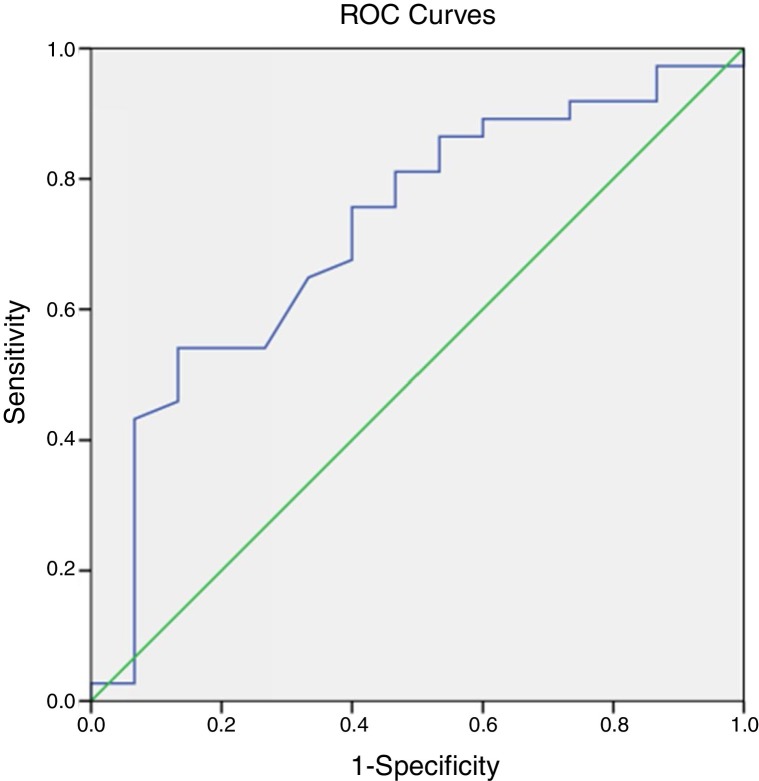
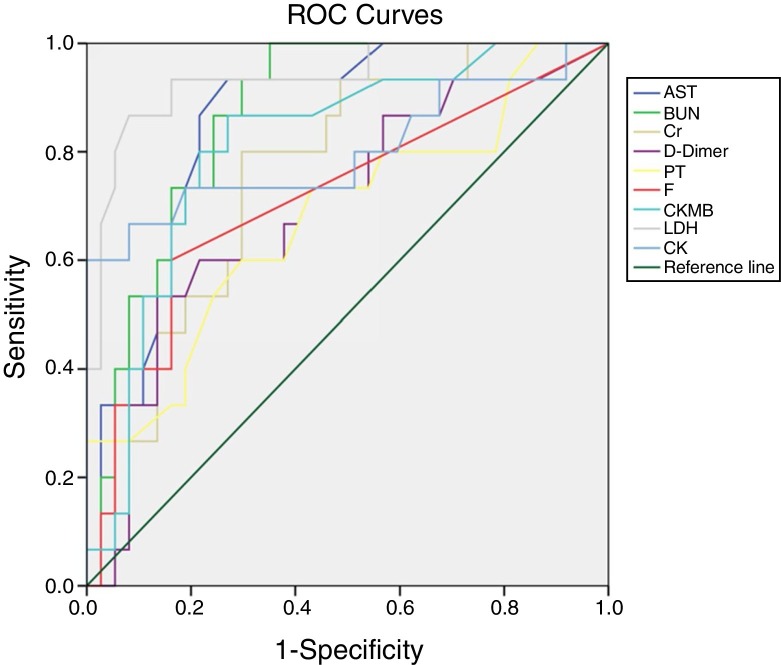
AST, BUN, CR, CK-MB, LDH, and CK in the non-survival group were higher than those in the survival group, and the differences were statistically significant (P<0.05). D-Dimer, PT, FIB, and F VIII:C in the non-survival group were higher than the values observed in the survival group, and the differences were statistically significant (P<0.05). PLT, AST, BUN, CR, D-Dimer, PT, FIB, F VIII:C, CK-MB, CK, and LDH predicted the area under the ROC curve (AUC) of the COVID19 endpoint events and were 0.721, 0.854, 0.867, 0.757, 0.699, 0.679, 0.715, 0.811, 0.935, and 0.802, respectively.
The results showed that there were different degrees of damage to the liver, kidneys, blood coagulation, and heart function in the non-survival group. In addition, PLT, AST, BUN, CR, D-Dimer, PT, FIB, F VIII:C, CK-MB, CK, and LDH had value in evaluating disease prognosis.
本研究通过回顾性临床分析,评估 102 例重症 COVID-19 感染患者的器官功能。
回顾性分析 102 例重症 COVID-19 感染患者,根据预后分为存活组(n=73)和死亡组(n=29)。收集两组患者年龄、性别、基础疾病、48h 内临床实验室资料(血常规、ALT、AST、TBIL、ALB、BUN、CR、D-Dimer、PT、APTT、FIB、F VIII:C、CK-MB、CK、LDH)及通气情况。比较两组间差异,评估重症 COVID-19 患者的器官功能。
死亡组患者 AST、BUN、CR、CK-MB、LDH、CK 高于存活组,差异有统计学意义(P<0.05);死亡组患者 D-Dimer、PT、FIB、F VIII:C 高于存活组,差异有统计学意义(P<0.05)。PLT、AST、BUN、CR、D-Dimer、PT、FIB、F VIII:C、CK-MB、CK、LDH 对 COVID19 终点事件的预测曲线下面积(AUC)分别为 0.721、0.854、0.867、0.757、0.699、0.679、0.715、0.811、0.935、0.802。
结果显示死亡组患者的肝、肾、凝血及心功能均有不同程度的损伤,且 PLT、AST、BUN、CR、D-Dimer、PT、FIB、F VIII:C、CK-MB、CK、LDH 对评估疾病预后有一定价值。