The Liver Unit, Queen Elizabeth Hospital Birmingham, Birmingham B15 2GW, United Kingdom.
Department of Dietetics, Queen Elizabeth Hospital Birmingham, Birmingham B15 2GW, United Kingdom.
World J Gastroenterol. 2020 Jun 14;26(22):2916-2930. doi: 10.3748/wjg.v26.i22.2916.
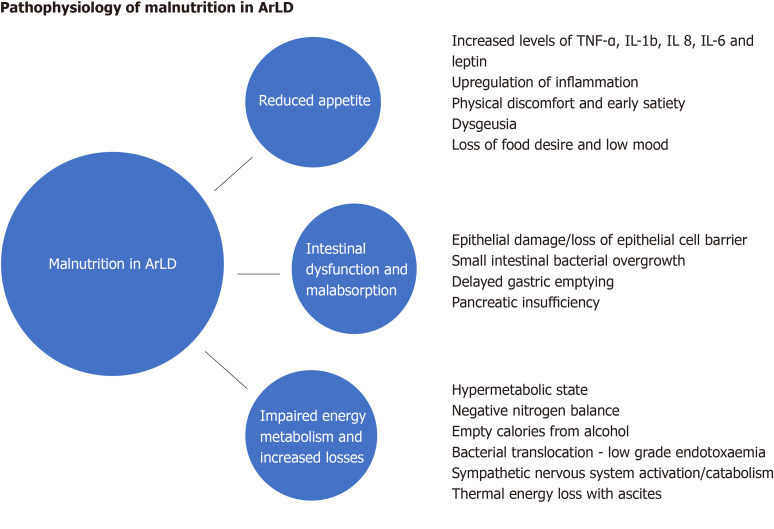
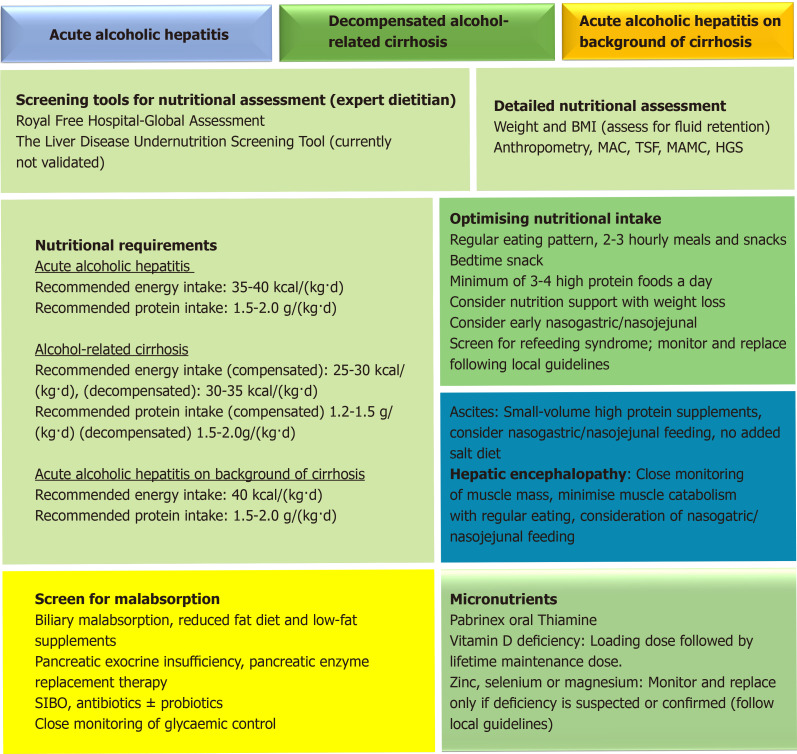
Malnutrition encompassing both macro- and micro-nutrient deficiency, remains one of the most frequent complications of alcohol-related liver disease (ArLD). Protein-energy malnutrition can cause significant complications including sarcopenia, frailty and immunodepression in cirrhotic patients. Malnutrition reduces patient's survival and negatively affects the quality of life of individuals with ArLD. Moreover, nutritional deficit increases the likelihood of hepatic decompensation in cirrhosis. Prompt recognition of at-risk individuals, early diagnosis and treatment of malnutrition remains a key component of ArLD management. In this review, we describe the pathophysiology of malnutrition in ArLD, review the screening tools available for nutritional assessment and discuss nutritional management strategies relevant to the different stages of ArLD, ranging from acute alcoholic hepatitis through to decompensated end stage liver disease.
营养不良包括宏量营养素和微量营养素缺乏,仍然是酒精性肝病 (ALD) 最常见的并发症之一。蛋白质能量营养不良可导致肝硬化患者发生严重并发症,包括肌少症、虚弱和免疫抑制。营养不良降低了患者的生存率,并对 ALD 患者的生活质量产生负面影响。此外,营养不足会增加肝硬化肝失代偿的可能性。及时识别高危人群,早期诊断和治疗营养不良仍然是 ALD 管理的关键组成部分。在这篇综述中,我们描述了 ALD 中营养不良的病理生理学,回顾了现有的营养评估筛查工具,并讨论了与 ALD 不同阶段相关的营养管理策略,从急性酒精性肝炎到失代偿期终末期肝病。