Maier Christopher, Huptas Christopher, von Neubeck Mario, Scherer Siegfried, Wenning Mareike, Lücking Genia
ZIEL Institute for Food and Health, Wissenschaftszentrum Weihenstephan, Technische Universität München, Freising, Germany.
Lehrstuhl für Mikrobielle Ökologie, Wissenschaftszentrum Weihenstephan, Technische Universität München, Freising, Germany.
Front Microbiol. 2020 Jun 10;11:1190. doi: 10.3389/fmicb.2020.01190. eCollection 2020.
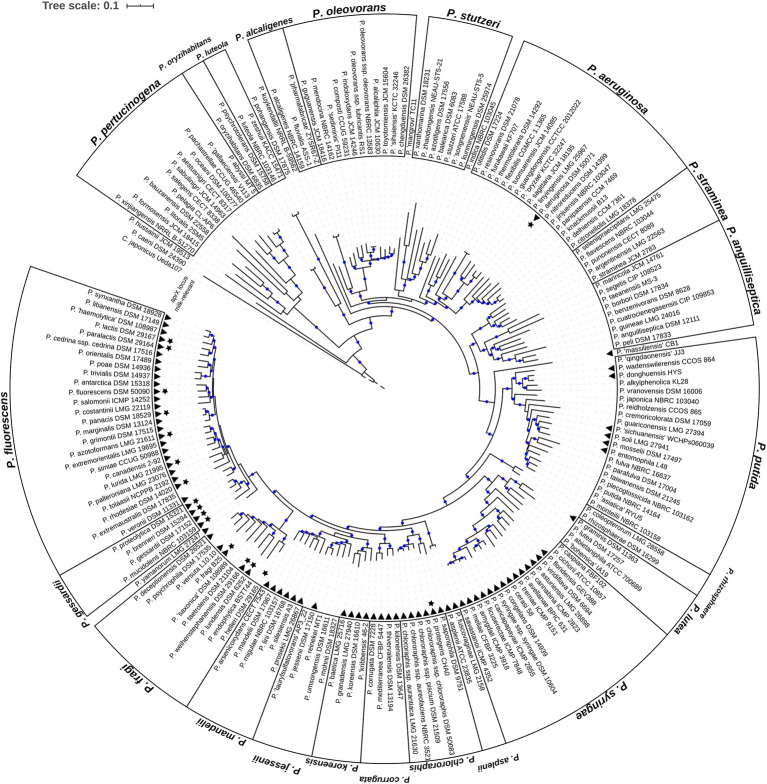
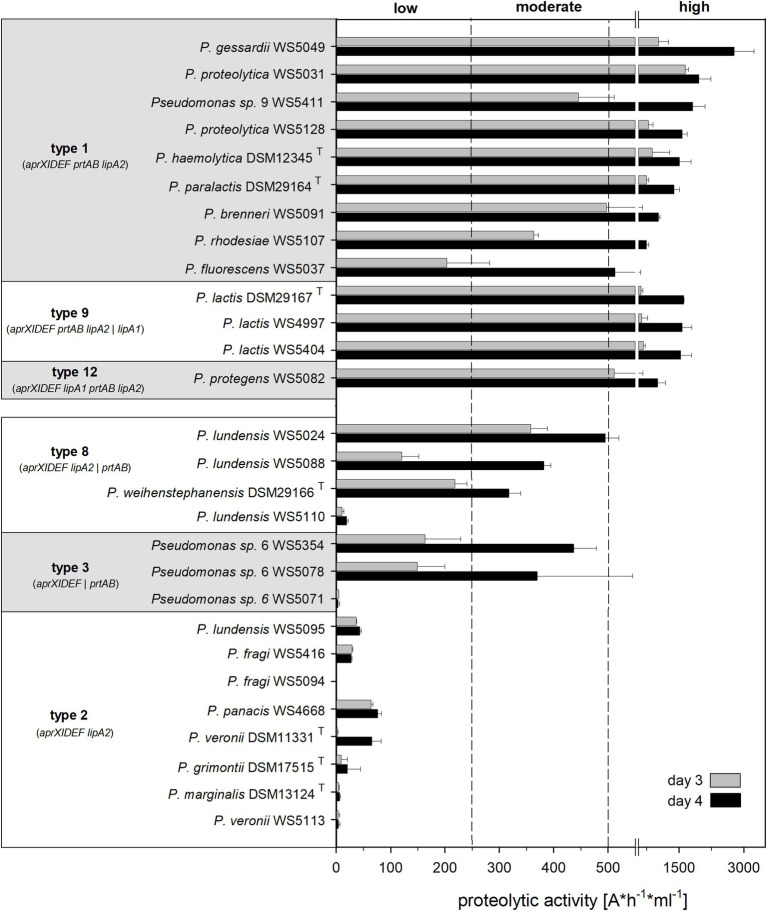
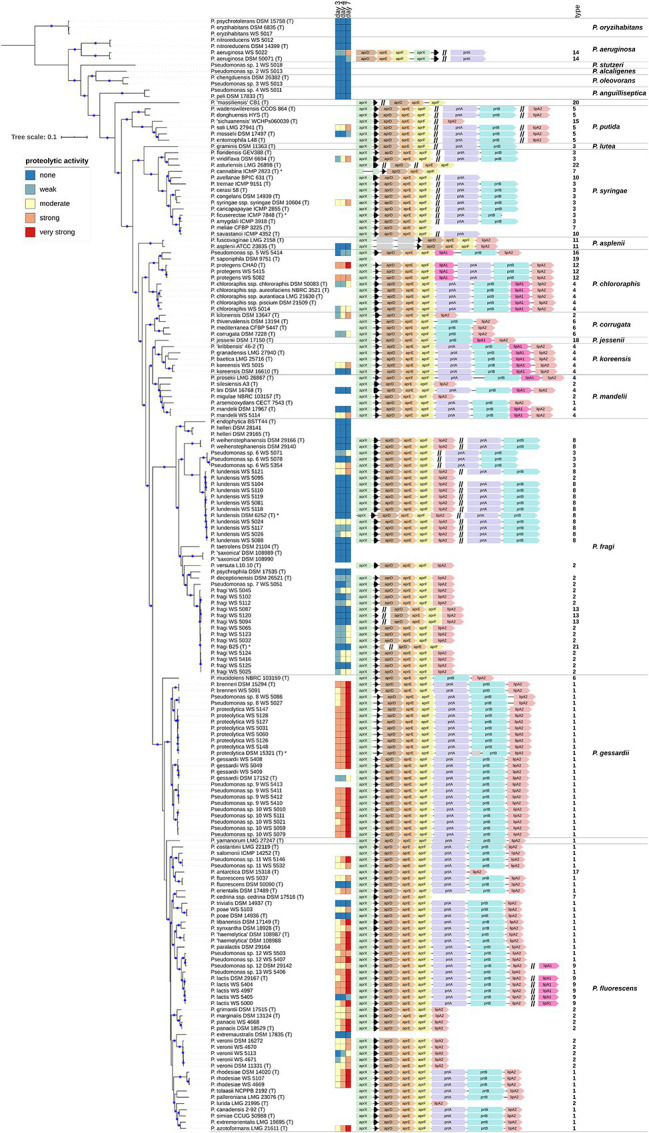
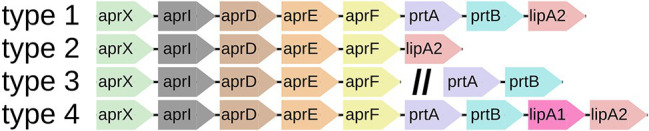
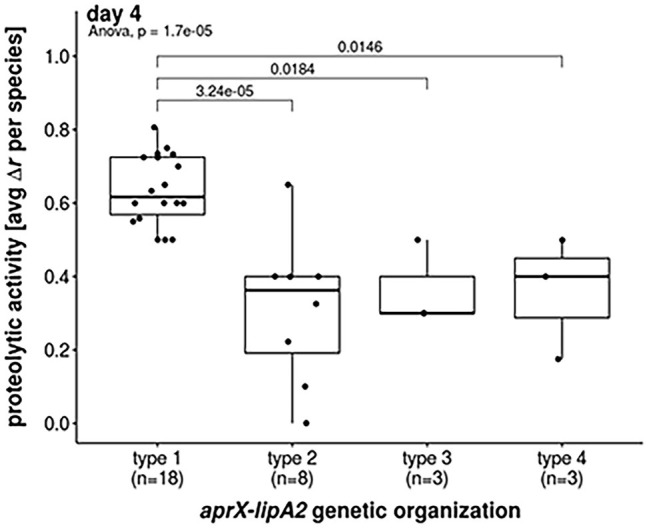
Psychrotolerant species are a main cause of proteolytic spoilage of ultra-high temperature (UHT) milk products due to the secretion of the heat-resistant metallopeptidase AprX, which is encoded by the first gene of the operon. While the proteolytic property has been characterized for many different isolates, the underlying gene organization was only described for a few strains so far. In this study, the phylogenomic analysis of 185 type strains revealed that the presence of is strongly associated to a monophylum composed of 81 species, of which 83% carried the locus. Furthermore, almost all type strains of known milk-relevant species were shown to be members of the three monophyletic groups , , and . In total, 22 different types of genetic organizations were identified in the genus, whereby 31% of the species tested carried the type 1 operon structure consisting of eight genes (). Other genetic structures differed from type 1 mainly in the presence and location of genes coding for two lipases ( and ) and putative autotransporters ( and ). The peptidase activity of 129 strains, as determined on skim milk agar and in UHT-milk, correlated largely with different gene compositions. Particularly, isolates harboring the type 1 operon were highly proteolytic, while strains with other operon types, especially ones lacking and , exhibited significantly lower peptidase activities. In conclusion, the phylogenomic position and the gene organization specify the proteolytic potential of isolates. In addition, however, an interplay of several environmental factors and intrinsic traits influences production and activity of AprX, leading to strain-specific proteolytic phenotypes.
耐冷菌是超高温(UHT)乳制品蛋白水解变质的主要原因,这是由于其分泌耐热金属肽酶AprX,该酶由操纵子的第一个基因编码。虽然已经对许多不同菌株的蛋白水解特性进行了表征,但迄今为止仅对少数菌株描述了其潜在的基因组织。在本研究中,对185株模式菌株的系统基因组分析表明,该基因的存在与一个由81个物种组成的单系密切相关,其中83%的物种携带该基因座。此外,几乎所有已知与牛奶相关物种的模式菌株都被证明是三个单系群、和的成员。总共在该属中鉴定出22种不同类型的基因组织,其中31%的测试物种携带由八个基因组成的1型操纵子结构()。其他遗传结构与1型的主要区别在于编码两种脂肪酶(和)和假定自转运蛋白(和)的基因的存在和位置。在脱脂乳琼脂和UHT乳中测定的129株菌株的肽酶活性在很大程度上与不同的基因组成相关。特别是,携带1型操纵子的分离株具有高度蛋白水解活性,而具有其他操纵子类型的菌株,尤其是缺乏和的菌株,表现出明显较低的肽酶活性。总之,系统基因组位置和基因组织决定了分离株的蛋白水解潜力。然而,此外,几种环境因素和内在特性的相互作用会影响AprX的产生和活性,导致菌株特异性的蛋白水解表型。