Department of Thoracic Oncology, Tianjin Medical University Cancer Institute and Hospital, National Clinical Research Center for Cancer, Key Laboratory of Cancer Prevention and Therapy, Tianjin, Tianjin's Clinical Research Center for Cancer, Tianjin 300060, China.
Department of Radiotherapy, Lanzhou University Second Hospital, Lanzhou 100040, China.
Cancer Biol Med. 2020 May 15;17(2):418-432. doi: 10.20892/j.issn.2095-3941.2019.0215.
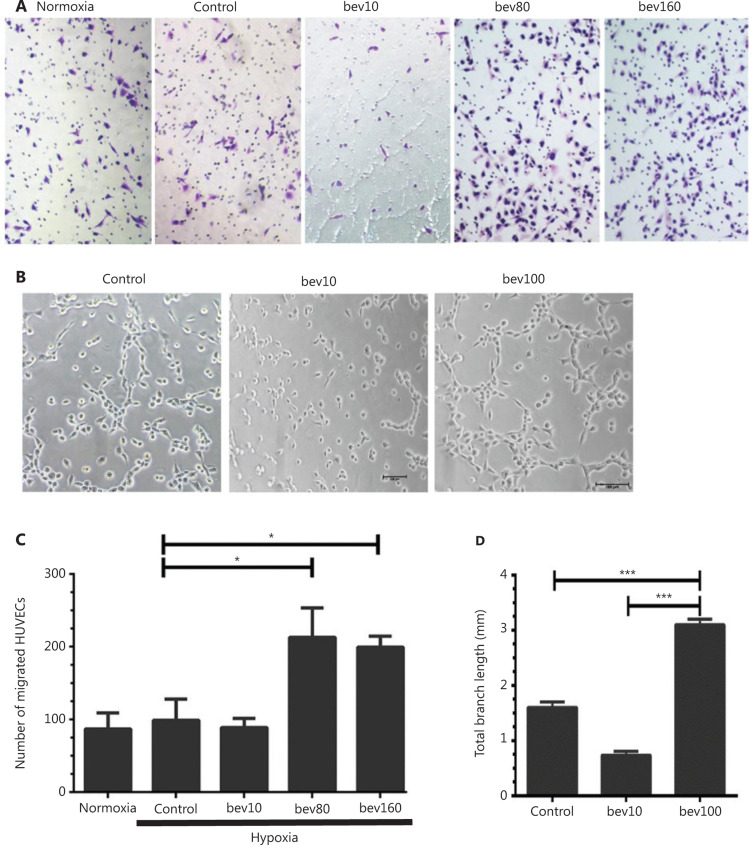
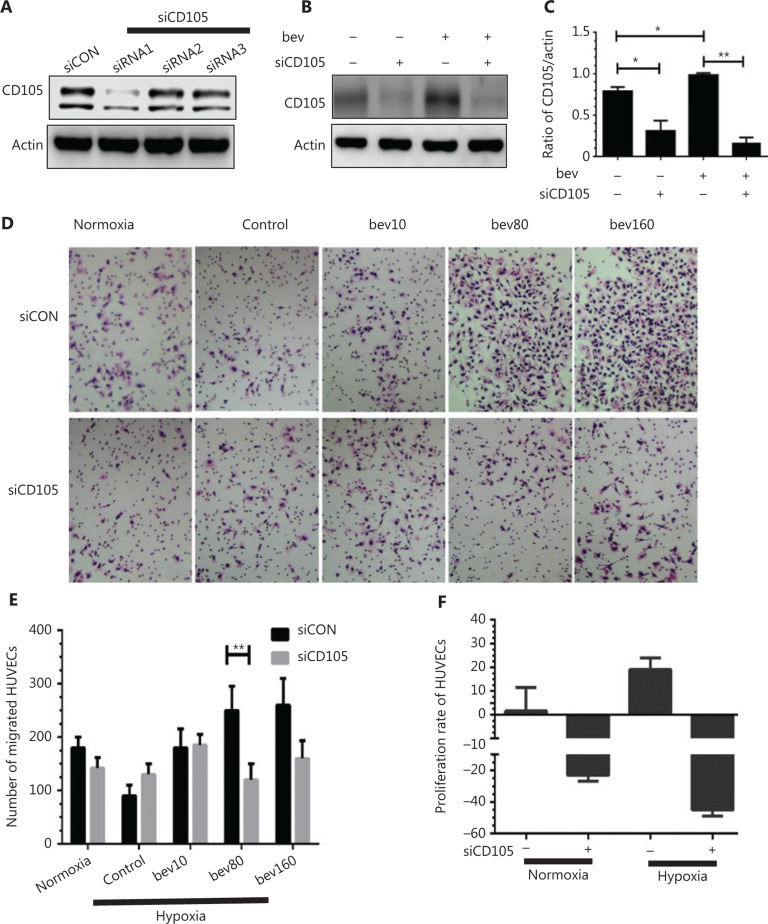
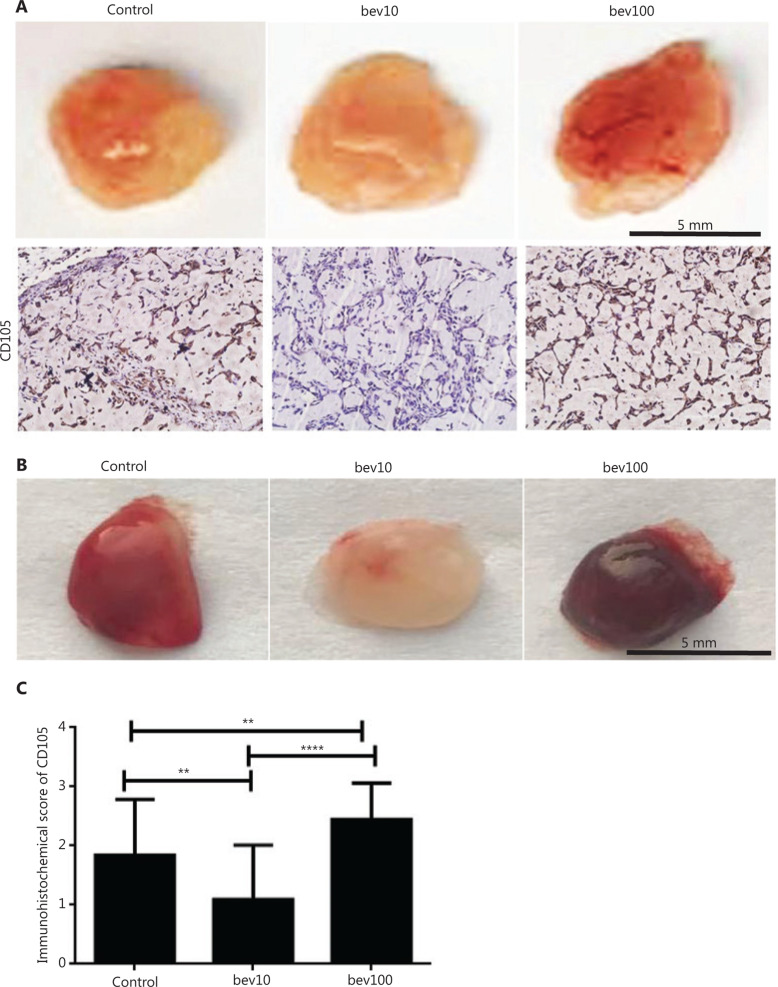
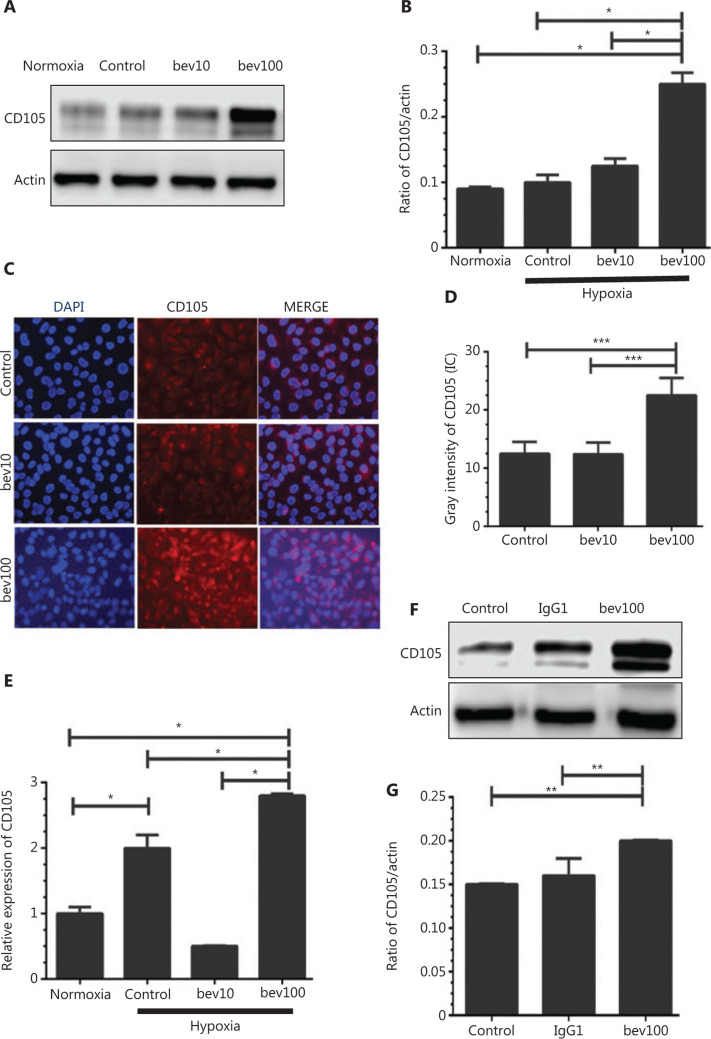
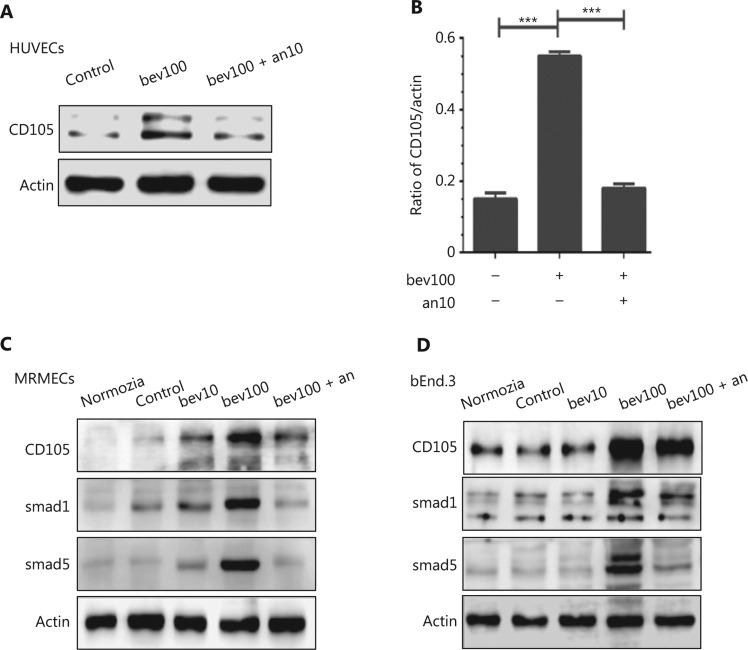
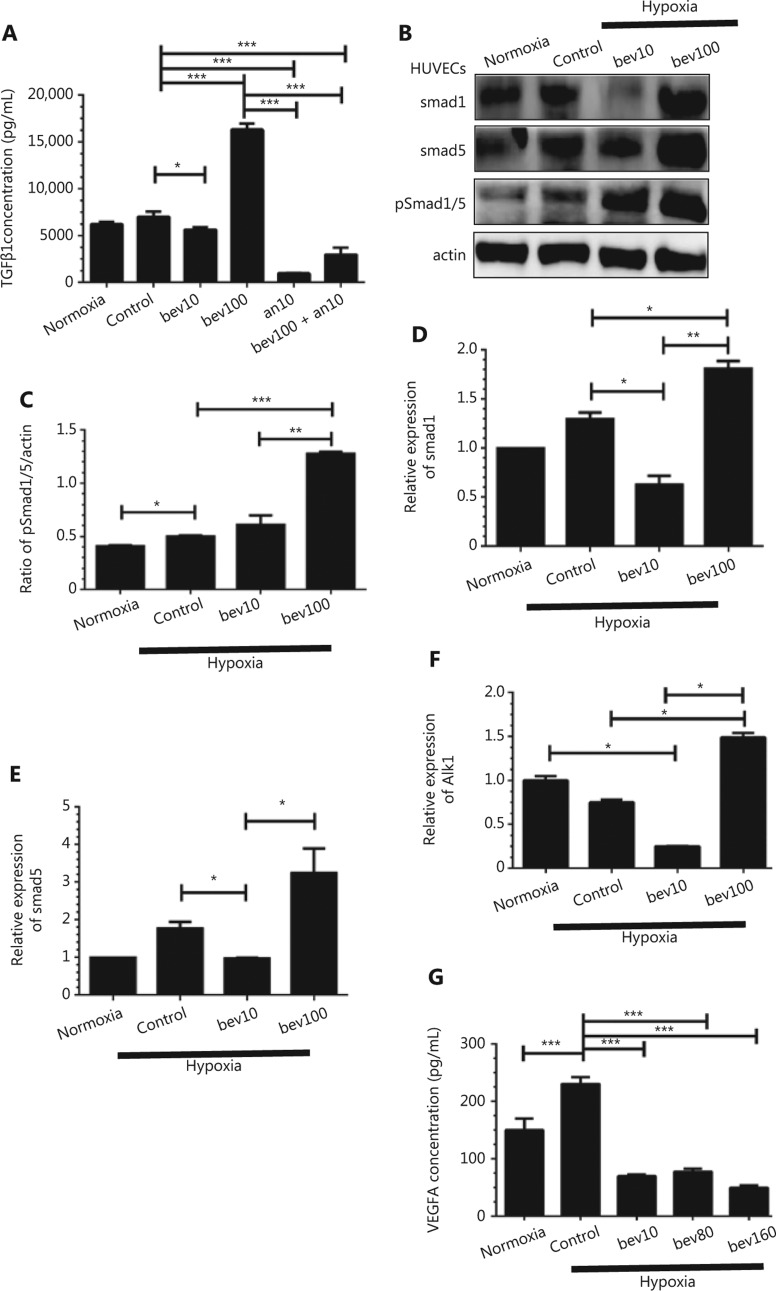
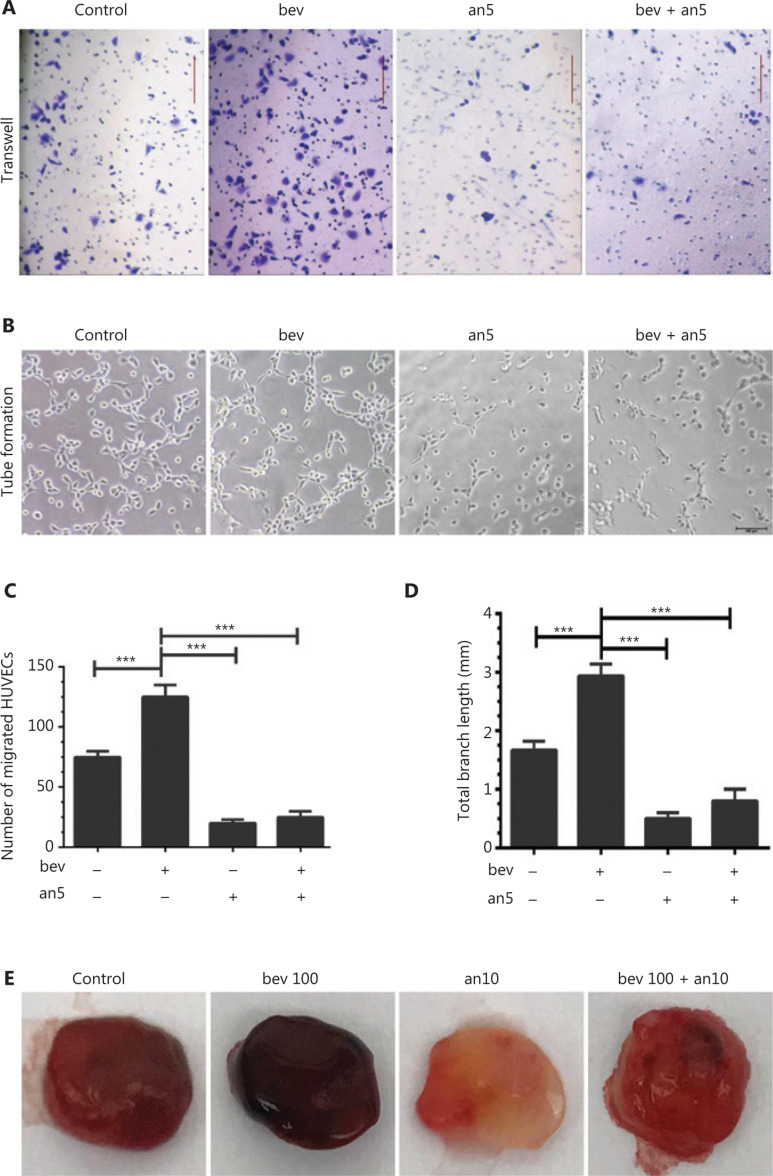
Bevacizumab is a recombinant humanized monoclonal antibody that blocks vascular endothelial growth factor (VEGF) with clear clinical benefits. However, overall survival of some cancer types remains low owing to resistance to bevacizumab therapy. While resistance is commonly ascribed to tumor cell invasion induced by hypoxia-inducible factor (HIF), less attention has been paid to the potential involvement of endothelial cells (ECs) in vasculature activated by anti-angiogenic drugs. Human umbilical vein ECs (HUVECs), bEnd.3 cells, and mouse retinal microvascular ECs (MRMECs) were treated with bevacizumab under conditions of hypoxia and effects on biological behaviors, such as migration and tube formation, examined. Regulatory effects on TGFβ1 and CD105 (endoglin) were established determination of protein and mRNA levels. We further investigated whether the effects of bevacizumab could be reversed using the receptor tyrosine kinase inhibitor anlotinib. Bevacizumab upregulated TGFβ1 as well as CD105, a component of the TGFβ receptor complex and an angiogenesis promoter. Elevated CD105 induced activation of Smad1/5, the inflammatory pathway and endothelial-mesenchymal transition. The migration ability of HUVECs was enhanced by bevacizumab under hypoxia. Upregulation of CD105 was abrogated by anlotinib, which targets multiple receptor tyrosine kinases including VEGFR2/3, FGFR1-4, PDGFRα/β, C-Kit, and RET. Bevacizumab promotes migration and tube formation of HUVECs activation of the TGFβ1 pathway and upregulation of CD105 expression. Anlotinib reverses the effects of bevacizumab by inhibiting the above signals.
贝伐珠单抗是一种重组人源化单克隆抗体,可阻断血管内皮生长因子(VEGF),具有明确的临床获益。然而,由于对贝伐珠单抗治疗的耐药性,某些癌症类型的总生存率仍然较低。虽然耐药性通常归因于缺氧诱导因子(HIF)诱导的肿瘤细胞侵袭,但对抗血管生成药物激活的内皮细胞(EC)的潜在参与关注较少。在缺氧条件下,用人脐静脉内皮细胞(HUVEC)、bEnd.3 细胞和小鼠视网膜微血管内皮细胞(MRMEC)处理贝伐珠单抗,并检查迁移和管形成等生物学行为的影响。确定蛋白和 mRNA 水平,建立对 TGFβ1 和 CD105(内皮素)的调节作用。我们进一步研究了是否可以使用受体酪氨酸激酶抑制剂安罗替尼逆转贝伐珠单抗的作用。贝伐珠单抗上调了 TGFβ1 以及 CD105,后者是 TGFβ 受体复合物的组成部分和血管生成促进剂。升高的 CD105 诱导了 Smad1/5 的激活、炎症途径和内皮-间充质转化。贝伐珠单抗在缺氧下增强了 HUVEC 的迁移能力。安罗替尼靶向包括 VEGFR2/3、FGFR1-4、PDGFRα/β、C-Kit 和 RET 在内的多种受体酪氨酸激酶,可阻断 CD105 的上调,从而逆转贝伐珠单抗的作用。贝伐珠单抗通过激活 TGFβ1 途径和上调 CD105 表达促进 HUVEC 的迁移和管形成。安罗替尼通过抑制上述信号来逆转贝伐珠单抗的作用。