Turner Hugo C, French Michael D, Montresor Antonio, King Charles H, Rollinson David, Toor Jaspreet
MRC Centre for Global Infectious Disease Analysis, Department of Infectious Disease Epidemiology, School of Public Health, Faculty of Medicine, St Mary's Campus, Imperial College London, London, W2 1PG, UK.
Oxford University Clinical Research Unit, Wellcome Africa Asia Programme, Ho Chi Minh City, Vietnam.
Wellcome Open Res. 2020 Aug 7;5:45. doi: 10.12688/wellcomeopenres.15754.2. eCollection 2020.
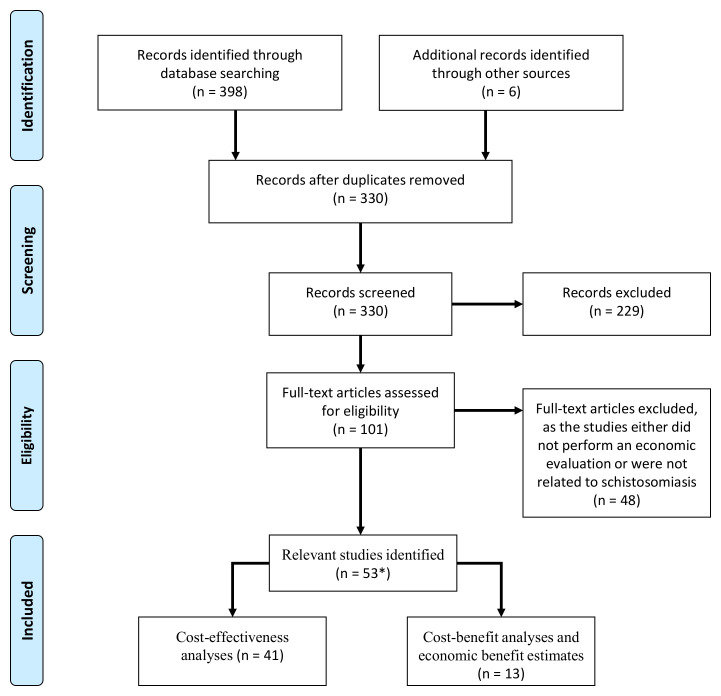
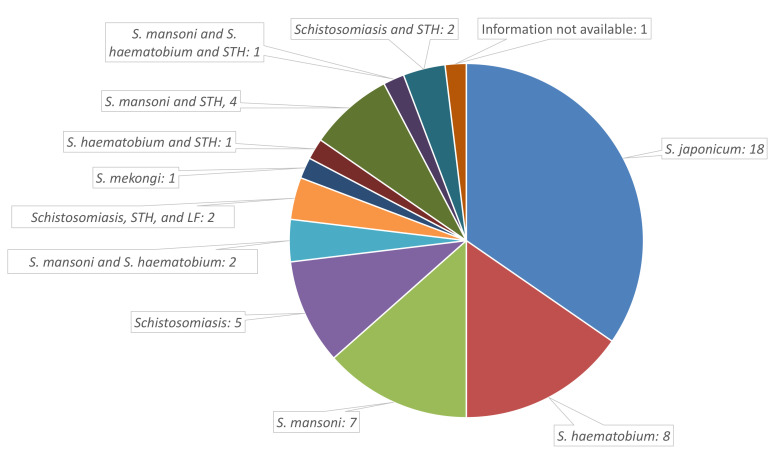
Schistosomiasis is one of the most prevalent neglected tropical diseases (NTDs) with an estimated 229 million people requiring preventive treatment worldwide. Recommendations for preventive chemotherapy strategies have been made by the World Health Organization (WHO) whereby the frequency of treatment is determined by the settings prevalence. Despite recent progress, many countries still need to scale up treatment and important questions remain regarding optimal control strategies. This paper presents a systematic review of the economic evaluations of human schistosomiasis interventions. A systematic review of the literature was conducted on 22nd August 2019 using the PubMed (MEDLINE) and ISI Web of Science electronic databases. The focus was economic evaluations of schistosomiasis interventions, such as cost-effectiveness and cost-benefit analyses. No date or language stipulations were applied to the searches. We identified 53 relevant health economic analyses of schistosomiasis interventions. Most studies related to followed by Several studies also included other NTDs. In Africa, most studies evaluated preventive chemotherapy, whereas in China they mostly evaluated programmes using a combination of interventions (such as chemotherapy, snail control and health education). There was wide variation in the methodology and epidemiological settings investigated. A range of effectiveness metrics were used by the different studies. Due to the variation across the identified studies, it was not possible to make definitive policy recommendations. Although, in general, the current WHO recommended preventive chemotherapy approach to control schistosomiasis was found to be cost-effective. This finding has important implications for policymakers, advocacy groups and potential funders. However, there are several important inconsistencies and research gaps (such as how the health benefits of interventions are quantified) that need to be addressed to identify the resources required to achieve schistosomiasis control and elimination.
血吸虫病是最普遍的被忽视热带病之一,全球估计有2.29亿人需要接受预防性治疗。世界卫生组织(WHO)已针对预防性化疗策略提出了建议,其中治疗频率由当地流行率决定。尽管最近取得了进展,但许多国家仍需扩大治疗规模,并且在最佳控制策略方面仍存在重要问题。本文对人类血吸虫病干预措施的经济评估进行了系统综述。2019年8月22日,使用PubMed(MEDLINE)和ISI Web of Science电子数据库对文献进行了系统综述。重点是血吸虫病干预措施的经济评估,如成本效益分析和成本效益分析。搜索未应用日期或语言限制。我们确定了53项关于血吸虫病干预措施的相关卫生经济分析。大多数研究涉及……其次是……一些研究还包括其他被忽视热带病。在非洲,大多数研究评估了预防性化疗,而在中国,它们大多评估了使用多种干预措施(如化疗、灭螺和健康教育)相结合的项目。所调查的方法和流行病学背景存在很大差异。不同研究使用了一系列有效性指标。由于已确定研究之间存在差异,因此无法提出明确的政策建议。尽管总体而言,目前世卫组织推荐的控制血吸虫病的预防性化疗方法被认为具有成本效益。这一发现对政策制定者、宣传团体和潜在资助者具有重要意义。然而,存在一些重要的不一致之处和研究空白(如如何量化干预措施的健康效益),需要加以解决,以确定实现血吸虫病控制和消除所需的资源。