Department of Psychology, Miami University, Oxford, Ohio, United States of America.
PLoS One. 2020 Jun 26;15(6):e0235412. doi: 10.1371/journal.pone.0235412. eCollection 2020.
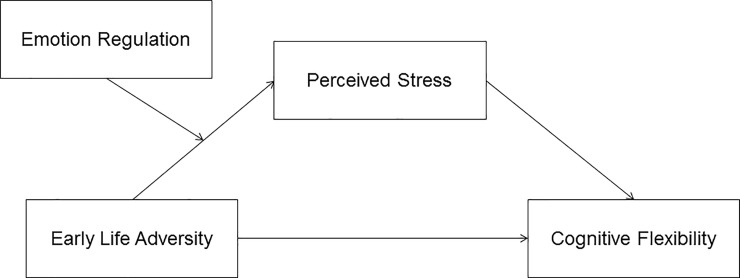
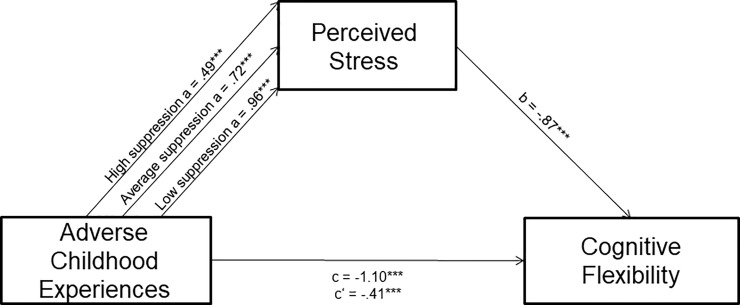
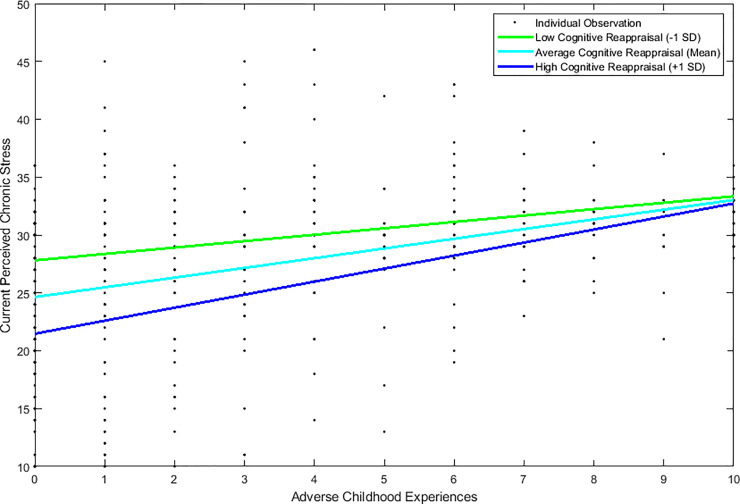
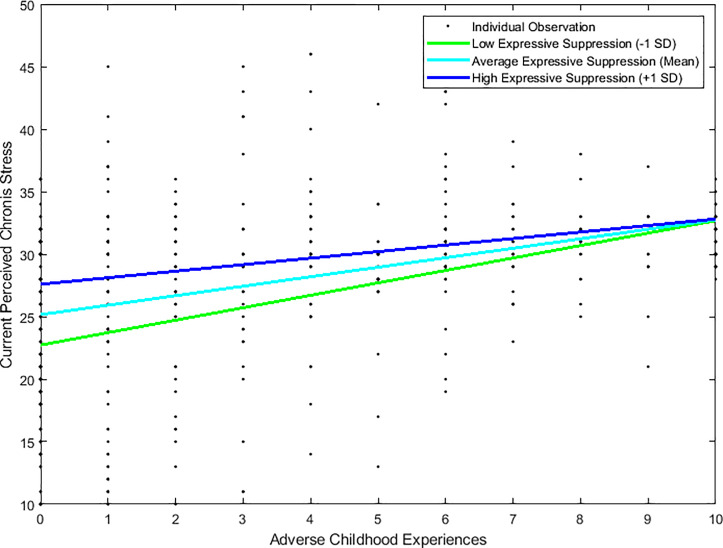
Exposure to early life adversity is associated with chronic stress and a range of stress-related health problems in adulthood. Since chronic stress debilitates activity in the prefrontal cortex (pFC), maladaptive regulatory strategies in response to stress have been proposed as one explanation for the impact of early life adversity on health outcomes in adulthood. We conducted a study to examine the impact of adverse childhood experiences (ACEs) on cognitive flexibility, a key executive function implicated in activity in the pFC, in a sample of adults (N = 486). Additionally, we investigated whether perceptions of chronic stress in adulthood would mediate the influence of ACEs on cognitive flexibility. However, stress is a subjective experience, and emotion regulation strategies can attenuate the stress response. So, we also examined if individual differences in emotion regulation strategies would modulate the relationship between ACEs and chronic stress. Our results demonstrate that early life adversity, as characterized by ACEs, is associated with decreased cognitive flexibility in adulthood. Additionally, number of ACEs was positively correlated with perceived stress, which in turn was negatively correlated with cognitive flexibility. But, individual differences in the habitual use of emotion regulation strategies moderated the influence of ACEs on chronic stress. Specifically, habitual use of cognitive reappraisal attenuated the stress levels whereas habitual use of expressive suppression exacerbated stress levels. Overall, our study highlights the importance of examining emotion regulation in individuals who have experienced early life adversity.
早期生活逆境与成年期慢性应激和一系列与应激相关的健康问题有关。由于慢性应激会削弱前额叶皮层(pFC)的活动,因此人们提出了应激反应中的适应性调节策略,作为早期生活逆境对成年期健康结果影响的一种解释。我们进行了一项研究,在成年人样本(N=486)中,研究了童年逆境(ACEs)对认知灵活性的影响,认知灵活性是与 pFC 活动有关的一项关键执行功能。此外,我们还研究了成年期慢性应激的感知是否会调节 ACEs 对认知灵活性的影响。然而,压力是一种主观体验,情绪调节策略可以减轻应激反应。因此,我们还研究了情绪调节策略的个体差异是否会调节 ACEs 和慢性应激之间的关系。我们的研究结果表明,童年逆境(以 ACEs 为特征)与成年期认知灵活性下降有关。此外,ACEs 的数量与感知到的压力呈正相关,而感知到的压力与认知灵活性呈负相关。但是,情绪调节策略的习惯性使用个体差异调节了 ACEs 对慢性应激的影响。具体来说,习惯性使用认知重评可以减轻压力水平,而习惯性使用表达抑制则会加剧压力水平。总的来说,我们的研究强调了在经历过早期生活逆境的个体中检查情绪调节的重要性。