• 文献检索
  • 文档翻译
  • 深度研究
  • 学术资讯
  • Suppr Zotero 插件Zotero 插件
  • 邀请有礼
  • 套餐&价格
  • 历史记录
应用&插件
Suppr Zotero 插件Zotero 插件浏览器插件Mac 客户端Windows 客户端微信小程序
定价
高级版会员购买积分包购买API积分包
服务
文献检索文档翻译深度研究API 文档MCP 服务
关于我们
关于 Suppr公司介绍联系我们用户协议隐私条款
关注我们

Suppr 超能文献

核心技术专利:CN118964589B侵权必究
粤ICP备2023148730 号-1Suppr @ 2026

文献检索

告别复杂PubMed语法,用中文像聊天一样搜索,搜遍4000万医学文献。AI智能推荐,让科研检索更轻松。

立即免费搜索

文件翻译

保留排版,准确专业,支持PDF/Word/PPT等文件格式,支持 12+语言互译。

免费翻译文档

深度研究

AI帮你快速写综述,25分钟生成高质量综述,智能提取关键信息,辅助科研写作。

立即免费体验

ST段抬高型心肌梗死患者直接经皮冠状动脉介入治疗后无复流现象的预测

Prediction of no-reflow phenomenon in patients treated with primary percutaneous coronary intervention for ST-segment elevation myocardial infarction.

作者信息

Yang Li, Cong Hongliang, Lu Yali, Chen Xiaolin, Liu Yin

机构信息

Department of Cardiology, Tianjin Chest Hospital.

Department of Epidemiology and Health Statistics, School of Public Health, Tianjin Medical University.

出版信息

Medicine (Baltimore). 2020 Jun 26;99(26):e20152. doi: 10.1097/MD.0000000000020152.

DOI:10.1097/MD.0000000000020152
PMID:32590726
原文链接:https://pmc.ncbi.nlm.nih.gov/articles/PMC7329019/
Abstract

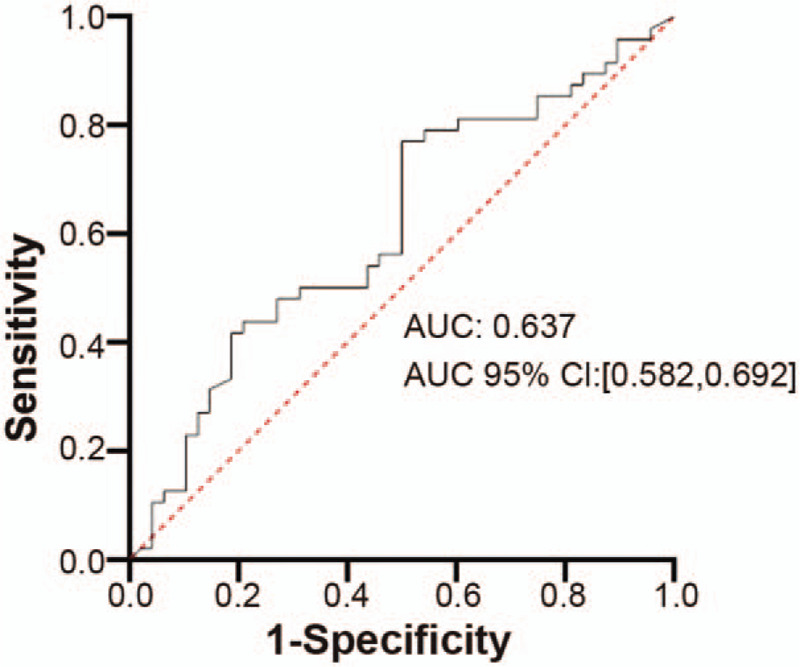
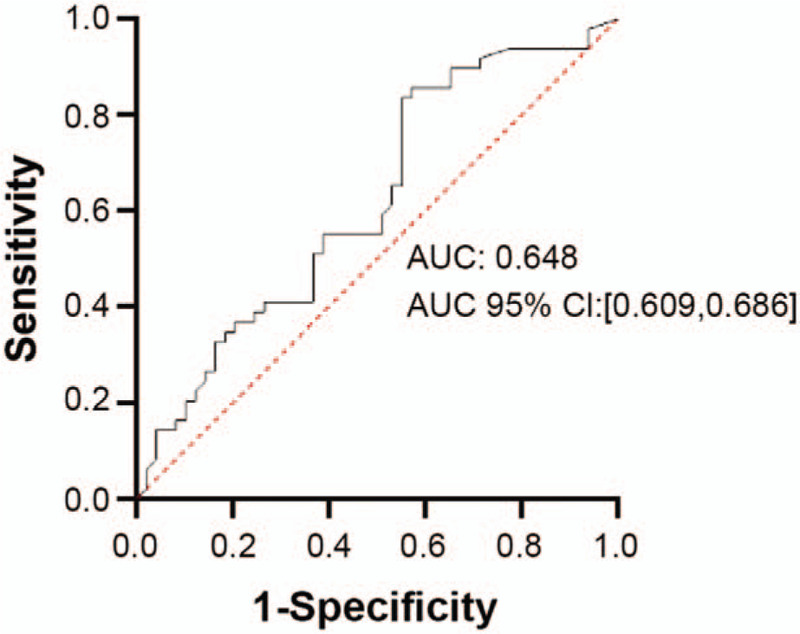
No-reflow is an important complication among patients with acute ST-segment elevation myocardial infarction (STEMI) undergoing percutaneous coronary intervention (PCI).A retrospective study of 1658 STEMI patients undergoing direct PCI was performed. Patients were randomly assigned at a 7:3 ratio into development cohort and validation cohort and into no-reflow and normal blood flow groups. Clinical data and laboratory examinations were compared to identify independent risk factors and establish a no-reflow risk scoring system.In the development cohort (n = 1122), 331 (29.5%) had no-reflow. Multivariate analysis showed age ≥ 65 years (OR = 1.766, 95% confidence interval (CI): 1.313-2.376, P < .001), not using angiotonase inhibitor/angiotensin receptor antagonists (OR = 1.454, 95%CI: 1.084-1.951, P = .013), collateral circulation <grade 2 (OR = 3.056, 95%CI: 1.566-5.961, P = .001), thrombosis burden ≥4 points (OR = 2.033, 95%CI: 1.370-3.018, P < .001), diameter of target lesion ≥3.5 mm (OR = 1.511, 95%CI: 1.087-2.100, P = .014), thrombosis aspiration (OR = 1.422, 95%CI: 1.042-1.941, P = .026), and blood glucose >8 mmol/L (OR = 1.386, 95%CI: 1.007-1.908, P = .045) were related to no-reflow. Receiver operating characteristic (ROC) area under the curve was 0.648 (95%CI: 0.609-0.86). At 0.349 cutoff sensitivity was 42.0%, specificity was 79.3%, positive predictive value (PPV) was 44.7%, negative predictive value (NPV) was 77.4%, P < .001. The resulting risk scoring system was tested in the validation cohort (n = 536), with 30.1% incidence of no-reflow. The area under the ROC curve was 0.637 (95%CI: 0.582-0.692). At a cutoff of 0.349 sensitivity was 53.2% and specificity was 66.7%, PPV was 41.2%, NPV was 76.4%, P < .001.The no-reflow risk scoring system was effective in identifying high-risk patients.

摘要

无复流是接受经皮冠状动脉介入治疗(PCI)的急性ST段抬高型心肌梗死(STEMI)患者的一种重要并发症。对1658例接受直接PCI的STEMI患者进行了一项回顾性研究。患者按7:3的比例随机分为开发队列和验证队列,以及无复流组和正常血流组。比较临床资料和实验室检查结果,以确定独立危险因素并建立无复流风险评分系统。在开发队列(n = 1122)中,331例(29.5%)发生无复流。多因素分析显示,年龄≥65岁(OR = 1.766,95%置信区间(CI):1.313 - 2.376,P <.001)、未使用血管紧张素转换酶抑制剂/血管紧张素受体拮抗剂(OR = 1.454,95%CI:1.084 - 1.951,P = .013)、侧支循环<2级(OR = 3.056,95%CI:1.566 - 5.961,P = .001)、血栓负荷≥4分(OR = 2.033,95%CI:1.370 - 3.018,P <.001)、靶病变直径≥3.5 mm(OR = 1.511,95%CI:1.087 - 2.100,P = .014)、血栓抽吸(OR = 1.422,95%CI:1.042 - 1.941,P = .026)以及血糖>8 mmol/L(OR = 1.386,95%CI:1.007 - 1.908,P = .045)与无复流相关。受试者工作特征(ROC)曲线下面积为0.648(95%CI:0.609 - 0.86)。在截断值为0.349时,灵敏度为42.0%,特异度为79.3%,阳性预测值(PPV)为44.7%,阴性预测值(NPV)为77.4%,P <.001。所得风险评分系统在验证队列(n = 536)中进行了测试,无复流发生率为30.1%。ROC曲线下面积为0.637(95%CI:0.582 - 0.692)。在截断值为0.349时,灵敏度为53.2%,特异度为66.
https://cdn.ncbi.nlm.nih.gov/pmc/blobs/3867/7329019/1c4aa30e8af3/medi-99-e20152-g006.jpg
https://cdn.ncbi.nlm.nih.gov/pmc/blobs/3867/7329019/44811f57297c/medi-99-e20152-g005.jpg
https://cdn.ncbi.nlm.nih.gov/pmc/blobs/3867/7329019/1c4aa30e8af3/medi-99-e20152-g006.jpg
https://cdn.ncbi.nlm.nih.gov/pmc/blobs/3867/7329019/44811f57297c/medi-99-e20152-g005.jpg
https://cdn.ncbi.nlm.nih.gov/pmc/blobs/3867/7329019/1c4aa30e8af3/medi-99-e20152-g006.jpg

相似文献

1
Prediction of no-reflow phenomenon in patients treated with primary percutaneous coronary intervention for ST-segment elevation myocardial infarction.ST段抬高型心肌梗死患者直接经皮冠状动脉介入治疗后无复流现象的预测
Medicine (Baltimore). 2020 Jun 26;99(26):e20152. doi: 10.1097/MD.0000000000020152.
2
Predictors of no-reflow phenomenon following percutaneous coronary intervention for ST-segment elevation myocardial infarction.经皮冠状动脉介入治疗 ST 段抬高型心肌梗死无复流现象的预测因素。
Ann Cardiol Angeiol (Paris). 2021 Jun;70(3):136-142. doi: 10.1016/j.ancard.2021.04.004. Epub 2021 May 4.
3
SYNTAX score is a predictor of angiographic no-reflow in patients with ST-elevation myocardial infarction treated with a primary percutaneous coronary intervention.SYNTAX评分是接受直接经皮冠状动脉介入治疗的ST段抬高型心肌梗死患者血管造影无复流的预测指标。
Coron Artery Dis. 2013 Mar;24(2):148-53. doi: 10.1097/MCA.0b013e32835c4719.
4
Comparison of syntax score and syntax score II to predict "no reflow phenomenon" in patients with ST-segment elevation myocardial infarction.比较Syntax评分和Syntax评分II预测ST段抬高型心肌梗死患者“无复流现象”的情况。
Int J Cardiovasc Imaging. 2017 Dec;33(12):1883-1889. doi: 10.1007/s10554-017-1200-5. Epub 2017 Jun 29.
5
Impact of platelet inhibition level on subsequent no-reflow in patients undergoing primary percutaneous coronary intervention for ST-segment elevation myocardial infarction.血小板抑制水平对 ST 段抬高型心肌梗死患者行直接经皮冠状动脉介入治疗后无复流的影响。
Arch Cardiovasc Dis. 2017 Nov;110(11):626-633. doi: 10.1016/j.acvd.2016.12.017. Epub 2017 Jun 2.
6
Increased Platelet-leukocyte Aggregates Are Associated With Myocardial No-reflow in Patients With ST Elevation Myocardial Infarction.血小板-白细胞聚集增加与ST段抬高型心肌梗死患者的心肌无复流相关。
Am J Med Sci. 2016 Sep;352(3):261-6. doi: 10.1016/j.amjms.2016.05.034. Epub 2016 Jun 9.
7
CHA2DS2-VASc Score is a Predictor of No-Reflow in Patients With ST-Segment Elevation Myocardial Infarction Who Underwent Primary Percutaneous Intervention.CHA2DS2-VASc评分是接受直接经皮冠状动脉介入治疗的ST段抬高型心肌梗死患者无复流现象的预测指标。
Angiology. 2016 Oct;67(9):840-5. doi: 10.1177/0003319715622844. Epub 2015 Dec 17.
8
The relationship between atherogenic index of plasma and no-reflow in patients with acute ST-segment elevation myocardial infarction who underwent primary percutaneous coronary intervention.急性 ST 段抬高型心肌梗死患者行直接经皮冠状动脉介入治疗后,血浆致动脉粥样硬化指数与无复流的关系。
Int J Cardiovasc Imaging. 2020 May;36(5):789-796. doi: 10.1007/s10554-019-01766-8. Epub 2020 Jan 9.
9
Morphological predictors for no reflow phenomenon after primary percutaneous coronary intervention in patients with ST-segment elevation myocardial infarction caused by plaque rupture.斑块破裂所致ST段抬高型心肌梗死患者直接经皮冠状动脉介入治疗后无复流现象的形态学预测因素
Eur Heart J Cardiovasc Imaging. 2017 Jan;18(1):103-110. doi: 10.1093/ehjci/jev341. Epub 2016 Jan 22.
10
Vitamin D level predicts angiographic no-reflow phenomenon after percutaneous coronary intervention in patients with ST segment elevation myocardial infarction.维生素 D 水平可预测 ST 段抬高型心肌梗死患者经皮冠状动脉介入治疗后的无复流现象。
Biomark Med. 2021 Oct;15(15):1357-1366. doi: 10.2217/bmm-2020-0689. Epub 2021 Sep 17.

引用本文的文献

1
Molecular Mechanisms of Microvascular Obstruction and Dysfunction in Percutaneous Coronary Interventions: From Pathophysiology to Therapeutics-A Comprehensive Review.经皮冠状动脉介入治疗中微血管阻塞与功能障碍的分子机制:从病理生理学到治疗学——全面综述
Int J Mol Sci. 2025 Jul 16;26(14):6835. doi: 10.3390/ijms26146835.
2
Predicting the no-reflow phenomenon in ST-elevation myocardial infarction patients undergoing primary percutaneous coronary intervention: a systematic review of clinical prediction models.预测行直接经皮冠状动脉介入治疗的 ST 段抬高型心肌梗死患者无复流现象:临床预测模型的系统评价。
Ther Adv Cardiovasc Dis. 2024 Jan-Dec;18:17539447241290438. doi: 10.1177/17539447241290438.
3

本文引用的文献

1
The predictors of no reflow phenomenon after percutaneous coronary intervention in patients with ST elevation myocardial infarction: A meta-analysis.ST段抬高型心肌梗死患者经皮冠状动脉介入治疗后无复流现象的预测因素:一项荟萃分析。
Indian Heart J. 2018 Dec;70 Suppl 3(Suppl 3):S406-S418. doi: 10.1016/j.ihj.2018.01.032. Epub 2018 Jan 31.
2
Combining clinical predictors to better predict for the no-reflow phenomenon.结合临床预测因子以更好地预测无复流现象。
Eur Rev Med Pharmacol Sci. 2018 Aug;22(15):4987-4994. doi: 10.26355/eurrev_201808_15639.
3
Cardiovascular diseases in China: Current status and future perspectives.
Analysis of risk factors for PCI no-reflow in coronary heart disease and construction of related prediction models.
冠心病经皮冠状动脉介入治疗无复流的危险因素分析及相关预测模型的构建
Am J Transl Res. 2024 Aug 15;16(8):3733-3741. doi: 10.62347/ECNI6080. eCollection 2024.
4
Changes and Diagnostic Significance of miR-542-3p Expression in Patients with Myocardial Infarction.心肌梗死患者中miR-542-3p表达的变化及其诊断意义
Mol Biotechnol. 2024 Sep 6. doi: 10.1007/s12033-024-01272-w.
5
The assessment of no-reflow phenomenon incidence in early versus delayed percutaneous coronary intervention following a primary fibrinolysis.在初次溶栓后早期与延迟经皮冠状动脉介入治疗中无复流现象发生率的评估。
ARYA Atheroscler. 2024 Mar-Apr;20(2):31-40. doi: 10.48305/arya.2024.42104.2921.
6
Impact of serum iron levels on in-hospital mortality and clinical outcomes in patients with ST segment elevation myocardial infarction undergoing emergency percutaneous coronary intervention: a retrospective analysis.血清铁水平对行急诊经皮冠状动脉介入治疗的 ST 段抬高型心肌梗死患者住院死亡率和临床结局的影响:一项回顾性分析。
Coron Artery Dis. 2024 Nov 1;35(7):539-546. doi: 10.1097/MCA.0000000000001393. Epub 2024 May 30.
7
The Impact of Disease Duration on Microcirculatory Dysfunction in Young Patients with Uncomplicated Type 1 Diabetes.病程对无并发症的1型糖尿病年轻患者微循环功能障碍的影响
Biomedicines. 2024 May 6;12(5):1020. doi: 10.3390/biomedicines12051020.
8
Coronary Air Embolism Secondary to Percutaneous Lung Biopsy: A Systematic Review.经皮肺活检继发冠状动脉空气栓塞:一项系统评价
Cureus. 2024 Feb 29;16(2):e55234. doi: 10.7759/cureus.55234. eCollection 2024 Feb.
9
Impact of body mass index on long-term outcomes in patients undergoing percutaneous coronary intervention stratified by diabetes mellitus: a retrospective cohort study.体重指数对糖尿病患者经皮冠状动脉介入治疗长期结局的影响:一项回顾性队列研究。
BMC Cardiovasc Disord. 2024 Feb 16;24(1):113. doi: 10.1186/s12872-024-03770-w.
10
Utility of electrocardiogram to predict the occurrence of the no-reflow phenomenon in patients undergoing primary percutaneous coronary intervention (PPCI): a systematic review and meta-analysis.心电图预测接受直接经皮冠状动脉介入治疗(PPCI)患者无复流现象发生的效用:一项系统评价和荟萃分析。
Front Cardiovasc Med. 2024 Jan 8;10:1295964. doi: 10.3389/fcvm.2023.1295964. eCollection 2023.
中国的心血管疾病:现状与未来展望。
Int J Cardiol Heart Vasc. 2014 Dec 30;6:25-31. doi: 10.1016/j.ijcha.2014.10.002. eCollection 2015 Mar 1.
4
No reflow phenomenon in percutaneous coronary interventions in ST-segment elevation myocardial infarction.ST段抬高型心肌梗死经皮冠状动脉介入治疗中的无复流现象
Indian Heart J. 2016 Jul-Aug;68(4):539-51. doi: 10.1016/j.ihj.2016.04.006. Epub 2016 Apr 19.
5
Worldwide disparities in cardiovascular disease: Challenges and solutions.全球心血管疾病的差异:挑战与解决方案。
Int J Cardiol. 2016 Jan 1;202:433-40. doi: 10.1016/j.ijcard.2015.08.172. Epub 2015 Aug 28.
6
Evaluation of the Clinical and Procedural Predictive Factors of no-Reflow Phenomenon Following Primary Percutaneous Coronary Intervention.直接经皮冠状动脉介入治疗后无复流现象的临床及操作预测因素评估
Res Cardiovasc Med. 2015 May 23;4(2):e25414. doi: 10.5812/cardiovascmed.4(2)2015.25414. eCollection 2015 May.
7
Simple clinical risk score for no-reflow prediction in patients undergoing primary Percutaneous Coronary Intervention with acute STEMI.急性ST段抬高型心肌梗死患者接受直接经皮冠状动脉介入治疗时无复流预测的简单临床风险评分。
Pak J Med Sci. 2015;31(3):576-81. doi: 10.12669/pjms.313.7484.
8
The relationship between culprit artery and the clinical outcomes in patients undergoing primary percutaneous coronary ıntervention for ınferior wall ST segment elevation myocardial ınfarction.接受下壁ST段抬高型心肌梗死直接经皮冠状动脉介入治疗患者的罪犯血管与临床结局的关系。
Minerva Cardioangiol. 2016 Aug;64(4):367-74. Epub 2014 Dec 17.
9
Clinical and procedural predictors of no-reflow in patients with acute myocardial infarction after primary percutaneous coronary intervention.直接经皮冠状动脉介入治疗急性心肌梗死后无复流的临床和操作预测因素。
World J Emerg Med. 2014;5(2):96-102. doi: 10.5847/wjem.j.issn.1920-8642.2014.02.003.
10
Predicting coronary no-reflow in patients with acute ST-segment elevation myocardial infarction using Bayesian approaches.使用贝叶斯方法预测急性ST段抬高型心肌梗死患者的冠状动脉无复流现象。
Coron Artery Dis. 2014 Nov;25(7):582-8. doi: 10.1097/MCA.0000000000000135.