Health Research Institute, University of Canberra, ACT, Canberra, 2617, Australia.
Int J Equity Health. 2020 Jun 26;19(1):105. doi: 10.1186/s12939-020-01216-1.
Inequity in access to healthcare services is a constant concern. While advances in healthcare have progressed in the last several decades, thereby significantly improving the prevention and treatment of disease, these benefits have not been shared equally. Excluded communities such as Indigenous communities typically face a lack of access to healthcare services that others do not. This study seeks to understand why the indigenous communities in Attapadi continue to experience poor access to healthcare in spite of both financial protection and adequate coverage of health services.
Ethnographic fieldwork was carried out among the various stakeholders living in Attapadi. A total of 47 in-depth interviews and 6 focus group discussions were conducted amongst the indigenous community, the healthcare providers and key informants. The data was coded utilising a reflexive and inductive approach leading to the development of the key categories and themes.
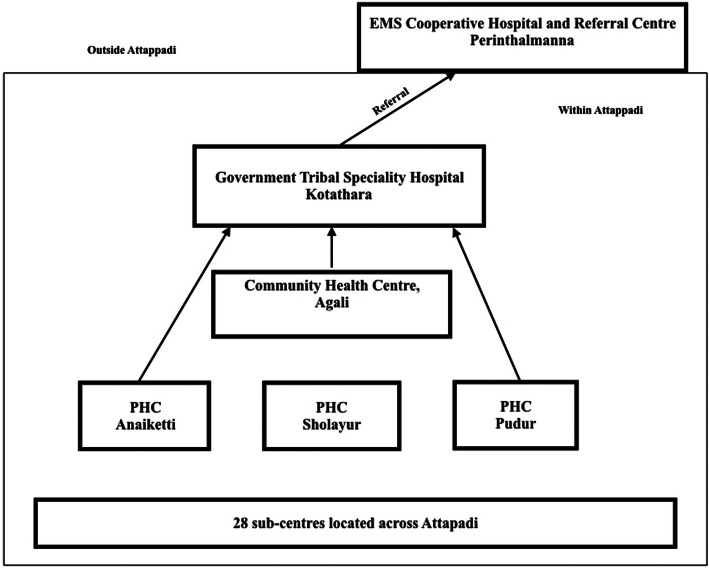
The health system provided a comprehensive financial protection package in addition to a host of healthcare facilities for the indigenous communities to avail services. In spite of this, they resisted attempts by the health system to improve their access. The failure to provide culturally respectful care, the discrimination of the community at healthcare facilities, the centralisation of the delivery of services as well as the lack of power on the part of the indigenous community to negotiate with the health system for services that were less disruptive for their lives were identified as the barriers to improving healthcare access. The existing power differentials between the community and the health system stakeholders also ensured that meaningful involvement of the community in the local health system did not occur.
Improving access to health care for indigenous communities would require UHC interventions to be culturally safe, locally relevant and promote active involvement of the community at all stages of the intervention. Continuing structural power imbalances that affect access to resources and prevent meaningful involvement of indigenous communities also need to be addressed.
医疗服务获取方面的不平等一直是人们关注的焦点。尽管过去几十年医疗保健领域取得了进步,极大地改善了疾病的预防和治疗,但这些益处并未平等共享。像原住民社区这样被排斥的群体通常面临着无法获得其他人享有的医疗保健服务的问题。本研究旨在了解为什么尽管阿塔帕迪的原住民社区享有财务保障和充足的医疗服务覆盖,但仍难以获得医疗服务。
在阿塔帕迪的各利益攸关方中开展了人种学实地工作。在原住民社区、医疗服务提供者和主要知情人中总共进行了 47 次深入访谈和 6 次焦点小组讨论。利用反思性和归纳性方法对数据进行编码,从而形成关键类别和主题。
该卫生系统除了为原住民社区提供一系列医疗设施外,还提供了全面的财务保障计划。尽管如此,他们还是抵制了卫生系统改善其获取途径的努力。未能提供文化上受尊重的护理、医疗设施对社区的歧视、服务提供的中心化以及原住民社区缺乏与卫生系统协商以获得对其生活干扰较小的服务的权力,这些都被认为是改善医疗保健获取的障碍。社区与卫生系统利益攸关方之间现有的权力差异也确保了社区无法真正参与当地卫生系统。
要改善原住民社区的医疗保健获取,全民医保干预措施必须具有文化安全性、与当地相关,并促进社区在干预的所有阶段积极参与。还需要解决影响资源获取和阻止原住民社区有意义参与的持续结构性权力失衡问题。