Centre for Health and Social Justice, Basement of Young Women's Hostel No. 2, Avenue 21, G Block, Saket, New Delhi, Delhi, 110017, India.
SAHAYOG, A-240 Indira Nagar, Lucknow, Uttar Pradesh, 226016, India.
Int J Equity Health. 2018 Sep 24;17(1):134. doi: 10.1186/s12939-018-0850-9.
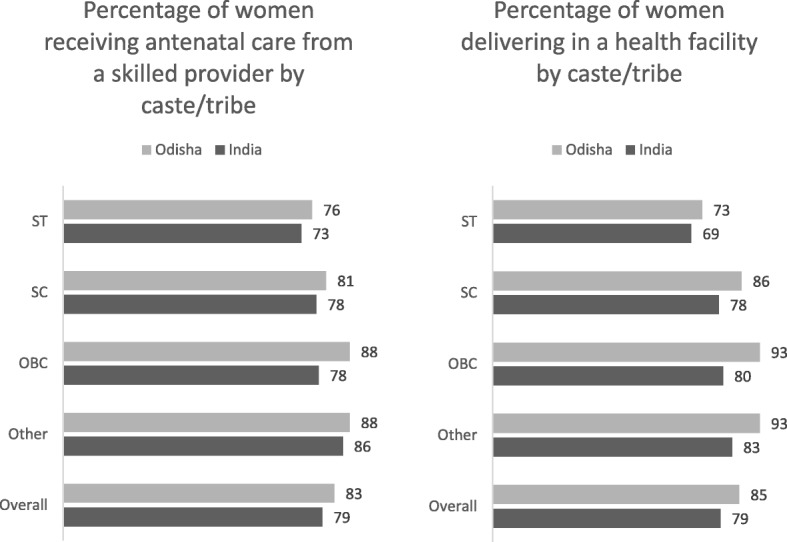
Over the past 15 years, several efforts have been made by the Government of India to improve maternal health, primarily through providing cash incentives to increase institutional child birth and strengthen services in the public health system. The result has been a definite but unequal increase in the proportion of institutional deliveries, across geographical areas and social groups. Tribal (indigenous) communities are one such group in which the proportion of institutional deliveries is low. The persistence of these inequities indicates that a different approach is required to address the maternal health challenges in these communities.
This paper describes an exploratory study in Rayagada District of Odisha which aimed to understand tribal women's experiences with pregnancy and childbirth and their interactions with the formal health system. Methods included in-depth interviews with women, traditional healers and formal health care providers and outreach workers, observations in the community and health facilities.
The exploration of traditional practices shows that in this community, pregnancy and childbirth is treated as part of a natural process, not requiring external intervention. There is a well-established practice of birthing in the community which also recognizes the need for health system interventions in case of high-risk births or complications. However, there has been no effort by the health system to build on this traditional understanding of safety of woman and child. Instead, the system continues to rely on incentives and disincentives to motivate women. Traditional health providers who are important stakeholders have not been integrated into the health system. Despite the immense difficulties that women face, however, they do access health facilities, but barriers of distance, language, cultural inappropriateness of services, and experiences of gross violations have further compounded their distrust.
The results of the study suggest a re-examining of the very approach to addressing maternal health in this community. The study calls for reorienting maternal health services, to be responsive to the requirements of tribal women, cater to their cultural needs, provide support to domiciliary deliveries, invest in building trust with the community, and preserve beneficial traditional practices.
在过去的 15 年里,印度政府做出了几项努力来改善产妇健康,主要是通过提供现金激励来增加机构分娩,并加强公共卫生系统的服务。其结果是,在地理区域和社会群体中,机构分娩的比例都有了明显但不平等的提高。部落(土著)社区就是这样一个群体,其中机构分娩的比例较低。这些不平等现象的持续存在表明,需要采取不同的方法来解决这些社区的产妇健康挑战。
本文描述了在奥里萨邦雷亚格达区进行的一项探索性研究,旨在了解部落妇女的妊娠和分娩经历以及她们与正规卫生系统的互动。方法包括对妇女、传统治疗师和正规卫生保健提供者和外展工作者进行深入访谈、在社区和卫生设施进行观察。
对传统做法的探索表明,在这个社区,妊娠和分娩被视为自然过程的一部分,不需要外部干预。有一种成熟的社区分娩实践,也认识到在高危分娩或出现并发症的情况下需要卫生系统干预。然而,卫生系统并没有努力利用这种对妇女和儿童安全的传统理解。相反,该系统继续依赖激励和惩罚来激励妇女。作为重要利益相关者的传统卫生提供者尚未融入卫生系统。尽管妇女面临着巨大的困难,但她们确实会寻求卫生设施,但距离、语言、服务文化不适应以及严重侵犯人权的经历等障碍进一步加深了她们的不信任。
研究结果表明,需要重新审视在该社区解决产妇健康问题的方法。研究呼吁重新调整产妇保健服务,以满足部落妇女的要求,满足她们的文化需求,为家庭分娩提供支持,投资于与社区建立信任,并保留有益的传统做法。