Department of Immunology, School of Basic Medical Sciences, Guangxi Medical University, Nanning, China.
Department of Otolaryngology and Head and Neck, The People's Hospital of Guangxi Zhuang Autonomous Region, Nanning, China.
Asian Pac J Cancer Prev. 2020 Jun 1;21(6):1787-1795. doi: 10.31557/APJCP.2020.21.6.1787.
This study aims to explore the roles of long non-coding RNAs (lncRNAs) for predicting survival in hepatocellular carcinoma (HCC) patients with cirrhosis.
A set of lncRNAs differentially expressed between HCC patients with or without cirrhosis was identified using expression profiles of The Cancer Genome Atlas database, and these lncRNAs were screened for their risk scoring system to predict recurrence-free survival (RFS) or overall survival (OS). Predictive ability of risk scoring systems was confirmed using uni- and multivariate Cox analyses while adjusting for clinical features. Predictive lncRNAs were analyzed by functional enrichment analysis.
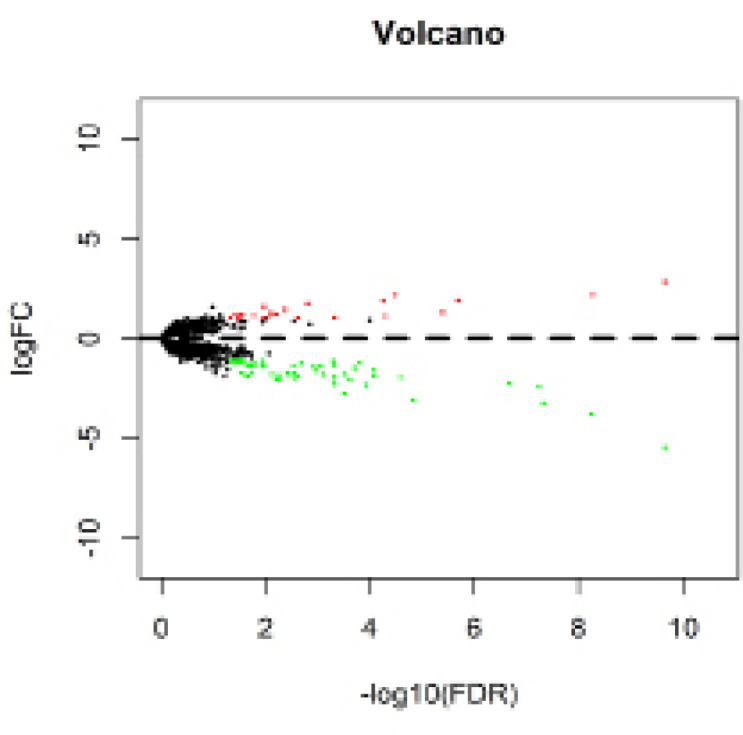
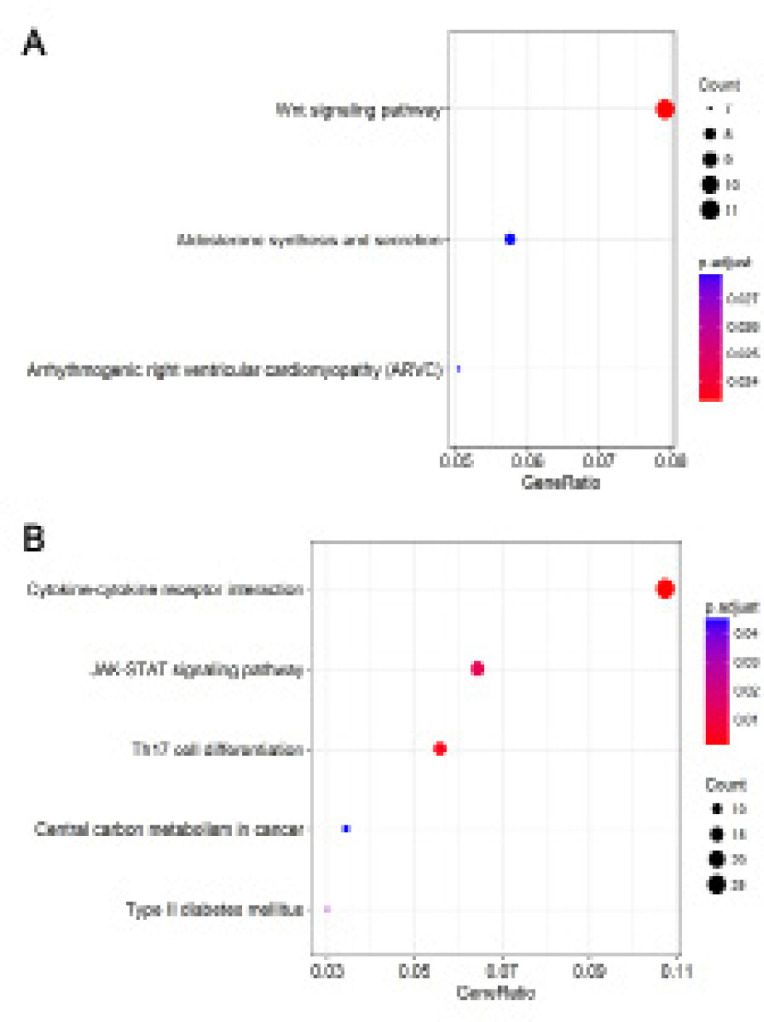
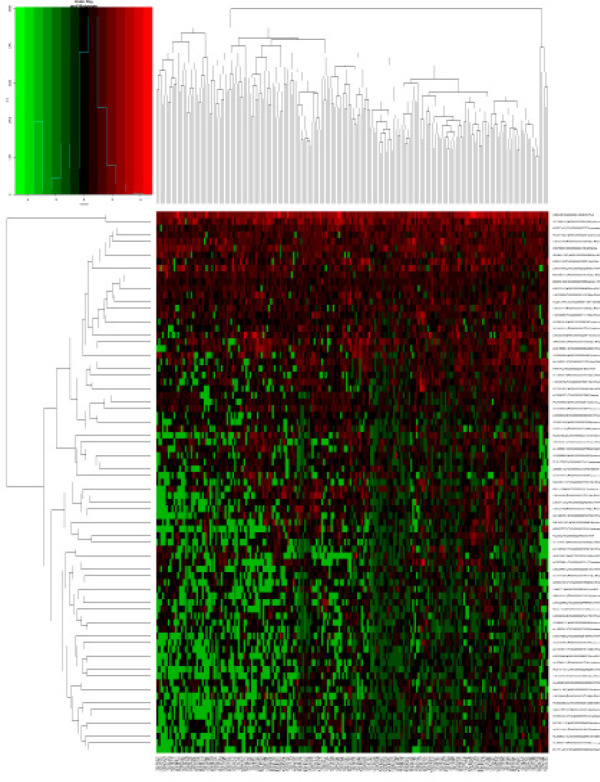
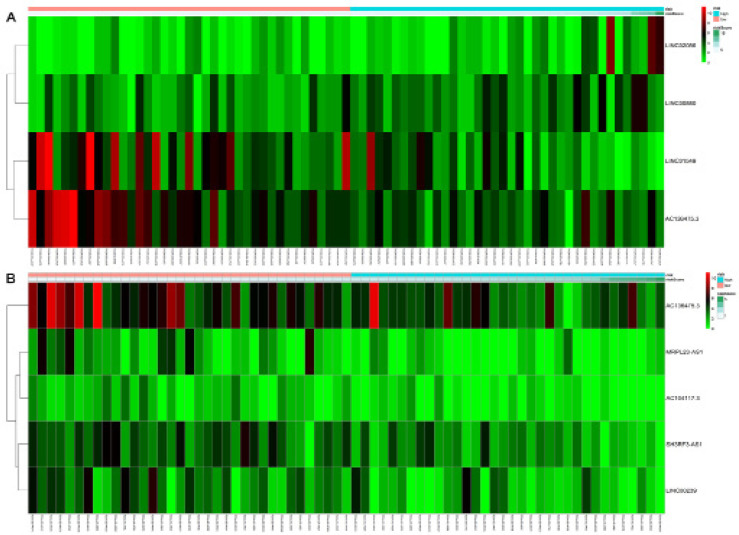
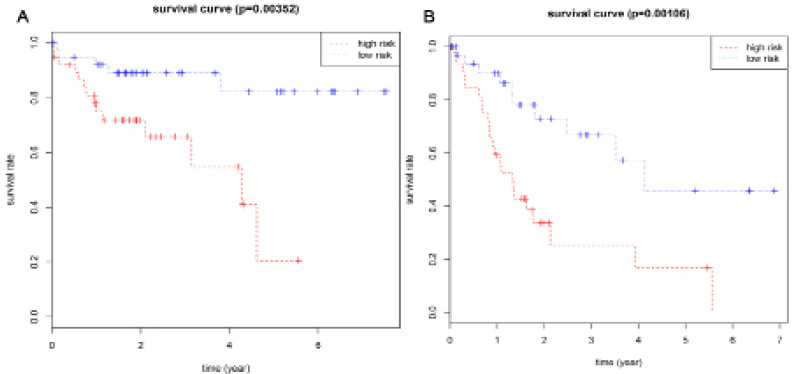
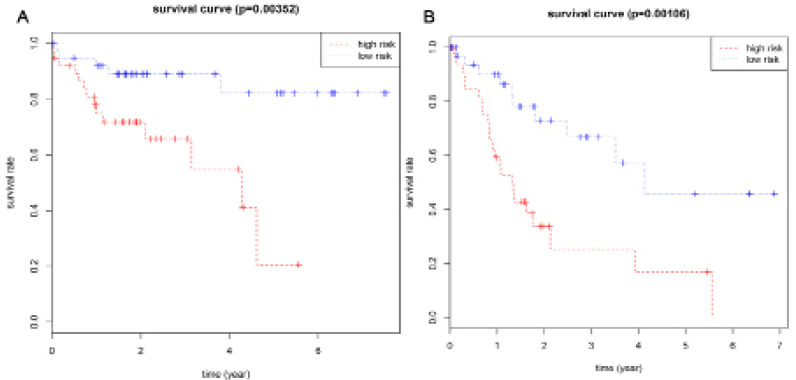
Our screen identified 22 lncRNAs that were upregulated in the presence of cirrhosis and 59 that were downregulated. To predict OS of HCC patients with cirrhosis, a risk scoring system was developed with four lncRNAs (LINC02086, LINC00880, LINC01549 and AC136475.3); to predict RFS in these patients, the risk scoring system contained five lncRNAs (SH3RF3-AS1, AC104117.3, AC136475.3, LINC00239 and MRPL23-AS1). All risk scoring systems were associated with an area under the receiver operating characteristic curve > 0.7. Based on uni- and multivariate Cox analyses, the risk scoring system could serve as a significant independent predictor for OS in HCC patients with cirrhosis. Functional enrichment analysis suggested that the lncRNAs in the risk scoring systems are involved primarily in the pathway of Wnt signal and cytokine-cytokine receptor interaction.
Risk scoring systems based on lncRNAs can effectively predict OS of HCC patients with cirrhosis. The system should be further developed and validated in larger, preferably multi-site patient populations.
.
本研究旨在探讨长链非编码 RNA(lncRNA)在预测肝硬化合并肝细胞癌(HCC)患者生存中的作用。
方法:使用癌症基因组图谱数据库的表达谱,确定一组在 HCC 患者伴或不伴肝硬化之间差异表达的 lncRNA,并筛选这些 lncRNA 的风险评分系统以预测无复发生存(RFS)或总生存(OS)。使用单变量和多变量 Cox 分析调整临床特征后,确认风险评分系统的预测能力。对预测 lncRNA 进行功能富集分析。
结果:我们的筛选确定了 22 个在肝硬化存在时上调的 lncRNA 和 59 个下调的 lncRNA。为了预测肝硬化 HCC 患者的 OS,开发了一个包含四个 lncRNA(LINC02086、LINC00880、LINC01549 和 AC136475.3)的风险评分系统;为了预测这些患者的 RFS,风险评分系统包含五个 lncRNA(SH3RF3-AS1、AC104117.3、AC136475.3、LINC00239 和 MRPL23-AS1)。所有风险评分系统的受试者工作特征曲线下面积均>0.7。基于单变量和多变量 Cox 分析,风险评分系统可作为肝硬化合并 HCC 患者 OS 的独立显著预测因子。功能富集分析表明,风险评分系统中的 lncRNA 主要参与 Wnt 信号通路和细胞因子-细胞因子受体相互作用。
结论:基于 lncRNA 的风险评分系统可有效预测肝硬化合并 HCC 患者的 OS。该系统应在更大、最好是多中心的患者人群中进一步开发和验证。