Moriyama Miyu, Nagai Minami, Maruzuru Yuhei, Koshiba Takumi, Kawaguchi Yasushi, Ichinohe Takeshi
Division of Viral Infection, Department of Infectious Disease Control, International Research Center for Infectious Diseases, Institute of Medical Science, The University of Tokyo, Minato-ku, Tokyo 108-8639, Japan; Department of Chemistry, Faculty of Science Fukuoka University, Jonan-ku, Fukuoka 814-0180, Japan.
Division of Viral Infection, Department of Infectious Disease Control, International Research Center for Infectious Diseases, Institute of Medical Science, The University of Tokyo, Minato-ku, Tokyo 108-8639, Japan.
iScience. 2020 Jul 24;23(7):101270. doi: 10.1016/j.isci.2020.101270. Epub 2020 Jun 14.
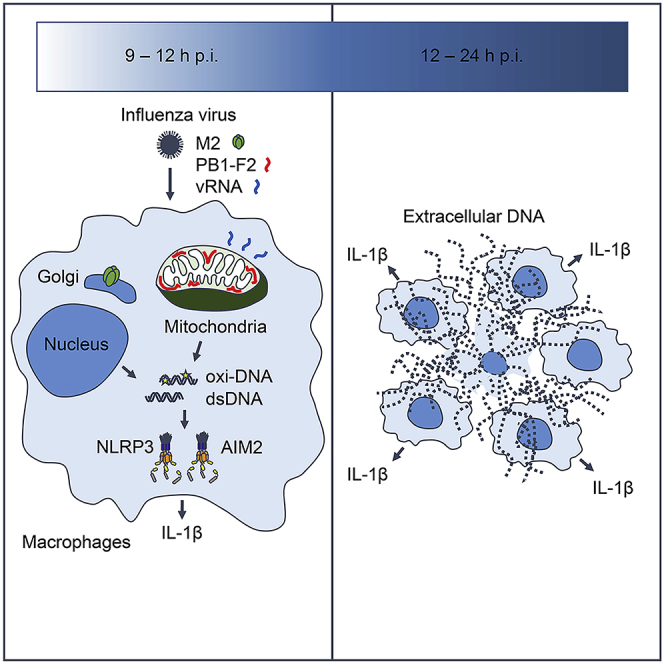
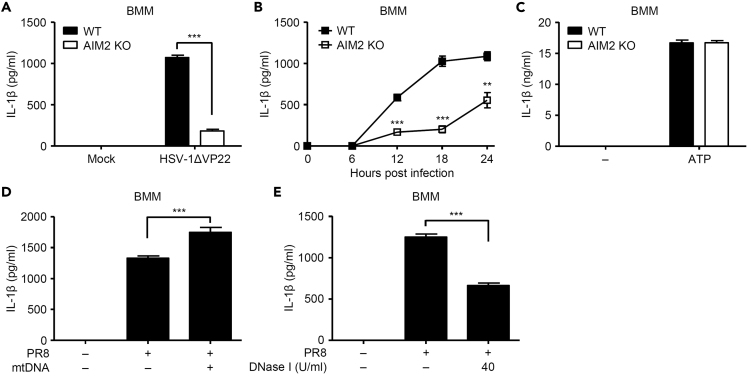
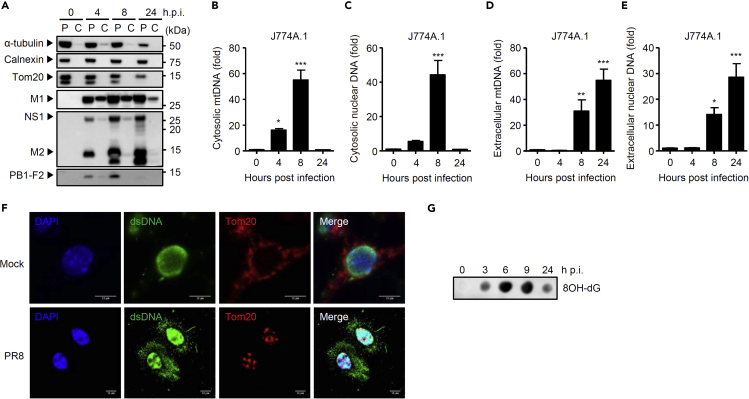
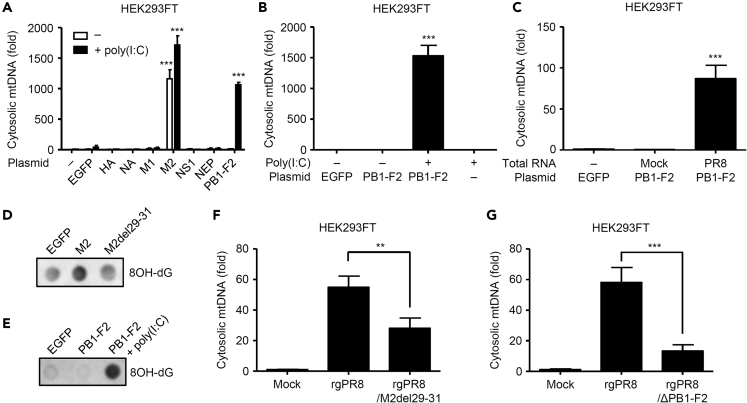
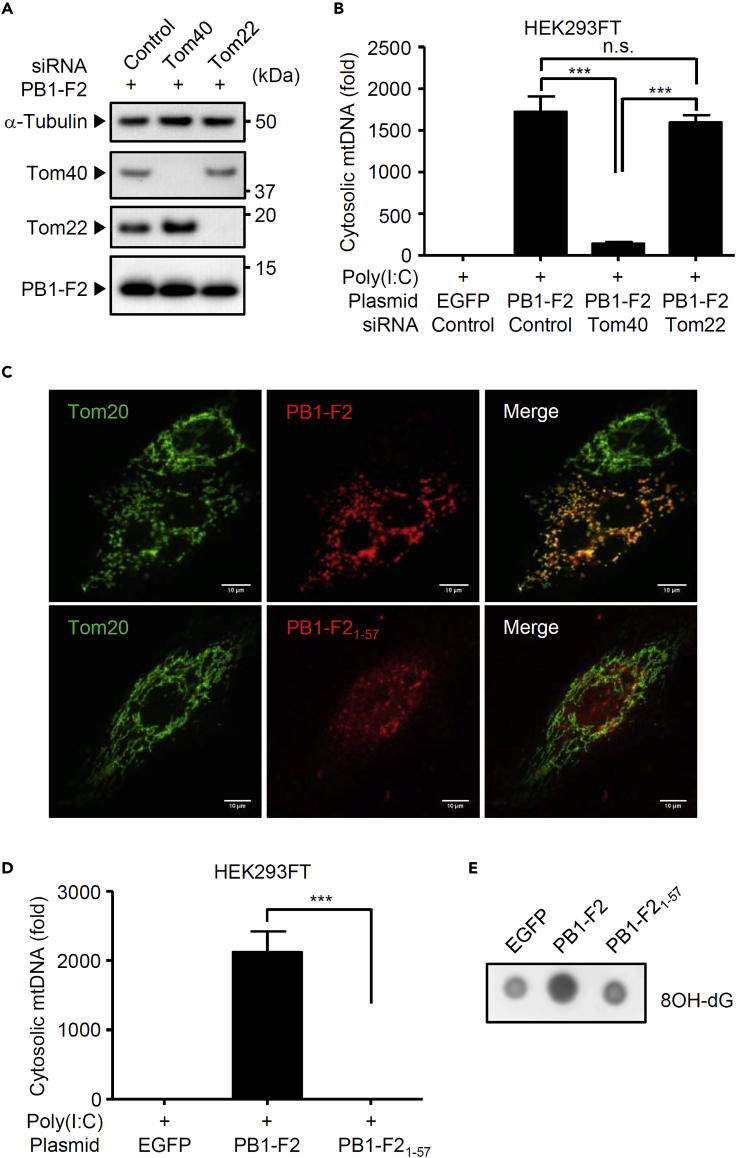
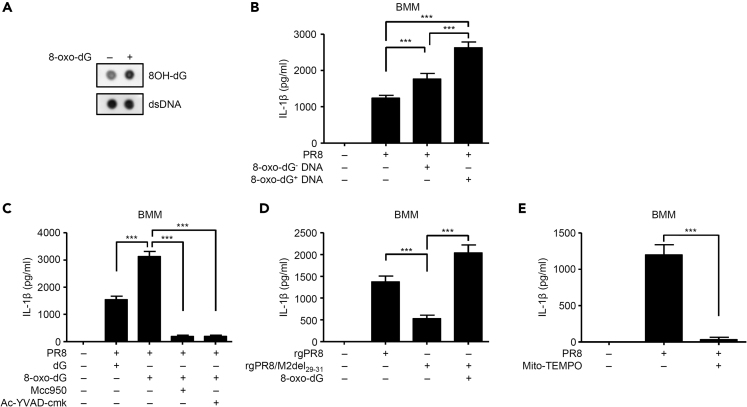
Influenza virus M2 and PB1-F2 proteins have been proposed to activate the Nod-like receptor family, pyrin domain-containing 3 (NLRP3) inflammasome in macrophages by altering intracellular ionic balance or mitochondrial reactive oxygen species (ROS) production. However, the precise mechanism by which these viral proteins trigger the NLRP3 inflammasome activation remains unclear. Here we show that influenza virus stimulates oxidized DNA release from macrophages. Ion channel activity of the M2 protein or mitochondrial localization of the PB1-F2 protein was required for oxidized DNA release. The oxidized DNA enhanced influenza virus-induced IL-1β secretion, whereas inhibition of mitochondrial ROS production by antioxidant Mito-TEMPO decreased the virus-induced IL-1β secretion. In addition, we show that influenza virus stimulates IL-1β secretion from macrophages in an AIM2-dependent manner. These results provide a missing link between influenza viral proteins and the NLRP3 inflammasome activation and reveal the importance of influenza virus-induced oxidized DNA in inflammasomes activation.
流感病毒M2蛋白和PB1 - F2蛋白被认为可通过改变细胞内离子平衡或线粒体活性氧(ROS)生成来激活巨噬细胞中的含吡啉结构域的Nod样受体家族3(NLRP3)炎性小体。然而,这些病毒蛋白触发NLRP3炎性小体激活的确切机制仍不清楚。在此我们表明,流感病毒可刺激巨噬细胞释放氧化型DNA。氧化型DNA的释放需要M2蛋白的离子通道活性或PB1 - F2蛋白的线粒体定位。氧化型DNA增强了流感病毒诱导的IL - 1β分泌,而抗氧化剂Mito - TEMPO抑制线粒体ROS生成则降低了病毒诱导的IL - 1β分泌。此外,我们表明流感病毒以AIM2依赖的方式刺激巨噬细胞分泌IL - 1β。这些结果填补了流感病毒蛋白与NLRP3炎性小体激活之间缺失的环节,并揭示了流感病毒诱导的氧化型DNA在炎性小体激活中的重要性。