Wageningen University, Cell Biology & Immunology and, ERC-The Netherlands, Schaijk, Landerd campus, The Netherlands.
Chemical Immunology Lab, Center for Cooperative Research in Biosciences, CIC bioGUNE, Biscay, Spain.
Immunol Rev. 2020 Jul;296(1):169-190. doi: 10.1111/imr.12889. Epub 2020 Jun 28.
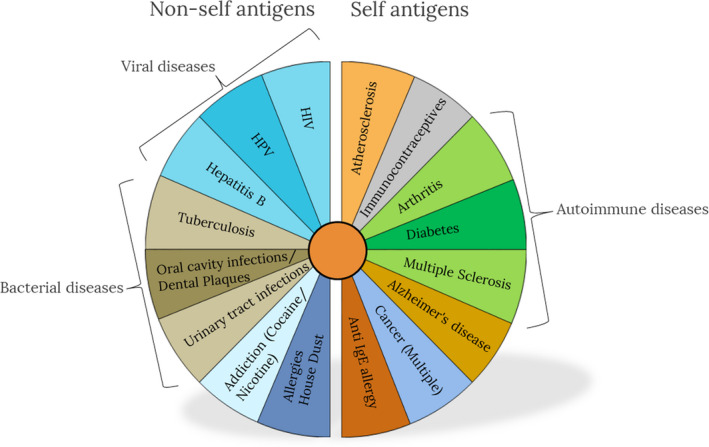
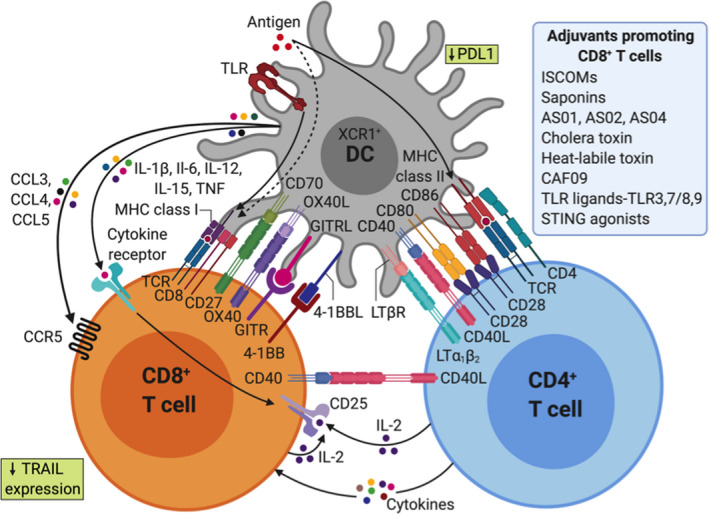
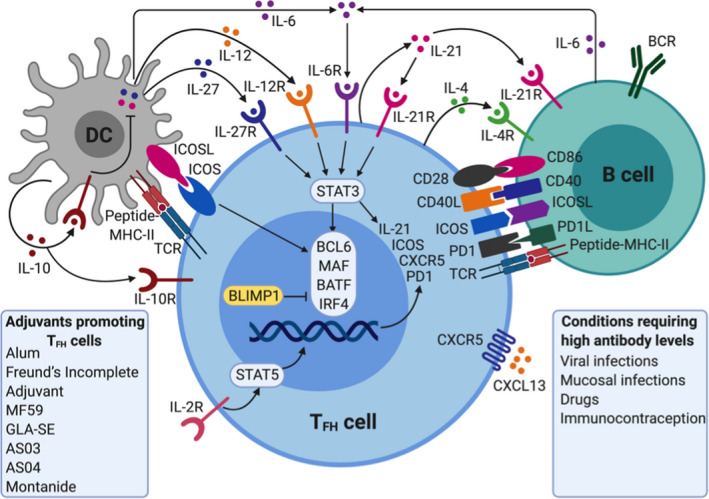
Therapeutic vaccination offers great promise as an intervention for a diversity of infectious and non-infectious conditions. Given that most chronic health conditions are thought to have an immune component, vaccination can at least in principle be proposed as a therapeutic strategy. Understanding the nature of protective immunity is of vital importance, and the progress made in recent years in defining the nature of pathological and protective immunity for a range of diseases has provided an impetus to devise strategies to promote such responses in a targeted manner. However, in many cases, limited progress has been made in clinical adoption of such approaches. This in part results from a lack of safe and effective vaccine adjuvants that can be used to promote protective immunity and/or reduce deleterious immune responses. Although somewhat simplistic, it is possible to divide therapeutic vaccine approaches into those targeting conditions where antibody responses can mediate protection and those where the principal focus is the promotion of effector and memory cellular immunity or the reduction of damaging cellular immune responses as in the case of autoimmune diseases. Clearly, in all cases of antigen-specific immunotherapy, the identification of protective antigens is a vital first step. There are many challenges to developing therapeutic vaccines beyond those associated with prophylactic diseases including the ongoing immune responses in patients, patient heterogeneity, and diversity in the type and stage of disease. If reproducible biomarkers can be defined, these could allow earlier diagnosis and intervention and likely increase therapeutic vaccine efficacy. Current immunomodulatory approaches related to adoptive cell transfers or passive antibody therapy are showing great promise, but these are outside the scope of this review which will focus on the potential for adjuvanted therapeutic active vaccination strategies.
治疗性疫苗为多种传染性和非传染性疾病的干预提供了巨大的希望。鉴于大多数慢性健康状况都被认为具有免疫成分,因此至少原则上可以将疫苗接种作为一种治疗策略。了解保护性免疫的性质至关重要,近年来在定义一系列疾病的病理性和保护性免疫的性质方面取得的进展为设计以靶向方式促进这种反应的策略提供了动力。然而,在许多情况下,这些方法在临床应用方面进展有限。这部分是由于缺乏安全有效的疫苗佐剂,这些佐剂可用于促进保护性免疫和/或减少有害免疫反应。尽管有些简单化,但可以将治疗性疫苗方法分为针对抗体反应可以介导保护的情况和那些主要关注促进效应和记忆细胞免疫或减少自身免疫性疾病等情况下的有害细胞免疫反应的情况。显然,在所有抗原特异性免疫治疗的情况下,鉴定保护性抗原是至关重要的第一步。除了与预防性疾病相关的挑战之外,开发治疗性疫苗还存在许多挑战,包括患者持续的免疫反应、患者异质性以及疾病的类型和阶段的多样性。如果可以定义可重复的生物标志物,这些标志物可以更早地诊断和干预,并可能提高治疗性疫苗的疗效。目前与过继细胞转移或被动抗体治疗相关的免疫调节方法显示出巨大的潜力,但这些不在本综述的范围内,本综述将重点介绍佐剂治疗性主动疫苗接种策略的潜力。