Grunze Heinz, Born Christoph
Psychiatrie Schwäbisch Hall and PMU Nuremberg, Nuremberg, Germany.
Front Psychiatry. 2020 Jun 12;11:510. doi: 10.3389/fpsyt.2020.00510. eCollection 2020.
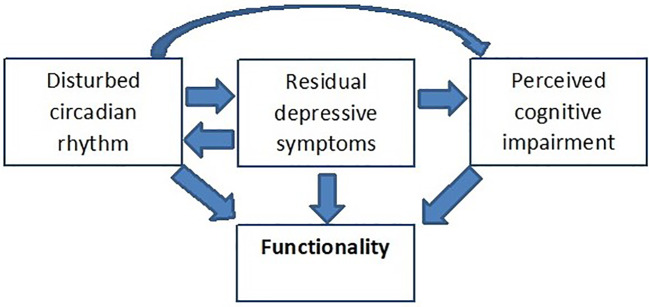
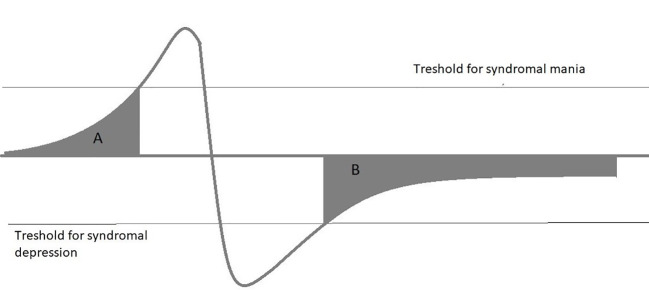
Subsyndromal symptoms have rarely been in the focus of bipolar research. This may be, in part, due to the fact that there is neither a uniform definition nor do they constitute an indication of regulatory and commercial interest. Nevertheless, they do have a decisive impact on the long-term course of bipolar disorder (BD), and the degree of functionality and quality of life (QoL) is more likely determined by their presence or absence than by acute episodes. Summarizing the literature an estimated 20-50% of patients suffer inter-episodically or chronically from subsyndromal BD. The most prominent symptoms that interfere with functionality are subsyndromal depression, disturbances of sleep, and perceived cognitive impairment, whereas anxiety negatively impacts on QoL. In the absence of evidence-based pharmacological treatments for subsyndromal BD, clinical practice adopts guidelines designed for treatment-resistant full-blown episodes of BD, supplemented by cognitive-behavioral, family focused or social-rhythm-based psychotherapies.
亚综合征症状很少成为双相情感障碍研究的焦点。部分原因可能是既没有统一的定义,它们也未构成监管和商业利益的关注点。然而,它们确实对双相情感障碍(BD)的长期病程具有决定性影响,功能水平和生活质量(QoL)更可能由其存在与否而非急性发作来决定。总结文献可知,估计20%至50%的患者在发作间期或长期患有亚综合征双相情感障碍。干扰功能的最突出症状是亚综合征抑郁、睡眠障碍和认知功能受损,而焦虑对生活质量有负面影响。由于缺乏针对亚综合征双相情感障碍的循证药物治疗方法,临床实践采用针对难治性双相情感障碍全面发作设计的指南,并辅以认知行为、家庭聚焦或基于社会节律的心理治疗。