Fatema Kaniz, Lariscy Joseph T
Department of Sociology and Criminology, University of Iowa, Iowa City, IA, USA.
Department of Sociology, University of Memphis, Memphis, TN, USA.
SSM Popul Health. 2020 Jun 7;11:100614. doi: 10.1016/j.ssmph.2020.100614. eCollection 2020 Aug.
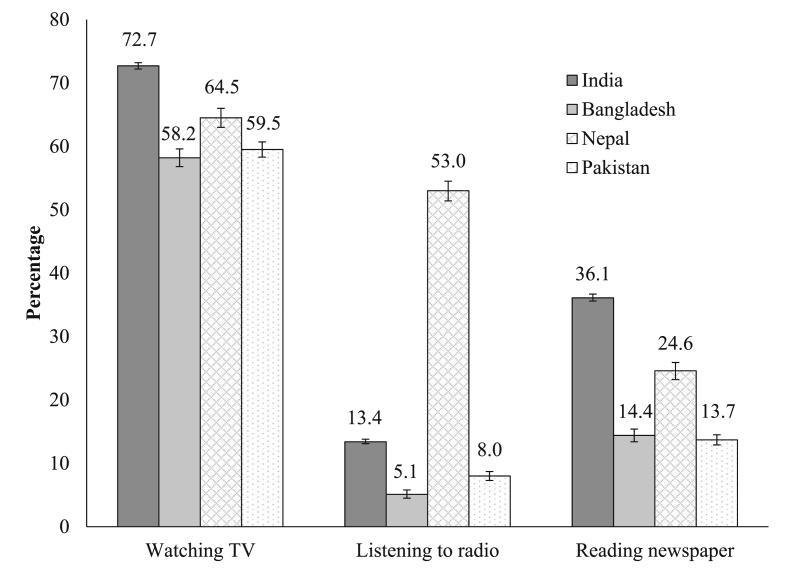
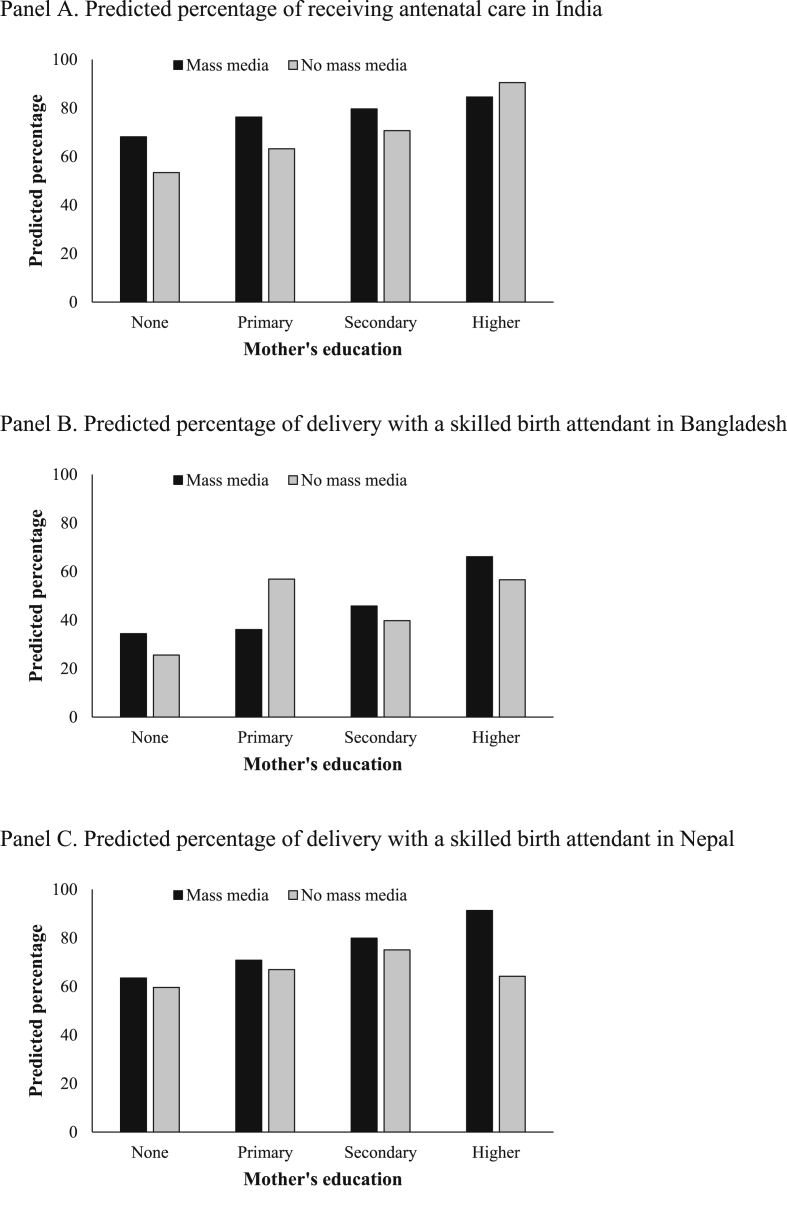
Maternal mortality remains a major population health problem in the developing world due in part to inadequate healthcare before, during, and after childbirth. Mass media has the potential to disseminate information about maternal healthcare that can improve well-being for mothers and infants, particularly among women with limited educational attainment. This study examines the impact of mass media exposure (e.g., television, radio, and newspaper) and sociodemographic factors on maternal healthcare utilization in four South Asian countries: India, Bangladesh, Nepal, and Pakistan. Analyses use 2014-2017 Demographic and Health Surveys, which are nationally representative of women aged 15-49 years. Results show that maternal healthcare utilization is significantly higher among women exposed to mass media across countries, even after controlling for mother's, husband's, and household sociodemographic factors. Women exposed to mass media are 46-86% more likely to receive antenatal care, 24-53% more likely to deliver their babies by skilled birth attendants, and 36-94% more likely to receive postpartum check-ups across countries. Mother's educational attainment moderates the association between mass media exposure and some maternal healthcare services in three of the four countries. Governments and public health organizations can consider mass media as a key intervention in promoting maternal health in developing contexts.
孕产妇死亡率在发展中世界仍然是一个重大的人口健康问题,部分原因是产前、产中和产后的医疗保健不足。大众媒体有潜力传播有关孕产妇保健的信息,这可以改善母亲和婴儿的健康状况,特别是在教育程度有限的妇女中。本研究考察了大众媒体曝光(如电视、广播和报纸)以及社会人口因素对四个南亚国家(印度、孟加拉国、尼泊尔和巴基斯坦)孕产妇医疗保健利用情况的影响。分析使用了2014 - 2017年人口与健康调查,这些调查在全国范围内代表了15 - 49岁的女性。结果表明,即使在控制了母亲、丈夫和家庭的社会人口因素之后,各国接触大众媒体的女性的孕产妇医疗保健利用率显著更高。各国接触大众媒体的女性接受产前护理的可能性要高出46% - 86%,由熟练助产人员接生的可能性要高出24% - 53%,接受产后检查的可能性要高出36% - 94%。在四个国家中的三个国家,母亲的教育程度调节了大众媒体曝光与一些孕产妇医疗保健服务之间的关联。政府和公共卫生组织可以将大众媒体视为在发展中环境中促进孕产妇健康的一项关键干预措施。