Hussein Essam M, Alsantali Reem I, Morad Moataz, Obaid Rami J, Altass Hatem M, Sayqal Ali, Abourehab Mohamed A S, Elkhawaga Amal A, Aboraia Ahmed S M, Ahmed Saleh A
Department of Chemistry, Faculty of Applied Science, Umm Al-Qura University, Makkah, 21955 Saudi Arabia.
Chemistry Department, Faculty of Science, Assiut University, Assiut, 71516 Egypt.
BMC Chem. 2020 Jun 25;14(1):42. doi: 10.1186/s13065-020-00694-2. eCollection 2020 Dec.
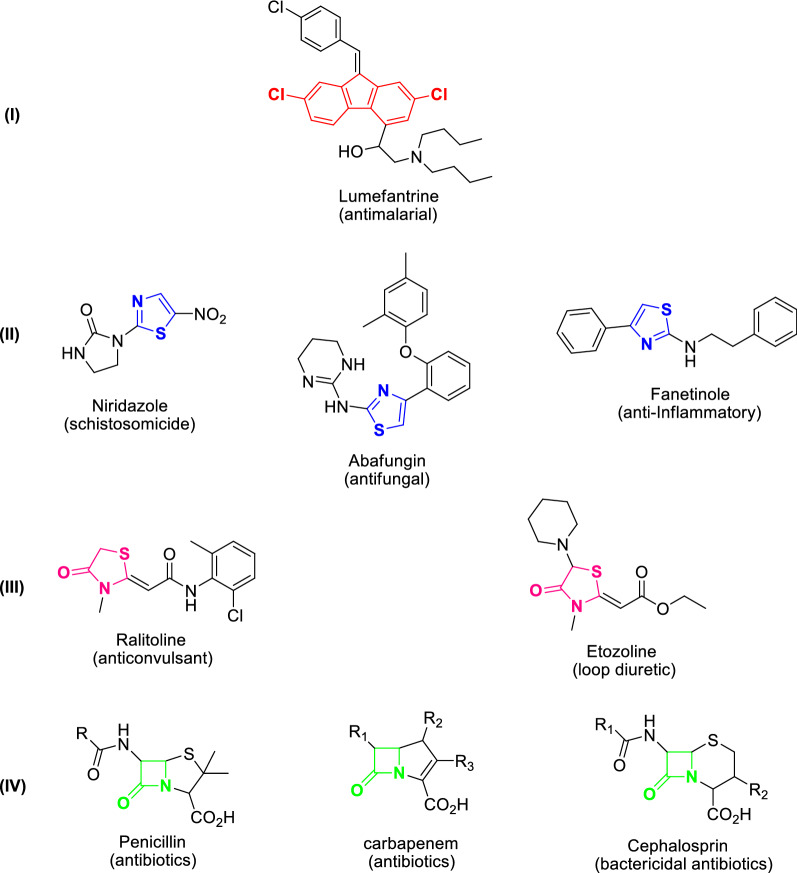
Thiazoles, thiazolidinones and azetidinones are highly ranked amongst natural and synthetic heterocyclic derivatives due to their great pharmaceutical potential.
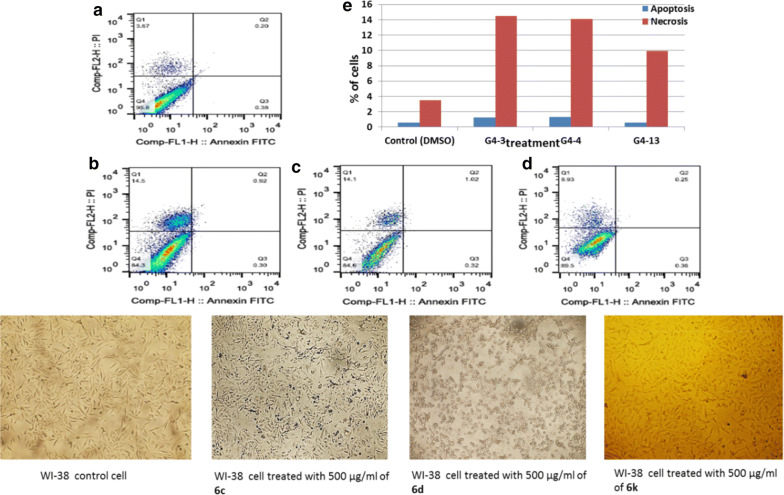
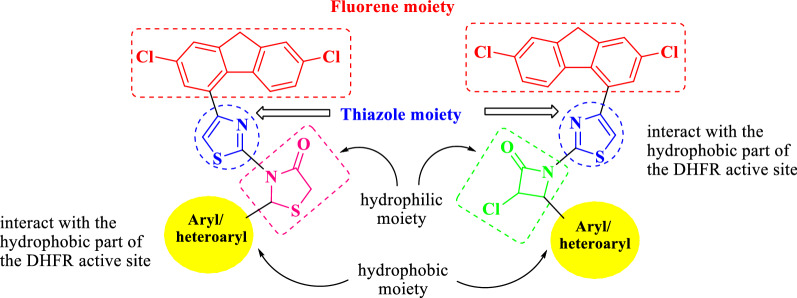
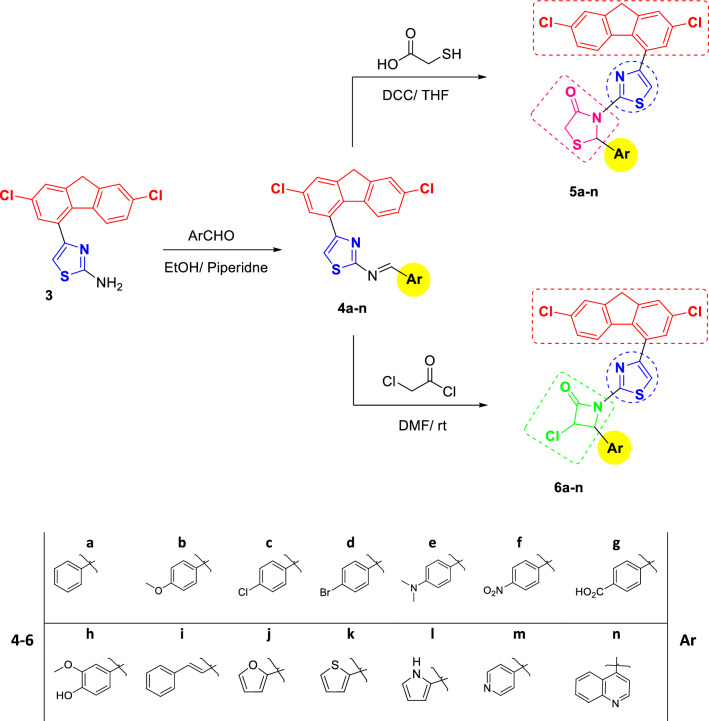
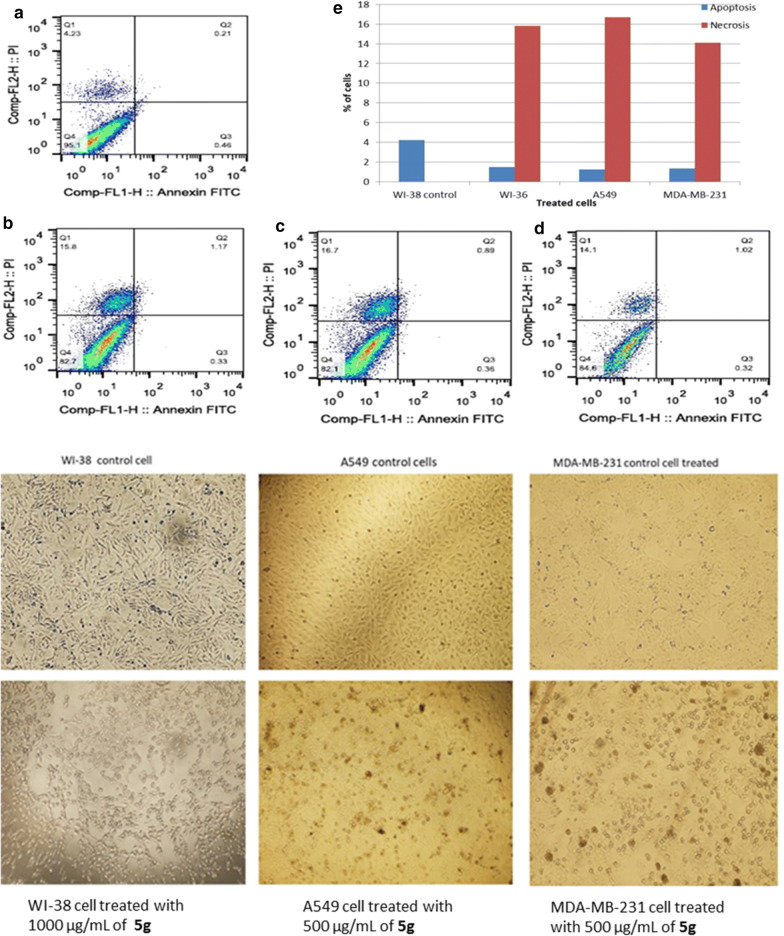
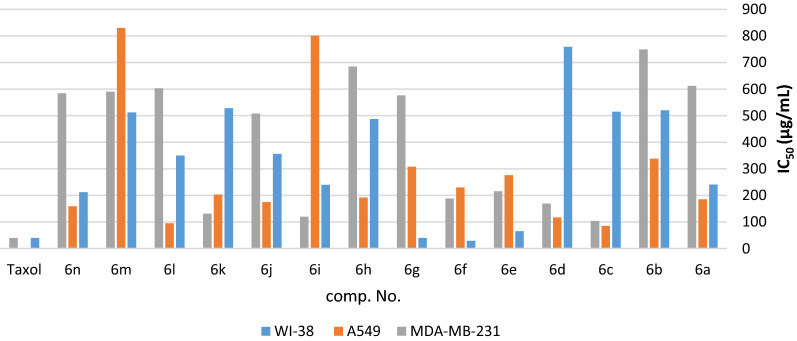
New thiazolidinone and azetidinone class of bioactive agents based on 4-(2,7-dichloro-9-fluoren-4-yl)thiazole moiety have been successfully synthesized. 4-(2,7-dichloro-9-fluoren-4-yl)thiazol-2-amine was synthesized and allowed to react with various aryl/heteroaryl aldehydes to afford the corresponding Schiff base intermediates. The target thiazolidinone and azetidinone analogues have derived from Schiff bases by their reactions with thioglycolic acid and chloroacetyl chloride, respectively. The newly synthesized compounds were then evaluated for their antimicrobial activity against some multidrug resistant strains and examined for cytotoxic activity against normal lung fibroblast (WI-38), human lung carcinoma (A549), and human breast carcinoma (MDA-MB-231) cell lines to develop a novel class of fluorene-based bioactive agents. The mode of action and the binding interaction of the synthesized compound with the active sites of dihydrofolate reductase enzyme were well identified by fluorescence-activated cell sorting (FACS) analysis and molecular docking study.
Some of the synthesized compounds showed remarkable activity against A-549 and MDA-MB-231 when compared to Taxol, which was used as a reference drug. 2,7-dichloro-9-fluorene-based azetidinones are more efficient as antimicrobial and anticancer agents compared to dichloro-9-fluorene-based thiazolidinones derivatives.
噻唑、噻唑烷酮和氮杂环丁烷酮因其巨大的药学潜力,在天然和合成杂环衍生物中排名很高。
基于4-(2,7-二氯-9-芴-4-基)噻唑部分的新型噻唑烷酮和氮杂环丁烷酮类生物活性剂已成功合成。合成了4-(2,7-二氯-9-芴-4-基)噻唑-2-胺,并使其与各种芳基/杂芳基醛反应,得到相应的席夫碱中间体。目标噻唑烷酮和氮杂环丁烷酮类似物分别通过席夫碱与巯基乙酸和氯乙酰氯的反应得到。然后对新合成的化合物针对一些多重耐药菌株的抗菌活性进行评估,并针对正常肺成纤维细胞(WI-38)、人肺癌(A549)和人乳腺癌(MDA-MB-231)细胞系检测其细胞毒性活性,以开发一类新型的基于芴的生物活性剂。通过荧光激活细胞分选(FACS)分析和分子对接研究,很好地确定了合成化合物与二氢叶酸还原酶活性位点的作用模式和结合相互作用。
与用作参考药物的紫杉醇相比,一些合成化合物对A-549和MDA-MB-231显示出显著活性。与基于二氯芴的噻唑烷酮衍生物相比,基于2,7-二氯芴的氮杂环丁烷酮作为抗菌和抗癌剂更有效。